When to Replace an Old or Urine-Damaged Rug Pad
Most rug pads should be replaced every 3-5 years, sooner if urine-damaged, crumbling, or sticking to the floor. The warning signs and floor-staining risk.
You know how a small maintenance delay can snowball into a massive repair bill. From what I have seen over years of handling high-end and antique textiles, ignoring a failing foundation layer is a costly mistake.
Our team at Legacy Rug Cleaning is dedicated to providing expert rug care and restoration services through quality workmanship and exceptional customer service. This direct exposure has shown us exactly when to replace rug pad layers before they ruin your investment.
Let’s examine the data and outline a schedule for keeping your floors safe.
For a complete overview of our foundation options, see our guide on Custom Rug Padding.
Standard replacement timeline
Most quality rug pads have a useful life of 3 to 5 years in typical residential use. This timeline shrinks for high-traffic situations or pet households.
Quality natural rubber and felt combinations can stretch closer to 5 to 10 years in formal, low-traffic rooms. Several factors influence your exact rug pad lifespan:
- Foot Traffic: Hallways and entryways compress materials twice as fast as bedrooms.
- Material Quality: Natural rubber outlasts cheap synthetic plastics.
- Environmental Moisture: Humid climates accelerate chemical breakdown in foams.
- Floor Type: Hard, unforgiving surfaces increase the friction on the padding.
The single best moment to swap a pad is when the rug returns from professional cleaning. The pad is already off the floor, the room is being reset, and the rug is completely clean.
We find that many of our customers schedule pad replacement at the same time. According to the National Wood Flooring Association, leaving a pad unchecked for too long can trap harmful moisture against the wood.
Warning signs
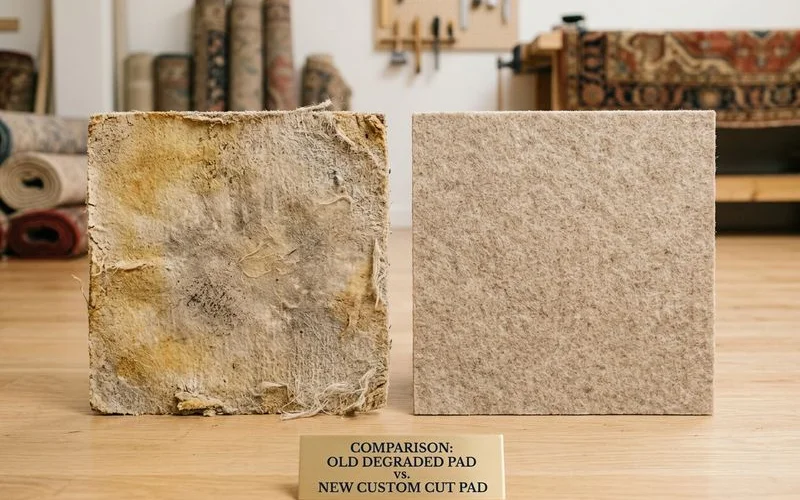
Visible crumbling, floor discoloration, and a sticky residue mean your pad requires immediate replacement. Old foams break down chemically over time, risking permanent damage to both the rug and the floor beneath it.
Because this deterioration happens entirely out of sight, you need to know exactly what to look for during routine cleaning.
Crumbling or breaking apart
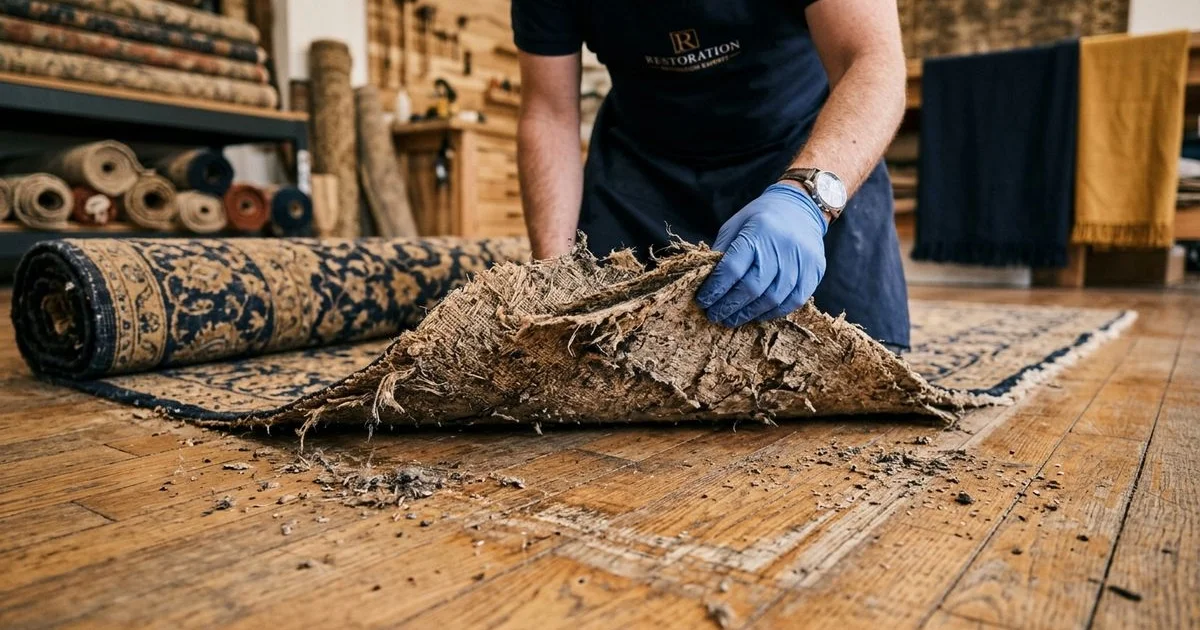
Old foam and synthetic rubber pads break down chemically over time. If you see crumbs, pieces, or visible structural failure when you lift the corner, the pad is past replacement.
Synthetic latex and PVC contain plasticizers designed to keep the material flexible. These chemicals dry out and leach away after a few years, leaving a brittle, powdery mess behind.
Sticking to the floor
Cheap foam padding can bond to hardwood surfaces as the material degrades. The solvent-based adhesives used in these low-cost options react poorly with floor finishes.
An old rug pad sticking to your wood planks will leave a stubborn, gummy residue that is incredibly hard to clean. Replace the foundation immediately if you feel any resistance when lifting the corner.
Loss of compression
A pad that is noticeably thinner than it was originally has lost its basic cushioning function. If the material does not bounce back when you press a finger into it, the cellular structure has collapsed.
Industry testing shows that a pad losing just 10 percent of its volume loses its ability to absorb impact effectively. It is time to replace it to protect your textile fibers from getting crushed against the hard floor.
Discoloration of the floor underneath
If you see yellowing, staining, or marking on the floor below the pad, chemical migration is actively damaging the wood. Certain synthetic materials leach their plasticizers directly into the polyurethane coating of the floor.
We strongly advise homeowners to act quickly if they notice any color transfer. Replace the pad and have a flooring professional assess the hardwood finish.
Lingering odor
Pads in pet households hold residual smells even after the top rug is thoroughly washed. Because most padding materials are highly absorbent, bacteria breed deeply within the cellular structure.
If you can smell a sour or musty scent when you lift the rug, replace the pad. No amount of surface spraying will neutralize odors trapped inside dense rubber or felt.
Visible surface damage
Tears, rips, or large worn spots drastically reduce the protective function of the underlayment. A rip causes the rug above it to flex unevenly, which can snap brittle warp and weft threads over time.
Replace the padding if visible damage covers more than 10 percent of the total surface area.
Pet-damaged pads (always replace)
You must replace the pad underneath any rug that has sustained pet urine damage. Even if you do not see a visible stain, the liquid has soaked through, and the pad is holding odor and bacterial activity.
When a pet urinates on a rug, the liquid undergoes a destructive chemical shift inside the padding:
- Initial Acidic Phase: Fresh urine has a pH of 5 or 6, which oxidizes and reacts with the dyes immediately.
- Alkaline Transition: As the liquid dries, it turns highly alkaline, reaching a pH between 10 and 12.
- Bacterial Growth: This high pH environment allows bacteria to multiply deep within the pad’s cellular structure.
Replacing the pad is a mandatory part of complete pet urine remediation. Urine salts left behind in the old foam are hydrophilic, meaning they actively draw moisture from the air during humid months.
This moisture reactivates the bacteria, releasing fresh ammonia gas into your home. Without a fresh underlayment, the rug’s clean smell will last only a few days before the old pad re-introduces the odor.
For a complete response to these types of accidents, see our guide on Pet Urine Odor Removal.
What old pads do to floors
Degraded foundation layers physically scratch surfaces, chemically stain finishes, and transfer color to the flooring beneath them. The cost of repairing this flooring damage always exceeds the cost of a new pad by a massive margin.
Different flooring materials react poorly to failing underlayments in specific ways.
| Floor Type | Common Damage from Failing Pads |
|---|---|
| Hardwood | Color transfer from backing, scratches from hardened crumbs, finish stripping from sticky adhesives. |
| Stone or Tile | Chemical staining from absorbent synthetic materials, slip risks if the degraded pad shifts. |
| Carpet Underneath | Dye bleeding, permanent matting from localized pressure, abrasive wear on the carpet pile. |
Our repair technicians see the aftermath of cheap PVC pads melting directly into expensive hardwood finishes. Plasticizers in these low-grade pads migrate into the floor’s polyurethane layer, causing permanent yellowing that requires a full sanding to fix.
You should always replace your padding proactively before these chemical reactions start.
When to upgrade rather than match
A replacement cycle presents the perfect time to upgrade your materials instead of buying the exact same product. Proper fit and higher quality materials make a substantial difference in daily performance.
Many off-the-shelf options simply do not offer the density required for heavy, antique pieces.
Consider these common upgrades when deciding what to purchase next:
- To pet-barrier pads: This is crucial if you have recently added pets to your household. See our insights on pet-barrier rug pads.
- To custom-cut pads: A proper fit prevents the edges of your rug from draping over the side and wearing down prematurely.
- To a felt-and-rubber combo: Upgrading from a basic foam layer to a dense felt-and-rubber mix offers noticeable acoustic benefits and better grip.
- To high-density pads: Standard pads compress much faster in heavy use, making high-density options ideal for living rooms and entryways.
We highly recommend natural rubber for its superior grip and floor safety. Synthetic options might be cheaper upfront, but they lack the longevity and safety profile of natural materials.
The economics
Knowing when to replace rug pad materials is the most inexpensive preventive step in fine textile care. When you compare the price of an underlayment to the staggering costs of floor repair, the financial choice is incredibly clear.
A custom-cut pad replacement typically costs between $150 and $400, depending on the rug size and material type.
Let’s look at the financial realities based on 2026 US average repair costs:
- Refinishing damaged hardwood: Current data shows refinishing costs $3 to $8 per square foot, pushing a single room to $1,890 on average.
- Replacing a worn rug: Accelerated wear from a compressed pad can force a replacement costing anywhere from $1,000 to $25,000 or more.
- Subfloor remediation: Fixing deep urine damage and off-gassing in a wooden subfloor ranges from $1,000 to $3,000.
Our perspective is strictly focused on saving you money in the long run. The math always favors timely pad replacement over waiting for visible damage to occur.
How to plan
Schedule your pad assessments alongside your professional cleaning appointments. This simple habit ensures your foundation layers are evaluated regularly by trained eyes.
For most owners, the most reliable approach follows a basic four-step rule.
- Replace the pad with each major professional cleaning, typically every 3 to 5 years for typical use.
- Replace the pad immediately after any pet urine incident reaches the foundation.
- Replace the padding if any warning sign appears between your scheduled cleanings.
- Upgrade to a pet-barrier model when adding new animals to the household.
Bring the rug in for pickup, mention you want a pad assessment, and our technicians will evaluate the current material. A replacement will be recommended if the pad is no longer performing correctly.
Knowing exactly when to replace rug pad layers is the simplest way to protect your floors from permanent damage.
Call our shop today to schedule your next rug washing, and let us take care of the foundation check for you.
Related Service
Custom Rug Padding
Custom-cut padding for hard surfaces and carpet, including high-density pet-barrier pads that protect subfloors.
Learn more about Rug PaddingRelated Rug Care Guides
Do You Need a Rug Pad? Benefits Explained
A good rug pad prevents slipping, protects fibers and floors, adds comfort, and improves airflow. Whether your rug needs one and which type fits.
Pet-Barrier Rug Pads That Protect Hardwood & Stone
Pet-barrier pads have a moisture liner that stops urine from reaching hardwood or stone. How they work and how they pair with odor treatment.
Frequently Asked Questions
How long do rug pads typically last?
Why is my pad sticking to the floor?
Do I really need to replace a urine-soaked pad?
Have a Rug You'd Like Us to Look At?
Free pre-inspection, transparent quoting, and pickup across Las Vegas.
Get My Free Quote