Professional Moth Treatment in Las Vegas
Have you ever pulled back your living room couch, only to discover bare spots on your favorite wool rug?
We see this heartbreak all the time at Legacy Rug Cleaning, where our team is dedicated to expert rug care and restoration.
Case-bearing clothes moths are the silent destroyers of fine textiles, making prompt Moth Treatment & Removal an absolute necessity. The adult moths actually do not eat your rug at all. Our professionals know that their tiny larvae do all the chewing, preferring dark, undisturbed areas like the underside of a carpet.
By the time most owners notice bald patches in the pile, the bugs have been feeding for months. You will learn the exact steps to handle this, so you can protect your home.
We are going to walk you through the process right now.
What an active infestation looks like
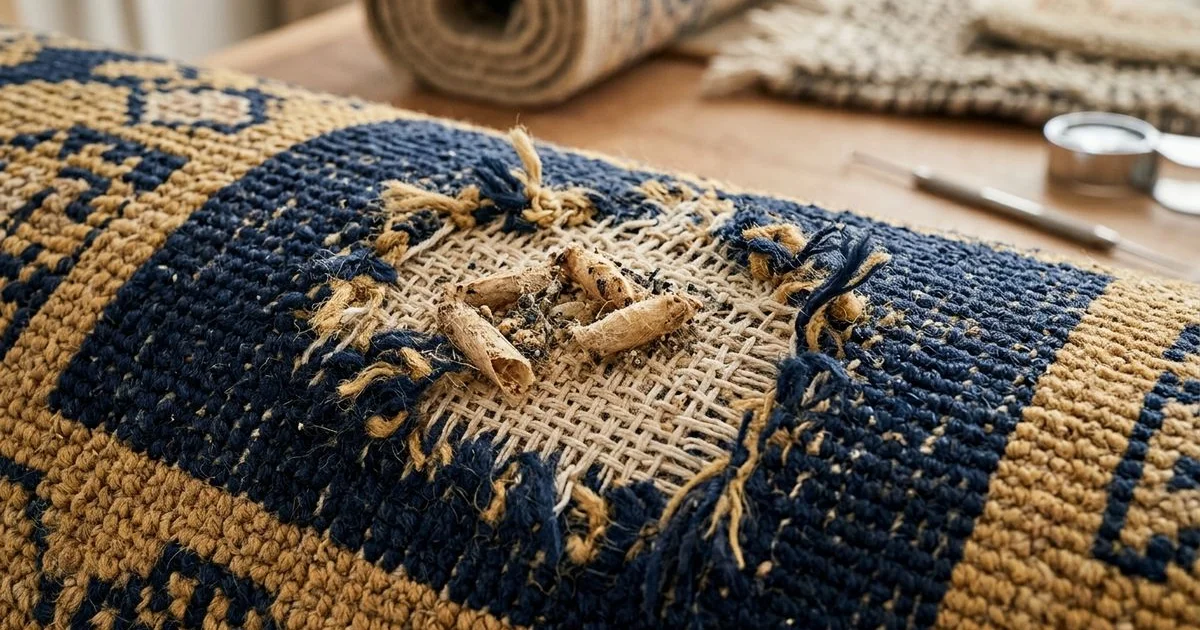
The first signs of trouble usually look like small bald spots in the rug pile. We frequently find grain-of-sand-sized casings scattered around the area.
These casings are actually portable silken tubes the larvae build from your rug’s own fibers to hide inside. Tiny, sticky cobwebs stuck in the foundation corners are another massive red flag.
Our technicians always check the back of the textile first, because that is where the bugs love to feed undisturbed. In modern climate-controlled US homes, case-bearing clothes moth larvae can live and eat for up to 30 months if left alone.
You can easily spot a few distinct warning signals during a routine cleaning:
- Irregular bald patches where the wool pile is completely missing.
- Sticky, web-like residue left behind in the foundation corners.
- Small fuzzy tubes matching the color of your rug fibers.
- Live larvae wiggling underneath your couch or heavy cabinets.
These visual clues mean it is time to take immediate action and schedule a Moth Treatment & Removal service. We recommend inspecting your home with a bright flashlight every season to catch these issues early.
For a longer read on what to look for, see our guide on signs of wool moth infestation.
Containment is the first move
Once an active infestation is confirmed, stopping the spread becomes the absolute top priority. We know that a single female clothes moth can lay up to 50 microscopic eggs in a dark corner.
Dragging an infested rug across your living room floor will easily scatter those invisible eggs to your other carpets. This simple mistake creates a massive secondary infestation.
Our initial response is to tightly seal the affected piece right where it sits.
Steps to Isolate the Infestation
This containment process ensures no bugs migrate to other textiles in your home during transport. The quarantine procedure follows strict guidelines to protect your property:
- Wrapping the rug in heavy plastic before moving it.
- Sealing all seams with high-grade industrial tape.
- Isolating the item upon arrival at the wash plant.
- Performing a detailed inspection under specialized lights.
These careful measures stop the lifecycle right in its tracks. We place the item in a dedicated zone to evaluate the full extent of the damage.
This deep inspection looks for foundation eating, egg deposits, and hidden webbing. Sometimes, the problem has already moved beyond a single floor covering.
We will recommend coordinating with your local pest control company if the infestation has spread into your baseboards or closets.
Treatment, repair, and prevention
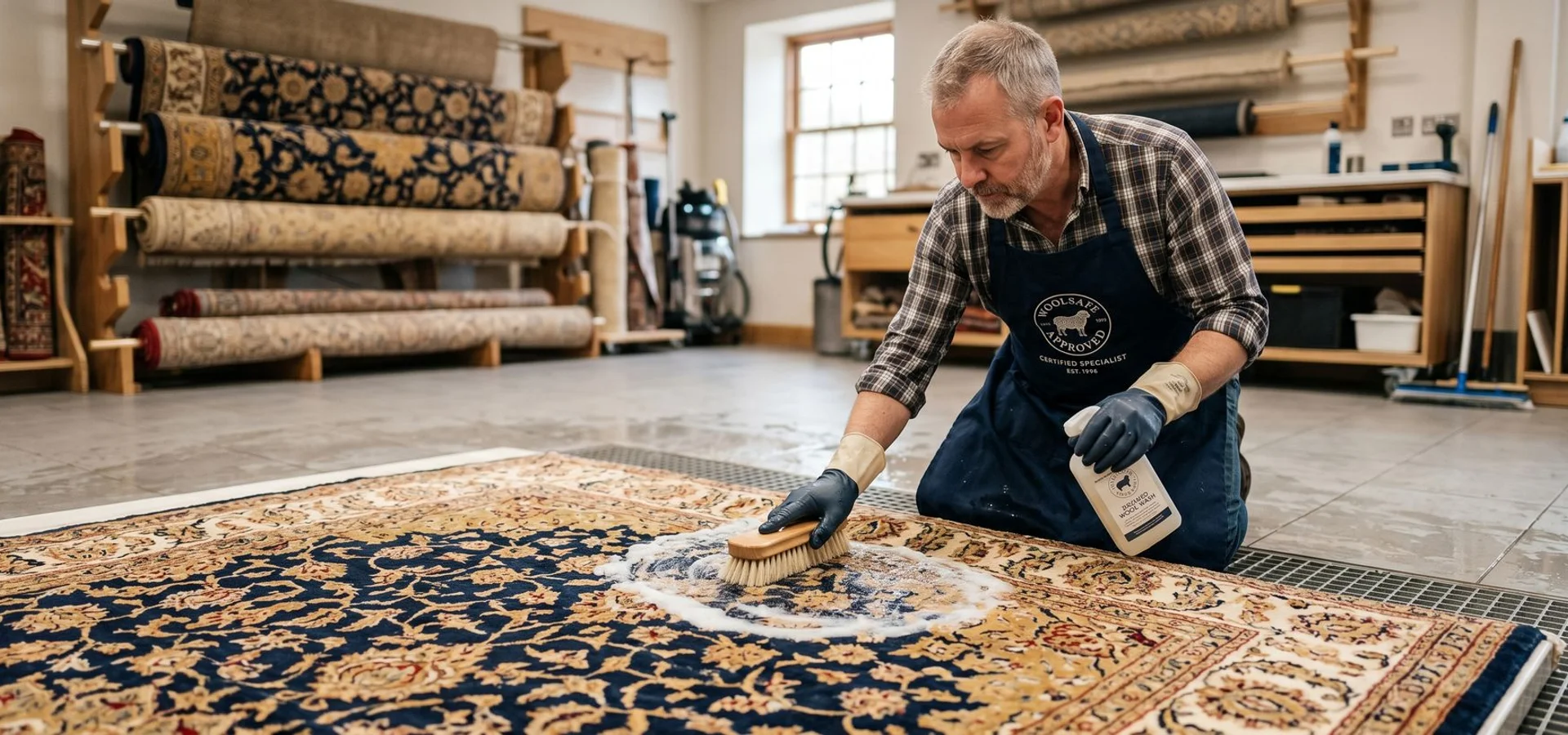
The actual extermination process combines sustained heat and specialist chemistry in an individual wash bath. Our system is perfectly calibrated to eradicate larvae and eggs without damaging the delicate natural wool.
Research shows that temperatures must exceed 122 degrees Fahrenheit to completely denature moth proteins and stop the lifecycle. This precise heat threshold guarantees a fully sanitized foundation.
We carefully monitor the treatment environment to protect the vibrant dyes in your antique pieces. Post-treatment, highly trained experts step in to rebuild bald patches and fix any structural issues the larvae caused.
You can learn more about this detailed finishing work by visiting our restoration team page.
Why Storage Materials Matter
Every moth job ends with a detailed conversation about long-term prevention. We teach you how to safely store your floor coverings to ensure this is a one-time treatment.
Natural wool fibers can actually hold up to 30 percent of their weight in moisture without feeling wet to the touch. The wrong wrapping material will completely destroy your investment over time.
Our top recommendation is to always use breathable storage wrapping to protect that natural moisture balance.
| Wrapping Material | Moisture Control | Pest Protection |
|---|---|---|
| Standard Plastic Tarps | Traps moisture, causing mildew and dry rot. | Creates a humid environment bugs love. |
| Tyvek Paper | Breathable, allowing natural wool to vent. | Tear-resistant barrier against moths and rodents. |
| Brown Kraft Paper | Breathable, but absorbs moisture over time. | Only suitable for very short-term indoor storage. |
This comparison highlights exactly why material selection is so critical. We always wrap our clients’ clean rugs in Tyvek to keep out insect invaders while letting the textile breathe.
The final goal is to return a beautiful, pest-free rug that stays that way for generations.
Protecting Your Investment
Moth Treatment & Removal is a serious process, but it does not have to be stressful. We are here to help you preserve your beautiful textiles for years to come.
Give us a call today to schedule your professional rug inspection and stop these silent destroyers in their tracks.
What You Can Expect
- Containment & isolation to stop the spread
- Larvae & egg eradication via wash and treatment
- Pest-control coordination for active infestations
- Post-infestation reweaving & repair
- Prevention guidance for storage
- WoolSafe-approved chemistry