
Cleaning Cowhide & Leather Rugs Safely
Cowhide and leather rugs need surface cleaning and conditioning, not saturation. How to care for hide rugs, handle odor, and avoid common damage.
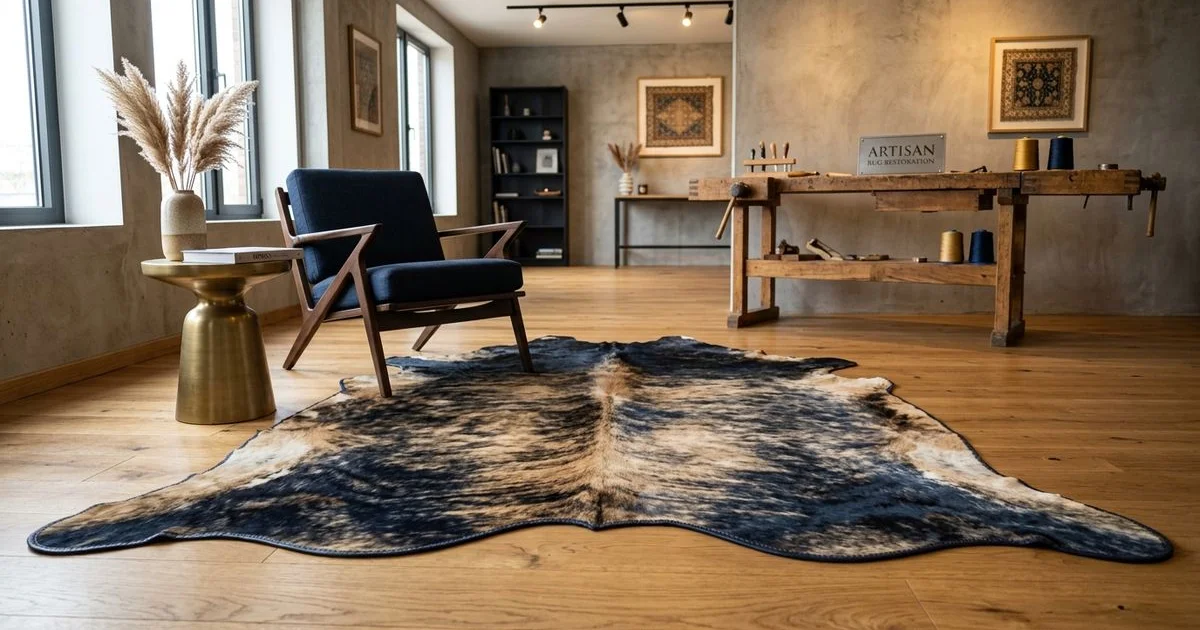
You know the feeling when a simple cleaning task suddenly ruins an expensive investment.
The pH balance of a tanned cowhide sits around 4.5, making it highly sensitive to standard household detergents. We constantly see these chemical reactions cause irreversible stiffening in the shop.
Hide and leather rugs simply cannot tolerate the moisture levels used for woven textiles. To prevent permanent damage, this guide breaks down the exact chemistry involved and shows you how to execute a safe cowhide rug cleaning routine.
Our team recommends reading the broader overview at Sisal, Jute & Hide Rug Cleaning for context on natural materials.
How hide rugs are different
A hide rug is essentially a tanned skin laid flat, making its structural needs completely distinct from a standard woven carpet. Standard wool rugs use a woven foundation, but a hide relies entirely on natural collagen fibers. We approach these pieces as specialized leather goods rather than traditional floor coverings.
The physical construction presents four major differences:
- No pile (the hair is the original animal hair)
- No foundation (the leather itself is the structure)
- No fringe (the natural edge forms the perimeter)
- Single layer (no warp and weft yarns)
Care must respect this delicate biological structure. Premium Brazilian cowhides feature a specialized chrome-tanning process that requires specific lipid maintenance. We strongly advise treating these pieces like fine leather upholstery to prevent premature aging.
Learning how to properly clean leather rug pieces starts with understanding this anatomy.
What goes wrong with wrong methods
Using incorrect cleaning chemistry or excess moisture causes permanent structural damage to natural hides. The damage usually falls into three specific categories that ruin the piece entirely. We frequently inspect rugs suffering from severe water damage or chemical burns.
- Water saturation: Water penetrates the leather backing and displaces the natural fatliquors introduced during the tanning process. Once those oils wash away, the hide suffers from dry rot and permanently curls or hardens.
- Standard rug cleaning chemistry: Liquid detergents formulated for synthetic carpets sit at a highly alkaline pH of 8 or 9. This alkalinity strips the acidic leather of its flexibility, leaving the skin stiff and prone to splitting.
- Heat and mechanical damage: Steam mops inject moisture at temperatures exceeding 200 degrees Fahrenheit, which instantly shrinks the collagen. Vacuuming with aggressive beater bars physically rips out the natural hair.
Our technicians cannot reverse the dramatic shrinkage caused by extreme heat exposure.
What the right approach looks like
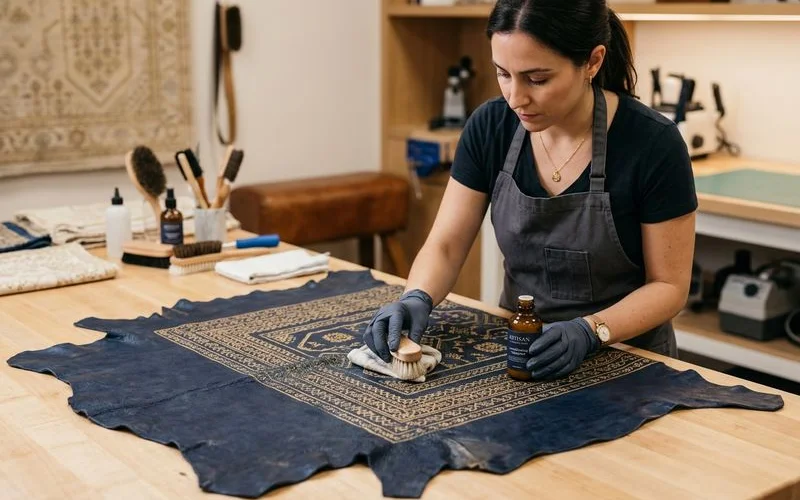
Our specialized process relies on dry extraction and pH-balanced chemistry. This method preserves the lipid barrier while safely lifting embedded soil. Every step focuses on maintaining the acidic balance of the skin.
- Inspection: The technician assesses the hide for existing dry rot, UV fading, and tanning quality before selecting a treatment.
- Dry surface cleaning: A gentle suction vacuum removes loose dirt, while a solid rubber pet brush lifts debris without scratching the leather backing.
- Targeted surface treatment: Stubborn spots receive a targeted application of leather-calibrated chemistry, usually balanced exactly at a 4.5 pH.
We never saturate the base during this stain removal phase. Applying liquids locally prevents the hide from warping. The final stages focus on long-term preservation.
- Conditioning: The hide receives a specialized fatliquor application to replace evaporated oils. This step prevents the sudden cracking that destroys older, untreated hides.
- Final finishing: A soft horsehair bristle brush grooms the coat back to its natural direction, restoring the original sheen.
Our team considers the finishing brushout absolutely essential for a uniform look.
Conditioning matters as much as cleaning
Leather inherently loses its natural moisture over time, especially in climate-controlled indoor environments. Without regular conditioning, the collagen structure tightens and becomes highly brittle. We consider this step the most critical part of extending your piece’s lifespan.
“A proper fatliquor treatment penetrates the skin deeply to restore true flexibility, whereas a basic surface wax only coats the hair.”
Replenishing these lost oils requires a dedicated leather conditioner rather than a surface wax. A proper fatliquor treatment penetrates the skin deeply to restore true flexibility. We apply a premium conditioning treatment during every single service appointment.
Most clients notice a dramatic improvement in the rug’s suppleness immediately. Routine maintenance makes the difference between a piece lasting five years or fifty.
| Factor | Unconditioned Hide | Professionally Conditioned |
|---|---|---|
| Texture | Stiff and rigid | Soft and supple |
| Durability | Prone to severe cracking | Resists tearing |
| Lifespan | 5 to 7 years | 20 to 30 years |
What you can do at home
Proper hide rug care prevents abrasive dirt from cutting into the delicate hair follicles. You can easily manage the routine upkeep between professional visits using the right tools. Our top recommendation is purchasing a solid rubber massage brush for daily grooming.
Here is a simple maintenance checklist for your home:
- Vacuum gently and regularly. Use the suction-only attachment and never engage the beater bar.
- Address dry soil immediately. Sweep crumbs or dust away with a rubber brush moving in the direction of the hair.
- Blot wet spills immediately. Press a dry, undyed cotton towel into the spill for thirty seconds to absorb moisture.
- Keep out of direct sun. UV rays bake the leather and permanently fade the natural hair colors.
We frequently spot early warning signs of dehydration during routine checkups. Watch closely for curled edges or a cardboard-like stiffness when you handle the rug. These symptoms clearly indicate the piece requires immediate professional hydration.
What you should never do at home
Applying the wrong household product will cause instant, irreversible chemical burns to the hide. Most popular DIY cleaning hacks rely on highly alkaline solutions that melt the delicate tanning bonds. We advise clients to avoid all liquid-based spot cleaners completely.
Please avoid the following common mistakes:
- Apply water or steam for any reason
- Use commercial leather products without consulting a specialist
- Scrub or rub aggressively against the grain
- Apply heat from a hairdryer, space heater, or direct sunlight
- Use vinegar, citrus, or alcohol-based cleaners
The rules for natural plant fibers share many of these same strict moisture limitations. You can read why sisal and jute can’t be wet-washed to understand how water impacts different natural structures. Our technicians apply these same dry-cleaning principles across all non-woven specialty rugs.
When hide rugs are damaged
Certain types of structural wear simply cannot be reversed by any cleaning chemistry. Understanding these limitations helps set realistic expectations for restoration work. We conduct a thorough pre-inspection to identify which issues are permanent.
Mechanical Wear and Hair Loss
Friction from heavy foot traffic physically snaps the delicate hair off the hide. This baldness does not grow back and represents permanent mechanical damage. We often see this issue on rugs placed under rolling office chairs.
Moisture and Heat Distortion
Wetting the leather causes severe dry rot and aggressive shrinking. A hide that has curled from heat exposure or water saturation will never stretch back to its original dimensions. Our restoration efforts focus on stabilizing the shape rather than stretching it out.
Dehydration and Cracking
Significant splitting caused by years of severe dehydration rarely fuses back together. A deep fatliquor conditioning treatment will halt further tearing, but the physical scar remains visible. We regularly apply these stabilizing treatments to salvage older heirlooms.
UV Fading
Prolonged UV radiation acts like a weak bleach on natural hair and bakes the leather backing. A professional treatment improves the texture of sun-baked leather, but the faded pigmentation is permanent. We always provide a completely transparent assessment of these salvageability factors before beginning work.
Lifespan and maintenance
High-quality, chrome-tanned Brazilian cowhides provide incredible durability when placed in the correct environment. A well-maintained piece can easily last 20 to 30 years under normal household conditions. Our shop regularly services antique pieces that look completely pristine after decades of use.
Several specific variables determine exactly how long your piece will survive:
- Conditioning frequency. The leather requires professional hydration every two to three years.
- UV exposure. Windows require UV-blocking films, and the rug needs periodic rotation.
- Moisture control. The backing must remain completely dry, requiring immediate spill remediation.
- Foot traffic. Formal display areas create far less friction than busy hallways.
- Pet activity. Animal claws easily scratch the leather and dig into the hair follicles.
We strongly suggest placing these pieces in low-traffic zones to minimize mechanical wear. Placing them in a high-stress family room significantly accelerates the breakdown of the hair. Careful placement easily doubles the effective lifespan of the item.
When professional care is appropriate
Routine home maintenance cannot replace the deep hydration provided by specialized leather treatments. Scheduling regular service appointments prevents the irreversible dry rot and cracking discussed earlier. We recommend establishing a consistent maintenance timeline for all custom pieces.
Consider this recommended service schedule for premium hides:
| Service Type | Recommended Frequency | Primary Benefit |
|---|---|---|
| Gentle Dry Cleaning | Every 1 to 2 years | Removes embedded grit |
| Deep Conditioning | Every 2 to 3 years | Restores lipid balance |
| Targeted Spot Treatment | As accidents happen | Prevents chemical burns |
| Pre-Storage Prep | Before long-term packing | Deters pest activity |
If you own a cowhide rug that has never seen a professional facility, the leather is likely dehydrating right now. Taking action immediately prevents the skin from suddenly splitting.
Our team is ready to evaluate your piece and execute a safe restoration protocol. Contact us today to schedule your comprehensive assessment and preserve your investment for decades to come.
Related Service
Sisal, Jute & Hide Rug Cleaning
Low-moisture and dry specialist cleaning for sisal, jute, grass-fiber, cowhide, and leather rugs.
Learn more about Sisal / Jute / HideRelated Rug Care Guides
Frequently Asked Questions
Can a cowhide rug be cleaned?
How do I handle a smelly cowhide rug?
Can I wash a leather rug with water?
Have a Rug You'd Like Us to Look At?
Free pre-inspection, transparent quoting, and pickup across Las Vegas.
Get My Free Quote