Genuine Silk vs. Faux Silk: How Cleaning Differs
Faux silk (viscose) and real silk look alike but clean very differently. Simple identification tests and why each fiber needs a different approach.
You probably know the sinking feeling of watching a spill spread across a beautiful, expensive floor covering. Our technicians see the aftermath of these accidents daily.
The biggest challenge in real vs faux silk rug cleaning is that owners often apply the wrong treatment based on mistaken fiber identity.
Treating one fiber like the other is the fastest way to ruin a valuable piece.
We must confirm the exact material before a single drop of moisture touches the surface. Examining the chemistry behind these materials reveals practical ways to respond.
For the broader service, see Silk Rug Cleaning.
Why the confusion exists
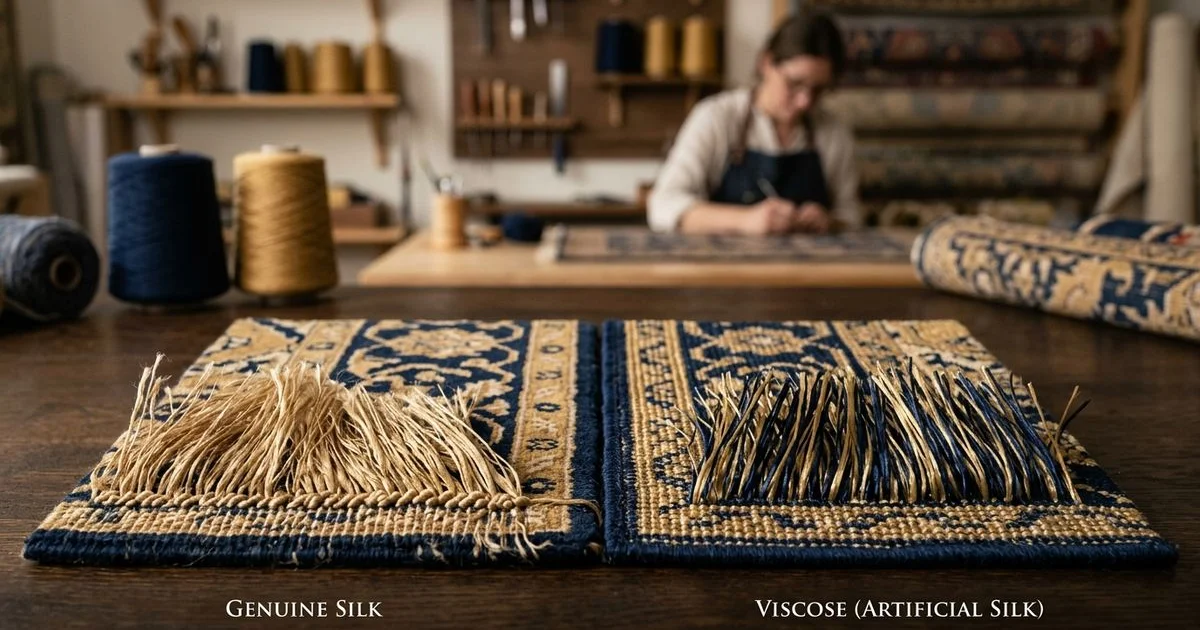
The confusion exists because manufacturers intentionally produce substitute materials to mimic the visual sheen of natural protein fibers. Our team frequently encounters rugs labeled as “art silk,” “bamboo silk,” or “banana silk” that are actually just viscose, a semi-synthetic rayon.
Visually, it can be incredibly hard to distinguish from the genuine article, especially in finished pieces. We find that the deception is not always intentional on the part of the seller.
The United States Federal Trade Commission enforces the Textile Fiber Products Identification Act, which requires accurate material disclosure. Some retailers honestly mislabel imports, while others simply lack the training to understand the legal requirements. Your cleaning approach depends entirely on which fiber you actually possess.
How specialists identify the fiber
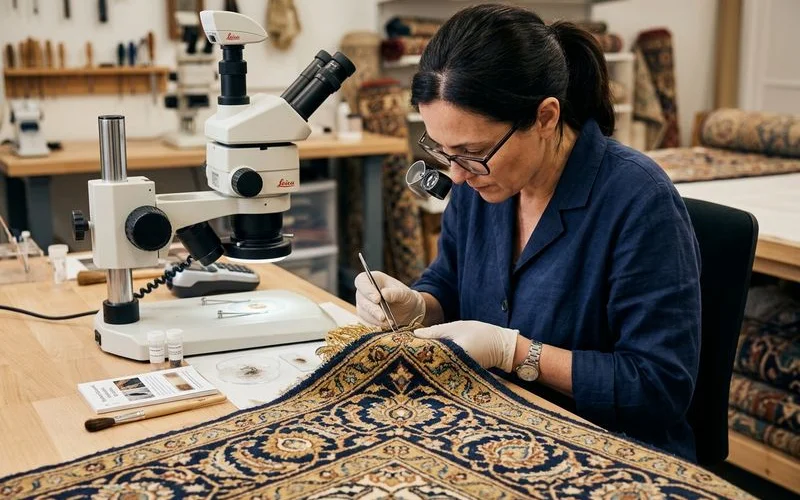
Specialists identify the fiber by running controlled physical and chemical tests on a tiny sample pulled from the rug. If you are wondering, “is my rug real silk,” a professional inspection provides the only definitive answer.
Our protocol requires these evaluations on every questionable piece before any treatment begins. A visual inspection alone is never enough to determine the correct chemical process.
- Burn test (most reliable): A small sample is briefly ignited. Genuine threads burn to a fine ash, stop burning when removed from the flame, and smell like burning hair due to their protein structure. Viscose ignites quickly, continues burning, and smells like burning paper because it is cellulose-based.
- Feel test: Natural threads have a distinct cool, smooth, slippery hand. The synthetic substitutes feel softer but warmer, and slightly less slippery.
- Light reflection: Real pile has a deeper, highly directional luster that shifts as you tilt the rug. Rayon presents a flatter, more uniform sheen.
- Crush test: Crushed natural fibers recover their shape well. The faux alternatives tend to stay completely crushed.
How silk and viscose differ in cleaning
The cleaning differs drastically because genuine protein fibers require an acidic environment, while rayon rapidly degrades when exposed to moisture. We adjust the entire wash process based on these chemical realities.
The same treatment that safely restores a natural rug can easily destroy a synthetic one. Viscose is highly water-sensitive and loses approximately fifty percent of its structural strength when wet.
This makes traditional washing impossible and limits faux silk rug care to strict low-moisture methods. You can see why viscose rugs are hard to clean for a deeper look at the chemistry.
| Factor | Genuine Silk | Viscose (Faux Silk) |
|---|---|---|
| Moisture Tolerance | Tolerates controlled, low-moisture hand-washing well. | Loses 50% strength when wet; severe browning risk. |
| pH Requirement | Requires acidic solutions (pH 4.5 to 5.5) to protect protein. | Requires strict neutral cleaning; sensitive to all liquids. |
| Texture Recovery | Grooming restores luster and bounce after drying. | Texture becomes stiff or matted permanently if saturated. |
What if you’re not sure
If you do not know the material, you must halt any cleaning efforts and seek a specialist fiber test immediately. It is completely normal to be unsure, as modern manufacturing makes these fakes incredibly convincing.
Our team at Legacy Rug Cleaning provides free pre-inspections to give you an accurate, data-driven answer.
A wrong guess carries severe financial consequences. Current 2026 data shows that high-end natural rugs cost between $70 and $100 per square foot in the US market.
We see owners accidentally destroy $8,000 investments by using a standard grocery store spot cleaner on the wrong fabric. Confirming what you have before a spill happens changes how you respond to incidents and protects your wallet.
Why this matters at-home
Knowing your fiber matters at home because the speed and method of your response dictate whether a spill becomes a permanent stain. Everyday care requires an immediate, specific reaction based on the material.
We advise keeping a stack of clean white cotton towels nearby for emergencies. The white fabric prevents any accidental dye transfer from the towel into your flooring.
- Natural protein spills: Blot the liquid gently, do not rub the pile, and call a professional. Never apply any water-based product or high-pH soap without specialist guidance.
- Viscose spills: Blot immediately with a dry cloth to pull the moisture out. Never use water to rinse the spot, and skip home chemical solutions entirely to prevent structural browning.
For both scenarios, the speed of your response matters far more than the specific commercial product you reach for.
When it’s both: silk-on-cotton
When a rug features both materials, the delicate surface pile dictates the entire cleaning protocol. Many hand-knotted pieces combine a soft, shiny pile with a sturdy, hidden cotton foundation.
We treat these mixed pieces with the same strict acidity rules as pure protein fibers. The strong cotton foundation can easily tolerate these specialist methods without shrinking or degrading.
- Mixed construction: The visible top layer demands acidic cleaning, while the hidden cotton base provides structural stability.
- Pure construction: Pieces with both a silk pile and a silk foundation are rare, highly valuable, and require extreme delicacy to prevent warping.
The honest summary
The correct method depends entirely on what fiber actually sits on your floor. Real vs faux silk rug cleaning requires two distinct scientific approaches.
You cannot assume what you have based on the original showroom label or the retailer’s verbal promise.
We recommend getting your piece properly tested and confirmed before you commit to any maintenance plan. Reach out for a professional inspection to keep your investment safe.
Related Service
Silk Rug Cleaning
Gentle, low-moisture hand-washing for genuine silk rugs that preserves sheen and protects delicate protein fibers.
Learn more about Silk RugsRelated Rug Care Guides
Caring for Silk Rugs at Home Between Cleanings
Protect a silk rug between professional washes, manage light and traffic, vacuum gently, respond fast to spills, and use the right padding.
Why Silk Rugs Need Specialized Hand-Washing
Silk is a delicate protein fiber sensitive to heat, water, and pH. Why silk rugs require gentle low-moisture hand-washing and controlled drying.
Frequently Asked Questions
How can I tell real silk from faux silk?
Is 'art silk' the same as silk?
Is faux silk harder to clean than real silk?
Have a Rug You'd Like Us to Look At?
Free pre-inspection, transparent quoting, and pickup across Las Vegas.
Get My Free Quote