
Why Viscose ('Art Silk') Rugs Are So Hard to Clean
Viscose weakens, browns, and loses texture when wet, the trickiest rug fiber. Why DIY ruins it and why specialists are essential.
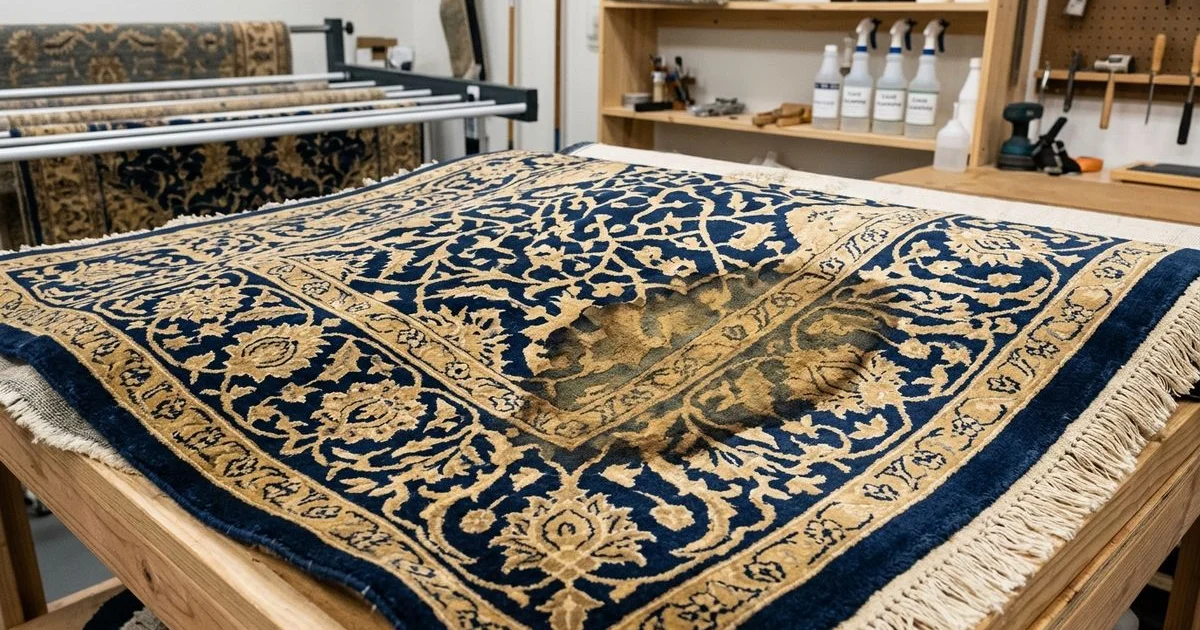
Our team routinely sees homeowners invest thousands of dollars in a stunning new area rug, completely unaware of the severe viscose rug cleaning problems waiting for them. Viscose is widely considered the most problematic fiber in the modern rug industry.
It looks luxurious, drapes beautifully, and costs significantly less than real silk. We constantly see how the underlying chemistry giving viscose its sheen also makes it extraordinarily difficult to clean.
For professional assistance, see Viscose & Art Silk Rug Cleaning.
Let’s break down the science behind this fragile fabric and explore practical ways to respond when spills happen.
What viscose actually is
Viscose, sold under many appealing names like rayon, art silk, bamboo silk, faux silk, lyocell, and modal, is a manufactured fiber made from cellulose. This cellulose is extracted from wood pulp or bamboo before being chemically processed into a fine thread. Our technicians frequently explain to clients that while it mimics silk’s luster and drape at a fraction of the cost, it is fundamentally water-sensitive.
The catch is the underlying chemistry. Manufacturers use intense chemicals like carbon disulfide to break down the wood pulp. We always point out that this process is so toxic that viscose manufacturing is actually banned in the United States, meaning all these rugs are imported.
Despite the environmental impact, this material remains incredibly popular. Viscose currently accounts for approximately 80% of all man-made cellulosic fiber production globally. Our experience shows that consumers love the affordable price tag, but they rarely understand the long-term cost of ownership.
Why water damages viscose
When viscose gets wet, several catastrophic chemical and structural changes occur. The fibers immediately lose between 50% and 80% of their tensile strength. We consistently see rugs completely ruined because owners scrubbed a wet stain with too much force.
Severe Browning and Discoloration
Residual lignin in the cellulose migrates and oxidizes when exposed to moisture. This produces the classic yellow-brown halo around wet spots that ruins the rug’s appearance. Our team uses specific acidic treatments to address this, but once lignin browning sets deeply into the fibers, it is often permanent.
Dramatic Texture Loss
Wet viscose becomes incredibly fragile and loses its structural integrity. Mechanical handling that a standard wool rug would shrug off can crush or compress wet viscose permanently. We warn clients that even walking on a damp viscose rug can leave permanent footprints matted into the pile.
Foundation Weakening and Shrinkage
Repeated wetting and drying will rapidly deteriorate the rug’s structural foundation. Viscose has a documented shrinkage rate of 2% to 8% when exposed to heavy moisture during a wash. Our cleaning process specifically avoids saturation to prevent the rug from buckling or losing its shape.
Color Bleeding and Migration
Many viscose rug dyes are highly unstable when introduced to liquids. This instability causes immediate color bleed, especially with darker shades like navy or burgundy. Our professionals regularly see ordinary at-home cleaning attempts make a viscose rug dramatically worse instead of better.
Why DIY ruins viscose
The most common viscose rug damage originates from well-intentioned at-home cleaning attempts. Homeowners panic when a spill happens and grab whatever household cleaner is under the sink. We constantly receive calls from panicked customers who made a small stain ten times worse.
Commercial carpet cleaning sprays like Resolve or Folex are highly alkaline. These high pH chemicals will instantly burn delicate cellulose fibers and strip away the unstable dyes. Our specialists have to explain that common household tricks simply do not work on this material.
Avoid these disastrous DIY mistakes:
- A small spot becomes a much larger browned halo after blotting with tap water.
- Applying a heavy alkaline “carpet cleaner spray” causes immediate texture damage.
- Using undiluted white vinegar destroys the fragile viscose fibers.
- Rented grocery store carpet cleaners soak the rug and produce widespread browning.
- Using a hairdryer to speed dry the area creates permanently heat-damaged sections.
The single most important lesson any viscose owner can learn is to keep water away from the fabric. For specific guidance on handling spills safely, see how to clean a viscose rug without ruining it. We strongly recommend keeping dry, absorbent white towels on hand for emergencies.
The specialist approach
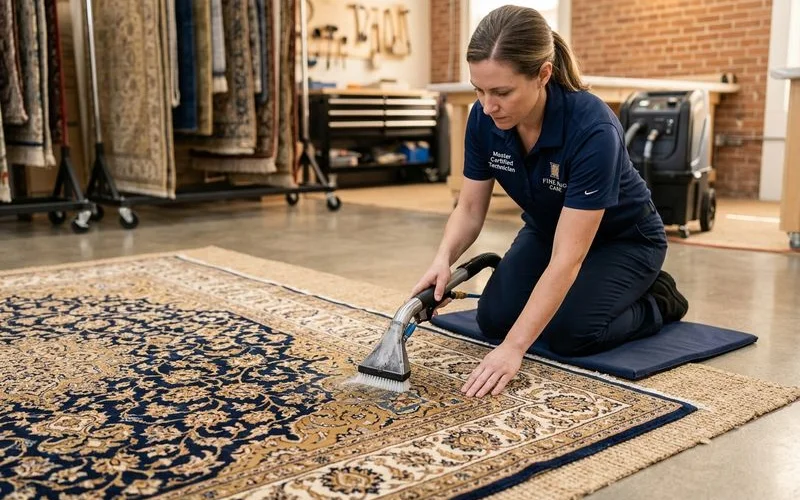
Specialized viscose cleaning protocols are fundamentally different from any standard rug washing method. People run into art silk rug problems because they assume standard carpet extraction works on delicate cellulose. We strictly adhere to the ANSI/IICRC S100 standard for professional cleaning of textile floor coverings to prevent fiber degradation.
This specialized approach requires highly trained technicians and controlled environments.
Specialized Cleaning Protocols
- Low-moisture only: Specialist surface methods, like dry compound extraction, clean without exposing the rug to the saturation that causes severe damage.
- Calibrated chemistry: Cleaning agents must be perfectly balanced for cellulosic fibers, completely avoiding harsh alkaline solutions.
- Browning treatment: Targeted chemical applications address mild lignin browning while respecting the fabric’s physical limits.
- Careful drying: Technicians use slow, controlled air movement to dry the rug instead of applying aggressive heat.
This methodical process requires significantly more time than cleaning a standard synthetic rug. A careful approach is the only way to protect the rug’s delicate texture and color. We refuse to take shortcuts because rapid processing guarantees permanent damage.
Honest expectations
The single most crucial service provided during a viscose consultation is realism. Some viscose damage is easily reversible, while other issues are permanent. We thoroughly inspect every rug and tell you exactly what to expect before starting any labor.
Viscose rugs typically only last two to three years in a busy home, compared to the decades of life you get from a quality wool rug. Understanding the limitations of this fabric saves everyone a lot of frustration. Our pre-inspection process categorizes damage into two distinct groups.
Damage Reversibility Guide
| Often Reversible | Often Not Reversible |
|---|---|
| Light surface dust and dry soiling | Heavy or set lignin browning |
| Mild traffic-lane discoloration | Crushed, matted, or stiffened texture |
| Recent water spots before browning sets | Color loss from high alkaline DIY sprays |
| Minor, non-acidic food spills | Structural fiber damage or tearing |
Setting realistic expectations prevents disappointment. A professional cleaning will vastly improve hygiene, but it cannot restore fibers that have physically degraded. We prioritize transparency so you can make an informed decision about your investment.
Should you even buy viscose
Owners frequently ask if the luxurious look of viscose is worth the constant maintenance hassle. The honest answer depends entirely on the specific room and your lifestyle. We believe that informed buyers make much better decorating decisions.
While retailers market these rugs as a luxury look for less, the hidden costs add up quickly. A viscose rug requires highly specialized, frequent cleaning and often needs complete replacement within a few years. Our clients often realize too late that a slightly more expensive wool rug is actually much cheaper over a ten-year period.
Placement Recommendations
Reasonable locations for viscose:
- Low-traffic formal sitting rooms
- Decorative display areas
- Bedroom accent rugs placed under the bed
- Spaces where you absolutely do not eat or drink
Risky locations for viscose:
- Family rooms shared with active kids and pets
- Dining rooms with constant chair movement and spill risks
- High-traffic entryways near exterior doors
- Any space with a water risk, including kitchens and bathrooms
Many viscose owners do not realize they purchased a delicate rayon rug until a disastrous spill occurs. If you are considering a beautiful “silk” rug, explicitly confirm the fiber content before you finalize the purchase. We strongly recommend choosing its placement very carefully to maximize its lifespan.
If you have a problematic viscose rug that needs expert care, bring it to our facility for a free pre-inspection. A thorough evaluation is the best way to understand your options. Our technicians will tell you exactly what is possible and what the realistic outcome looks like.
Related Service
Viscose & Art Silk Rug Cleaning
Low-moisture specialist cleaning for water-sensitive viscose / 'art silk' rugs, with realistic expectations about browning and texture.
Learn more about Viscose / Art SilkRelated Rug Care Guides
How to Clean a Viscose Rug Without Ruining It
Why wet cleaning ruins viscose, what you can safely do at home (blot only), and why low-moisture professional cleaning is the safe route for art silk.
Why Viscose Rugs Turn Yellow or Brown
Yellow or brown patches on a viscose rug are usually cellulosic browning from moisture. The causes, what's reversible, and how to prevent it.
Frequently Asked Questions
Why is viscose so much harder to clean than other fibers?
Can a viscose rug be fully restored to original condition?
Is 'bamboo silk' the same as viscose?
Have a Rug You'd Like Us to Look At?
Free pre-inspection, transparent quoting, and pickup across Las Vegas.
Get My Free Quote