Why Wool Rugs Need WoolSafe-Approved Cleaning
Wool's lanolin and pH sensitivity mean the wrong products cause felting and shrinkage. What WoolSafe approval means and why it protects your rug.
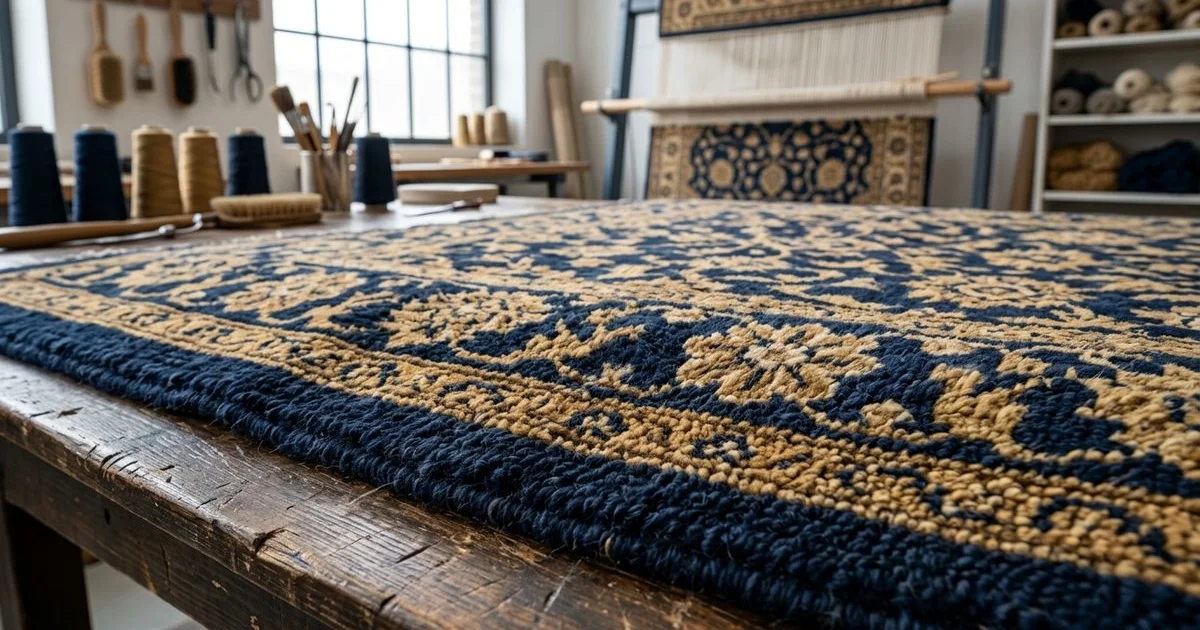
We know how frustrating it is to invest thousands in a beautiful centerpiece, only to see it ruined by a well-meaning cleaning attempt.
Wool is the most common fiber in fine area rugs, but it is highly sensitive to improper chemistry. The protective oils that give wool its character can be stripped in minutes by the wrong solutions.
We are dedicated to providing expert rug care and restoration services at Legacy Rug Cleaning through quality workmanship and exceptional customer service.
This focus on science and preservation is exactly why woolsafe rug cleaning matters. Let’s look at the data behind the certification, what it actually means for your investment, and how to verify your wool rug is safe to clean.
For a breakdown of our specific service, see our guide on Wool Rug Cleaning.
What WoolSafe is
WoolSafe is the international certification standard for wool-safe cleaning products and service providers. It was developed in response to widespread wool damage from cleaning products that were not formulated for the fiber.
We rely on this standard because it mandates rigorous laboratory testing. The WS 1000 protocol dictates strict performance and safety requirements for chemicals before they earn the mark.
Approved formulas must pass ISO testing methods to prove they do not cause color bleeding or yellowing.
Our technicians understand that this dual-path certification is the only way to guarantee safety. The certification has two distinct paths:
- Product approval. Manufacturers submit cleaning products to independent testing. Approved products demonstrably preserve wool’s structure, lanolin, and dye stability under real-world use.
- Service provider approval. Cleaning companies are audited on their use of approved products and their adherence to wool-safe methods. Approved providers have demonstrated consistent correct practice.
Why wool needs this protection
Natural wool fibers behave very differently from synthetic materials under stress. The combination of structural vulnerabilities makes proper chemistry essential.
We evaluate four critical factors before applying any cleaning solution to your piece. Each of these natural characteristics requires a highly controlled environment to prevent permanent deterioration.
The Importance of Lanolin
Wool fiber naturally contains lanolin, a protective wax that acts as a moisture barrier. This natural coating provides a 30 to 60 second window where spills will bead on the surface before absorbing.
Our cleaning process preserves this vital layer. Wrong chemistry strips lanolin completely, leaving the wool stiff, dry, and brittle.
pH Sensitivity and Dye Stability
Wool is a protein fiber that thrives in a mildly acidic environment. The raw fibers are typically dyed in baths with a pH between 4.5 and 5.5, which sets the color.
We avoid strong alkaline chemistry because anything with a pH above 8 attacks the protein structure and causes immediate dye bleeding. Many standard household and commercial carpet cleaning products are highly alkaline and will cause irreversible yellowing.
The Permanent Felting Risk
Wool fibers feature microscopic exterior scales that react aggressively to extreme conditions. These scales lock together tightly under the combination of heat, high alkalinity, and heavy agitation.
Our equipment is strictly calibrated to stay below the 150°F temperature threshold where this felting process begins. Once felted, the wool cannot be unfelted, making the shrinkage permanent and devastating.
| Vulnerability | The Chemical Trigger | The Permanent Result |
|---|---|---|
| Lanolin Loss | Harsh Detergents | Brittle, dry fibers |
| Protein Damage | pH levels above 8 | Color bleeding, yellowing |
| Felting | Heat over 150°F + Agitation | Irreversible shrinkage |
What WoolSafe approval doesn’t mean
The certification guarantees a safe baseline, but it is not a magic shield against every type of damage. Some stains permanently alter the fiber structure regardless of the cleaning method used.
We often see heavy oil-based stains or strong dyes like curry and wine permanently bond with the protein fiber. These substances bypass natural resistance and require highly specialized correction beyond standard washing.
Limitations of the Standard
The credential also does not mean the standard cleaning is automatically the best choice for your specific rug. Antiques, kilims, and silk-blend rugs demand customized care protocols that go far beyond the baseline WoolSafe standard.
Our restoration specialists evaluate the age and weave tension before finalizing a treatment plan. A standard wash might be perfectly safe chemically but too aggressive mechanically for a 100 year old textile.
Pricing and Value
It does not mean the price will be the lowest in town. Specialist work requires calibrated water temperatures, premium buffered detergents, and controlled drying environments.
We invest in these precision tools because generic steam cleaning is too risky for fine textiles. What the approval actually means is simple: the products and methods used will not damage the wool itself. That is the essential baseline a fine rug needs to survive a century of use.
How we apply WoolSafe principles
Executing a safe wash requires more than just buying the right soap. It requires a facility designed specifically around fiber preservation.
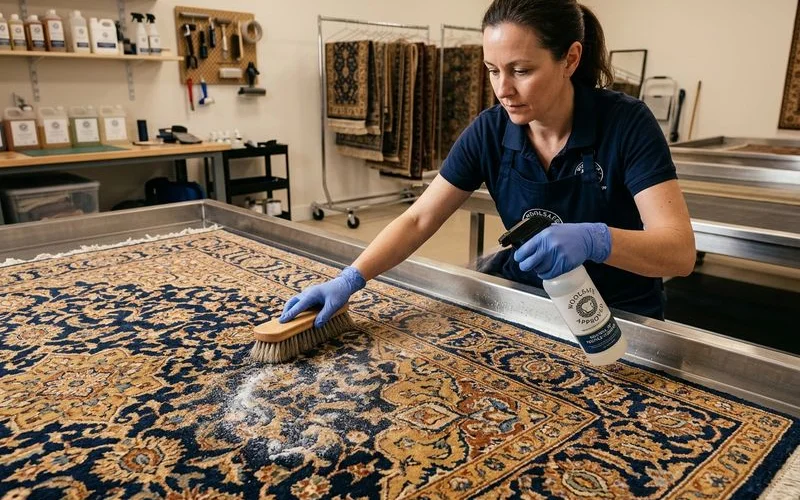
We apply the core wool rug cleaning method across four distinct stages of the washing process. Every step is carefully monitored to eliminate the variables that cause shrinkage or color loss.
Our Four-Step Preservation Process
- Approved chemistry: All cleaning products used on your wool are WoolSafe approved or equivalent. Household detergents and aggressive alkaline builders are strictly banned from the wash floor.
- pH-balanced wash: Each bath is calibrated to the rug’s specific dye stability. We maintain a neutral to slightly acidic pH environment and never apply alkaline solutions.
- Gentle agitation: Hand washing techniques are adjusted based on the textile’s age and current condition. Heavy rotary scrubbing is never used on natural fibers.
- Controlled drying: Vertical drying with regulated air flow prevents the rapid moisture loss that causes shrinkage. We maintain specific humidity levels in the drying room to ensure the fibers dry soft and flexible.
Handling tough spots requires a slightly different approach within these strict safety parameters. For specific stain handling within these protocols, see removing stains from wool rugs.
What you can do at home
Daily maintenance is the most effective way to protect your investment between professional washings. Abrasive dry soil causes microscopic damage to the fibers every time you walk across the room.
We recommend a few specific practices to extend the life of your textiles. Simple routine care prevents the need for aggressive restoration down the line.
Safe Home Maintenance Practices
- Vacuum gently and regularly: Turn the beater bar off or use a suction-only setting to prevent pulling. Our technicians frequently see permanent damage caused by aggressive rotating brushes pulling at the woven loops.
- Address spills immediately: Blot with a dry, white towel first, then a damp cloth if needed.
- Avoid popular chemical spotters: Never use high-alkaline foams like OxiClean or Resolve, as their oxygen bleach strips color.
- Manage room humidity: Keep the indoor climate stable to prevent the fibers from drying out or absorbing excess moisture.
The Danger of Household Spotters
Do not apply commercial spot removers without explicit professional guidance.
We strongly advise against using popular oxygenated products on natural textiles. High-alkaline foam cleaners contain oxygen bleach that will permanently strip the color and dissolve the lanolin.
Extreme dry heat or heavy ambient humidity will both stress the wool’s cellular structure over time.
The honest summary
If your wool rug has been cleaned by a non-WoolSafe-approved provider, especially with steam extraction or strong household chemistry, it may already have some lanolin loss or fiber damage. Specialist cleaning can often recover some of that lost condition. We invite you to bring your piece in for a comprehensive free pre-inspection.
The assessment process identifies any prior chemical damage so you know exactly what to expect. If you are choosing where to clean a wool rug, the WoolSafe Approved Service Provider credential is a meaningful indicator of competence.
It is not the only thing that matters, but it is a highly useful filter. Our team will recommend the safest approach based on the specific needs of your textile.
Related Service
Wool Rug Cleaning
WoolSafe-approved cleaning that preserves lanolin and protects wool from felting, shrinkage, and stain damage.
Learn more about Wool RugsRelated Rug Care Guides
Frequently Asked Questions
What does WoolSafe approved actually mean?
Can wool rugs really shrink when cleaned?
Why does wool need special care?
Have a Rug You'd Like Us to Look At?
Free pre-inspection, transparent quoting, and pickup across Las Vegas.
Get My Free Quote