Hand-Washing vs. In-Home Steam Cleaning for Fine Rugs
Why hot-water extraction with detergent risks color bleeding, shrinkage, and dry rot in fine rugs, and when steam is acceptable vs full submersion.
We see the aftermath of bad cleaning advice practically every week in our shop. A well-meaning homeowner brings in a beautiful piece that was “professionally” cleaned right in their living room. Unfortunately, they arrive with a textile where colors have bled or the shape is permanently distorted.
Owners of fine rugs are sometimes told that in-home steam cleaning, or hot-water extraction, is perfectly fine.
Our experience shows that treating a hand-knotted piece like a glued-down synthetic carpet is a massive mistake. It’s important to understand what’s actually happening, and why specialist plants exist for a reason.
Let’s look at the data behind rug hand washing vs steam cleaning, what actually goes wrong, and how to safely handle these textiles.
For the proper alternative, see Oriental & Persian Rug Cleaning.
How in-home steam cleaning works
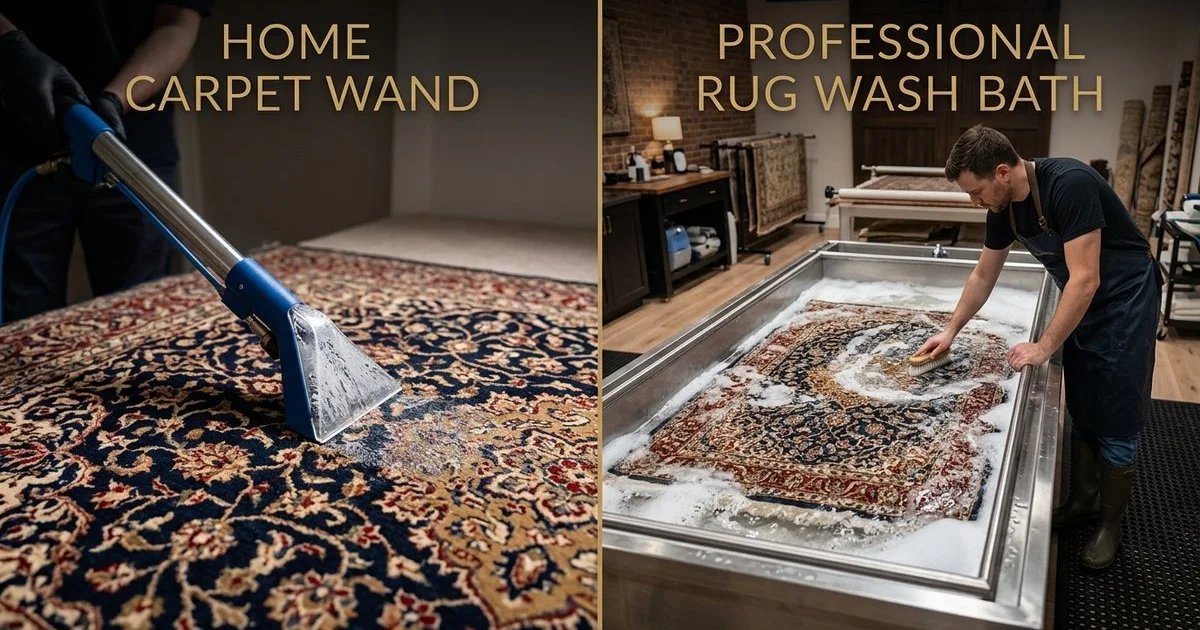
In-home steam cleaning works by using a carpet extractor to spray extremely hot water and detergent under high pressure directly into the fibers, immediately followed by heavy vacuum suction. The method is designed exclusively for synthetic wall-to-wall carpet glued to a subfloor in a typical residential setting.
The problems for fine rugs are systemic and immediate.
- Dangerous Heat Levels: Steam extractors hit 150 to 200 degrees Fahrenheit, but the protective lanolin in a wool piece starts melting away at just 104 degrees.
- Destructive Chemistry: Standard carpet shampoos have a highly alkaline pH of 9.0 to 12.0, whereas natural fibers require a slightly acidic 4.5 to 6.0 pH to remain strong.
- Incomplete Extraction: Woven textiles hold onto water tightly, leaving the cotton foundation soaked long after the vacuum passes over it.
Our team routinely sees the structural damage caused by this mismatched process. The extraction machine simply leaves too much dangerous moisture trapped deep inside the foundation.
The drying phase is completely uncontrolled. This means the textile simply sits damp on your floor. This vulnerable state directly leads to dye migration, mildew growth, and severe shrinkage.
What goes wrong on fine rugs
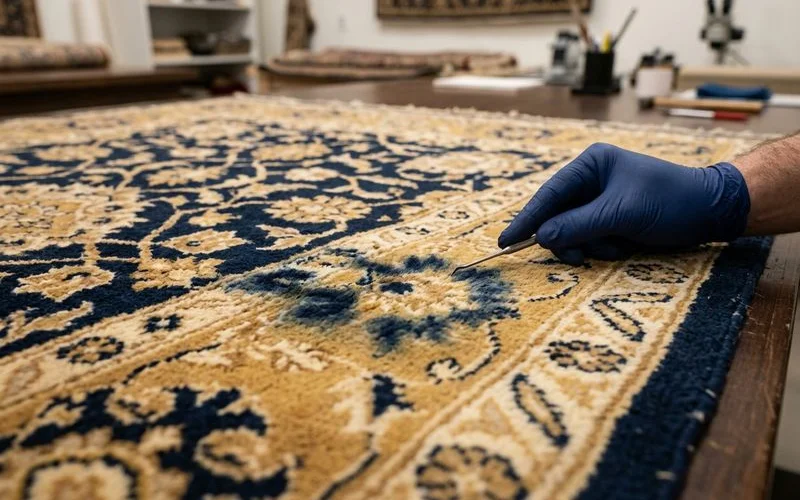
When you steam clean wool rug fibers or delicate silks, the most common damage falls into four distinct categories. The combination of intense heat, aggressive chemistry, and lingering moisture physically alters the structure of the piece.
Permanent Color Bleeding
Hot water mixed with highly alkaline detergents breaks down the bonds holding natural dyes in place. The high pH levels cause the chemical salt bridges in the keratin to dissociate. This reaction allows the blue dye from a border to bleed uncontrollably into the cream of an adjacent field. The migration is often completely permanent.
Severe Shrinkage and Warping
Wool combined with high heat and uncontrolled room-temperature drying causes the underlying cotton foundation to shrink unevenly. A standard room-sized wool piece can lose several inches of length after a single improper machine wash. The textile no longer lies flat, the corners curl upward, and the overall rectangular shape distorts.
Foundation Dry Rot
Water that does not fully extract sits stagnant in the woven foundation. This is especially destructive under heavy furniture put back into the room too soon. Over a period of weeks, the damp cotton foundation rots. The material eventually develops cracking, weak areas that literally tear apart when moved.
Sticky Detergent Residue
Carpet extractors leave a heavy layer of detergent residue trapped deep inside the pile. This soapy film acts like a magnet, attracting fresh dirt and soil much faster than before. The entire piece will quickly feel sticky to the touch and look dull within months.
How rug hand washing vs steam cleaning is different
Submersion hand-washing is fundamentally a different process because it cleans the textile thoroughly from the foundation up using cool, pH-balanced water. Each piece goes into its own calibrated bath, ensuring delicate fibers are never exposed to the harsh conditions of a communal tub or a high-pressure wand.
Our team at Legacy Rug Cleaning is dedicated to providing expert care and restoration services through quality workmanship. This specialized plant process protects your investment through several specific steps:
- Custom Chemistry: The wash bath is precisely pH-balanced to a gentle 5.5 to 8.0, matching the exact needs of the specific dye and fiber type.
- Cool Water Bath: Temperatures stay well below the 100-degree danger zone to preserve the natural lanolin.
- Gentle Agitation: Master Certified specialists work the wash by hand to lift deep-set dirt without the abrasive friction of a machine beater bar.
- Complete Submersion Rinsing: The entire piece is fully submerged, allowing fresh water to flush out every trace of soil and soap.
Drying happens vertically in a specialized, controlled-drying tower. These enclosed rooms feature tightly regulated humidity levels and massive airflow to dry the heavy cotton foundation rapidly.
The final result is a beautiful piece with no sticky residue, zero warping, and absolutely no dye migration. See how Old-World hand-washing works for the complete step-by-step process.
When steam is acceptable
Steam is acceptable when you are cleaning durable, low-value synthetic area rugs where the risk-reward ratio makes financial sense. You can definitely use hot water extraction on an inexpensive polyester runner in a basement, for example.
Can you steam clean an area rug made of modern plastics? Absolutely. Synthetic fibers like polypropylene and olefin don’t absorb moisture like natural fibers do. They also tolerate high heat without shrinking.
| Feature | Synthetic Rugs (Polypropylene/Nylon) | Natural Rugs (Wool/Silk/Cotton) |
|---|---|---|
| Heat Tolerance | High (Resists steam damage) | Low (Lanolin melts at 104°F) |
| Moisture Absorption | Low (Dries quickly) | High (Traps water in foundation) |
| Alkaline Resistance | High (Tolerates standard shampoos) | Low (Causes dye bleeding & rot) |
We always recommend professional cleaning to extract the maximum amount of dirty water. The consequences of an in-home extraction are simply much lower for these synthetic materials. Standard carpet cleaning is highly cost-effective for these pieces, often running just fractions of the cost of a full submersion wash.
However, this aggressive method is never appropriate for investment pieces. You should immediately rule out steam extraction for:
- Hand-knotted Persian, Oriental, or tribal rugs
- Antique rugs of any construction
- Pure wool rugs
- Silk or viscose rugs
- Natural-fiber rugs (sisal, jute, cowhide)
- Rugs with natural dyes
- Any textile you have spent meaningful money on
What to ask before hiring anyone
Before hiring a company, you must explicitly ask if they will clean the piece in your home with an extraction wand, or if they will transport it to a dedicated off-site washing plant. If the answer is the former, especially on a fine textile, you need to walk away immediately.
Our industry is full of standard carpet cleaners who advertise specialized textile care without owning the proper facilities. To protect your investment, you should ask these three specific questions:
- Do you use a submersion pit or just a floor wand? A true specialist will have a dedicated wash pit for full submersion cleaning.
- What pH level is your cleaning solution? If they don’t immediately answer that they use a neutral or slightly acidic wash (around 4.5 to 8.0 pH), their chemicals will strip the lanolin.
- How do you control the drying process? Professional plants use vertical hanging towers with industrial dehumidifiers, not just a fan blowing across a living room floor.
The right answer for any rug worth keeping is off-site care. It belongs in a specialist plant, receiving individual hand-washing from trained experts.
Conclusion
Understanding the data behind rug hand washing vs steam cleaning comes down to respecting the natural chemistry of your materials. High heat and harsh alkaline chemicals will permanently damage these delicate fibers, while a careful, fully submerged wash preserves their beauty and structural integrity for generations.
If you have a hand-knotted piece that is starting to look dull, do not risk its future with a standard hot-water carpet wand.
Reach out to a certified professional washing plant today to schedule a proper, safe, and controlled cleaning.
Related Rug Care Guides
How Much Does Area Rug Cleaning Cost in Nevada?
Nevada area rug cleaning runs roughly $4-$12 per sq ft by fiber and condition. What drives price (urine, size, repairs) and what an estimate includes.
Hand-Knotted vs. Tufted Rugs: What Can Be Cleaned & Restored
Tufted rugs use latex backing that degrades and off-gasses; hand-knotted rugs last generations. What each can take and when restoration is worth it.
How Often Should You Professionally Clean an Area Rug?
Most area rugs need professional cleaning every 1-3 years, sooner with pets, kids, or heavy traffic. Fiber-specific guidance and between-wash care.
How Old-World Area Rug Hand-Washing Works
The Old-World submersion hand-wash step by step, dry dusting, an individual pH-balanced bath, controlled drying, and why it beats machine cleaning.
Frequently Asked Questions
Can I steam-clean my wool rug?
Is steam ever okay for rugs?
Why do carpet cleaners offer rug cleaning?
Have a Rug You'd Like Us to Look At?
Free pre-inspection, transparent quoting, and pickup across Las Vegas.
Get My Free Quote