
How to Clean a Viscose Rug Without Ruining It
Why wet cleaning ruins viscose, what you can safely do at home (blot only), and why low-moisture professional cleaning is the safe route for art silk.
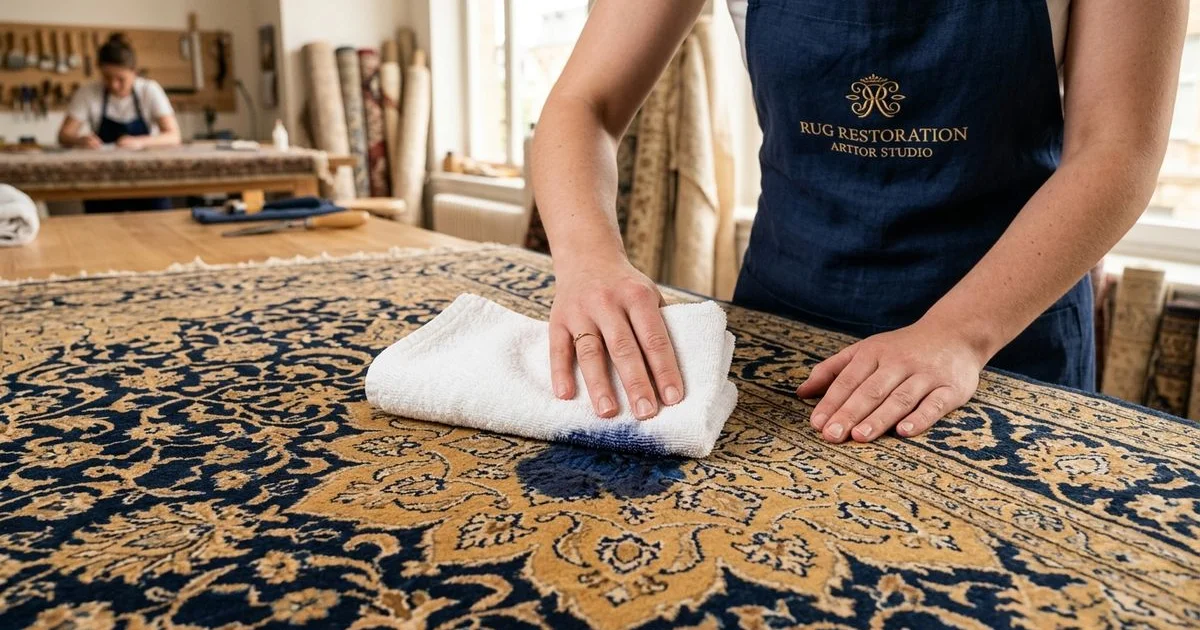
From what I have seen at Legacy Rug Cleaning over the years, handling water incorrectly is the fastest way to ruin a beautiful piece. Owners constantly ask how to clean viscose rug without ruining it, and the answer always starts with keeping it dry.
That is exactly why water is the absolute enemy of this material.
We regularly see the aftermath of well-intentioned DIY attempts. This article breaks down exactly why cellulose fibers react poorly to moisture and outlines the precise steps you need to take instead.
For a complete look at the specialized approach, see the guide on Viscose & Art Silk Rug Cleaning.
The fundamental rule: don’t use water
Water acts as a destructive trigger that degrades the structural integrity of the fibers. You must avoid using water entirely because viscose loses 50 to 80 percent of its tensile strength when it gets wet.
We constantly remind clients that moisture causes immediate physical changes to the cellulose structure. The strands essentially turn into a weak paper pulp.
This extreme vulnerability leads to several common issues:
- Browning halos around water spots
- Texture loss in wet areas
- Color migration
- Foundation weakening
Natural silk fibers can withstand roughly 2,000 stretches before breaking. Viscose fibers can only handle around 70 stretches, making them incredibly fragile even before moisture is introduced.
Even a small amount of tap water blotted with a damp cloth often makes the situation worse than the original spill.
Our recommendation for at-home protocol focuses entirely on dry intervention. If the spill requires anything wet, call a specialist immediately.
To put this fragility into perspective, compare how different materials react to moisture.
| Fiber Type | Strength Change When Wet | Sensitivity to High pH |
|---|---|---|
| Viscose (Art Silk) | Loses 50% to 80% strength | High (Scorches easily) |
| Natural Wool | Loses 10% to 20% strength | Moderate |
| Cotton | Gains 10% to 20% strength | Low |
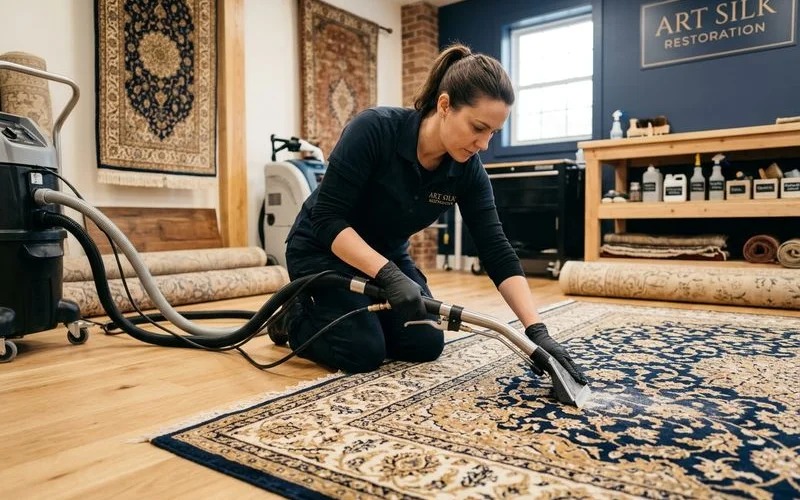
What you can safely do at home: how to clean viscose rug without ruining it
Your safe at-home maintenance is strictly limited to dry methods. You can gently sweep the surface or blot up a fresh viscose rug spill with a dry white cloth.
We highly recommend using a suction-only setting on your vacuum. A premium canister model like a Miele, operated entirely without the rotating beater bar, works perfectly to clean art silk rug fibers safely.
Here is the complete list of safe at-home actions:
- Vacuum gently and often. Suction-only, no beater bar. Regular dry vacuuming removes loose soil before it sets in.
- Blot dry spills immediately. A clean, dry, white cloth is required. Press, lift to a dry section, repeat. Never rub.
- Address dry soil immediately. Crumbs, dust, and dry food require a gentle brush or suction to remove safely.
What you should never do
You should never apply any liquid or household chemical to this fabric. Those products will permanently stain or melt the delicate cellulose.
We often receive frantic calls after an owner uses a standard grocery store carpet shampoo. These commercial carpet extractors and stain removers are calibrated for synthetic nylon carpets. Their high pH levels, often testing above 9, chemically scorch the low-pH sensitive fibers.
Please avoid every single one of these common mistakes:
- Don’t apply water. Not a damp cloth, not water-based products, not anything wet.
- Don’t apply household cleaners. Household staples like dish soap or vinegar ruin the reactive dyes instantly.
- Don’t apply commercial carpet cleaners or stain removers. They are calibrated for synthetic carpet and damage these delicate threads.
- Don’t use a hairdryer or any heat. Heat compounds the damage and sets the stain permanently.
- Don’t rent a carpet extractor. This is one of the most common ways beautiful floor coverings are destroyed.
- Don’t try to “clean” set stains yourself. You will only push the soil deeper into the backing.
What happens when you call a specialist
A professional applies a fundamentally low-moisture protocol designed specifically for reactive cellulose. This involves careful dry soil extraction followed by highly controlled acidic spot treatments.
Our process carefully limits moisture to prevent saturating the foundation of the rug. Standard hot water extraction ruins these items, so specialized chemistry is mandatory.
The professional sequence looks like this:
- Pre-inspection. We confirm the exact fiber blend, assess existing damage, and document conditions before any treatment.
- Surface dry-soil removal. Gentle specialist methods remove embedded dry soil that typical household vacuuming simply cannot reach.
- Low-moisture spot treatment. Targeted treatment utilizes specialist chemistry calibrated specifically to cellulose. The technician uses just enough moisture to clean, never enough to saturate.
- Browning treatment (if applicable). Specialist chemistry involving mild acidic solutions addresses lignin browning, with honest expectations provided about how much improvement is realistic.
- Controlled drying. Slow drying with regulated airflow prevents new water spots from developing during the process itself.
When viscose can’t be saved
Some damage crosses the threshold of professional reversal, requiring you to replace the piece entirely. Saturation that causes the fibers to mat into a stiff, cardboard-like texture is usually permanent.
We evaluate the financial sense of restoration during the initial assessment. The US market price for these items in 2026 ranges anywhere from 300 dollars for basic synthetic blends up to 5000 dollars for premium designer pieces. Paying for extensive repair on a severely compromised budget item rarely makes sense.
You should expect a replacement recommendation if you have:
- Widespread browning from prior water exposure
- Crushed or matted texture from total saturation
- Severe color migration from improper cleaning attempts
- Structural foundation damage like dry rot
Our team promises complete transparency if the piece is past the point of saving. Sometimes the best advice is knowing when to let it go.
Cleaning frequency
You should schedule a professional treatment every 12 to 18 months for average household use. Low-traffic decorative pieces can stretch this interval to every two or three years.
Our technicians align their recommendations with the Institute of Inspection, Cleaning and Restoration Certification (IICRC) guidelines for delicate fabrics. Each wash puts a small amount of unavoidable mechanical stress on the weakened fibers.
The IICRC standard emphasizes that semi-synthetic cellulose fibers require highly controlled, low-frequency washing schedules to prevent premature degradation.
Spot maintenance works well for fresh incidents in between professional visits.
If your home involves heavy foot traffic, active pets, or frequent entertaining, this material might become a source of frustration. The cumulative effect of repeated specialist cleaning takes a toll over the years.
What about prevention
The smartest strategy involves placing the rug in a safe, low-traffic environment to stop accidents before they happen. You should treat it more like a delicate wall hanging than a heavy-duty floor mat.
We always suggest placing a premium, solid felt rug pad underneath the piece to minimize friction against hard floors.
Follow these placement and protection rules:
- Place the item in low-traffic, low-risk spaces.
- Don’t eat or drink near it.
- Avoid placement in entries or high-spill areas.
- Address fresh dry spills immediately.
- Call a specialist before any wet spill becomes a bigger problem.
For viscose discoloration specifically, such as yellowing or browning that develops over time, see why viscose rugs turn yellow.
The honest bottom line
This material is a beautiful but demanding fabric that punishes traditional scrubbing. The owners who accept these strict limitations will enjoy their investment for years.
Our team routinely rescues these pieces from well-meaning DIY mistakes. Treating this fabric like standard nylon or wool guarantees a difficult, expensive reversal process.
If you have a spill that needs care, the right first step is calling a specialist. Learning how to clean viscose rug without ruining it means knowing exactly when to step away and ask for professional help.
Related Service
Viscose & Art Silk Rug Cleaning
Low-moisture specialist cleaning for water-sensitive viscose / 'art silk' rugs, with realistic expectations about browning and texture.
Learn more about Viscose / Art SilkRelated Rug Care Guides
Why Viscose ('Art Silk') Rugs Are So Hard to Clean
Viscose weakens, browns, and loses texture when wet, the trickiest rug fiber. Why DIY ruins it and why specialists are essential.
Why Viscose Rugs Turn Yellow or Brown
Yellow or brown patches on a viscose rug are usually cellulosic browning from moisture. The causes, what's reversible, and how to prevent it.
Frequently Asked Questions
Can I clean my viscose rug with water?
How do I handle a spill on a viscose rug?
Can I use vinegar on viscose?
Have a Rug You'd Like Us to Look At?
Free pre-inspection, transparent quoting, and pickup across Las Vegas.
Get My Free Quote