
Why Viscose Rugs Turn Yellow or Brown
Yellow or brown patches on a viscose rug are usually cellulosic browning from moisture. The causes, what's reversible, and how to prevent it.
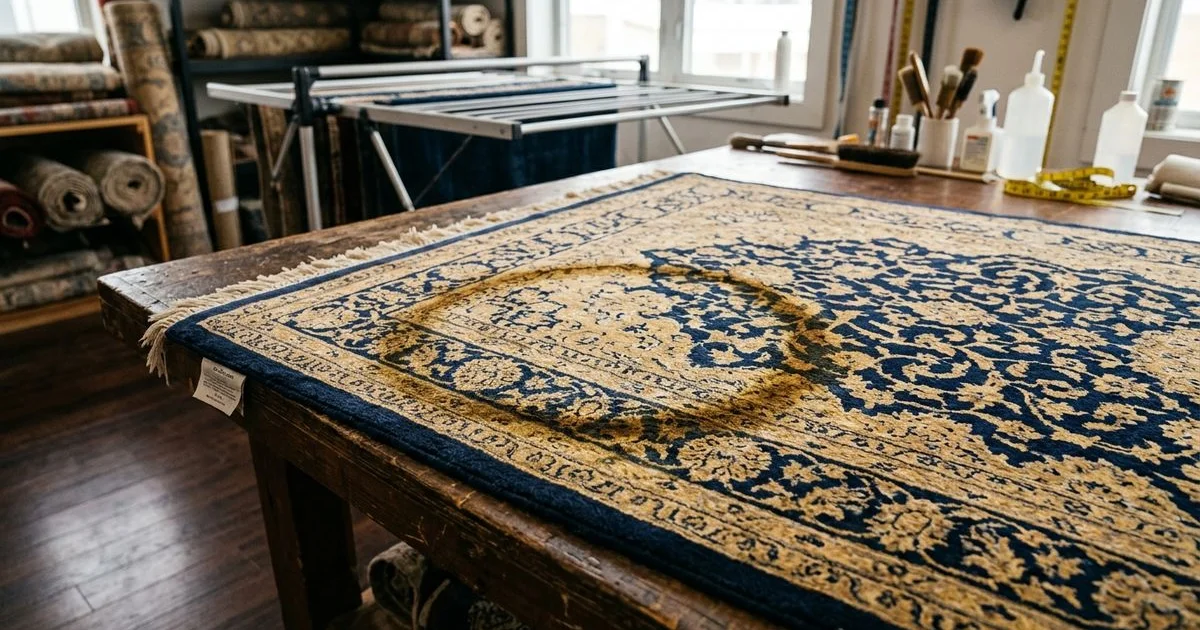
If you have noticed a small water mark on your luxury rug slowly turn into a yellow or brown halo over a few days, you are witnessing a chemical reaction known as cellulosic browning. We see this exact issue in our Las Vegas restoration shop almost every single week.
It represents one of the most frustrating problems for high-end floor coverings, but it is also highly preventable. The underlying cause comes down to the delicate nature of regenerated plant fibers and how they react to simple moisture.
Our comprehensive guide to Viscose & Art Silk Rug Cleaning covers the broader service options. Today, let us look at the data behind a viscose rug turning yellow and explore a few practical ways to respond.
What causes browning
Moisture dissolves the residual natural sugars and lignin hidden inside plant-based fibers. These elements then oxidize as they dry. We frequently explain this to clients by comparing it to an apple turning brown after you cut it open.
Viscose consists of 100% regenerated cellulose, typically processed from raw wood pulp or bamboo. Manufacturing processes leave residual lignin from that original plant material trapped inside the delicate fiber.
“When even a few drops of water touch viscose, the fiber loses up to 50% of its structural strength while immediately triggering the oxidation process.”
Our technicians use this fact to explain why gentle handling remains mandatory. The moisture forces the dormant lignin to dissolve slightly and migrate to the surface of the pile.
As that wet spot finally dries, the displaced lignin oxidizes upon contact with the air. This chemical reaction produces the characteristic stain associated with a viscose rug turning yellow. We always remind owners that this process simply follows the rules of basic chemistry.
The equation stays consistent: cellulose with residual lignin plus moisture plus drying time equals visible discoloration.
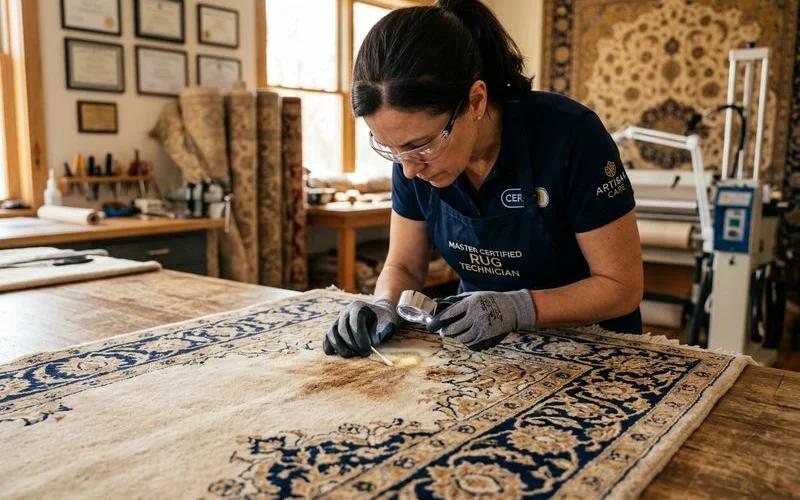
Where browning shows up
This yellow or brown discoloration typically appears anywhere the rug absorbs moisture. Our repair logs show that damage ranges from tiny viscose rug brown spots to massive stains across the entire foundation.
The exact pattern usually tells a very specific story about the original liquid exposure. Here are the most common scenarios where this damage occurs:
- Around water spots: A classic halo pattern usually forms a dark brown ring exactly where a cup of water sat or a pet spilled a bowl.
- In areas that were spot cleaned: A small wine spill blotted with a damp cloth often produces a secondary brown area much larger than the original stain.
- Where the rug got wet from below: Bathroom rugs absorb heavy humidity, while living room pieces might soak up condensation from a nearby potted plant.
- Across larger areas after improper cleaning: A rug treated with at-home steam cleaners often shows widespread, irreversible browning across the entire surface.
We strongly advise against using rental carpet cleaning machines on these delicate textiles for this exact reason. The heavy moisture output guarantees a poor outcome.
What’s reversible
Fresh browning that occurred within the last week often responds very well to specialized treatments. Our success rate drops significantly once those oxidized sugars permanently bond to the fiber dyes.
The timeframe and severity of the incident dictate the realistic outcome. We use the following industry benchmarks to set expectations before beginning any restoration work.
This table outlines the typical prognosis based on the age of the stain:
| Browning Severity | Timeframe | Expected Outcome |
|---|---|---|
| Fresh | Within 1 to 7 days | High probability of significant reduction or complete reversal. |
| Mild (Localized) | 1 to 3 weeks | Visible improvement is likely, but faint yellowing may remain. |
| Set-In | 1 to 6 months | Extremely difficult to treat; partial fading is the best-case scenario. |
| Heavy (Widespread) | 6+ months | Usually permanent; the oxidized chemistry has completely altered the fibers. |
You should treat any new moisture event as a time-sensitive emergency. Our best results always happen when clients call us the exact same day the spill occurs. Delaying treatment allows the lignin migration to set permanently into the core of the textile.
How specialist treatment works
Professional correction requires a strict, low-moisture protocol using targeted acidic chemistry to reverse the oxidation process. We follow the exact guidelines laid out in the 2026 IICRC S100 standard for professional textile floor covering cleaning.
This industry protocol strictly prohibits high-alkaline shampoos on cellulosic materials. Standard tap water sits at a neutral pH of 7, while many common household cleaners register at a highly alkaline pH of 9 or higher.
Our specialists utilize custom formulas calibrated to a specific acidic pH level of 3 to 5. This precise acidity represents the only reliable way to break down the oxidized residue without stripping the actual rug dyes.
- Lifting mobile lignin: The process starts by gently suspending any un-oxidized sugars before they can spread further.
- Treating oxidized residue: Specific acidic conditioning agents target and neutralize the visible yellow-brown staining.
- Addressing dye migration: The formula stabilizes surrounding colors to prevent secondary bleeding during the correction.
- Executing low-moisture handling: Every step utilizes minimal fluid to prevent triggering a brand new cycle of browning.
Drying is then mechanically paced using specialized air movers to accelerate evaporation. We provide honest, straightforward assessments during the initial pre-inspection phase. While noticeable improvement is usually possible, achieving a complete reversal often is not.
How to prevent browning
The absolute best way to prevent browning is to keep the rug entirely dry and avoid placing it in any high-moisture environments. We remind owners that luxury floor coverings like these often cost upwards of $50 to $150 per square foot.
Protecting that investment requires treating the piece more like a delicate silk garment than a traditional wool carpet. Here are the strict operational rules for keeping your investment safe from water damage:
- Address fresh spills immediately: Grab a clean, completely dry, white cotton towel. Press it firmly into the spill, but absolutely do not rub or scrub the fibers.
- Never apply water: You must avoid blotting spills with a damp cloth, using a lightly damp mop, or attempting any water-based spot treatment.
- Avoid risky placements: Viscose placed in kitchens, dining rooms, bathrooms, or unsealed entryways will inevitably suffer a water incident.
- Skip the household carpet cleaners: Popular DIY remedies like baking soda or professional steam extraction both carry high moisture levels that guarantee instant browning.
- Manage room climate: Humidifiers and nearby plumbing fixtures pose an ongoing risk to these highly absorbent textiles.
Taking proactive measures will significantly extend the lifespan of your floor covering. We outline the complete, step-by-step maintenance protocol in our dedicated resource on how to clean a viscose rug without ruining it. Reviewing those guidelines will help you avoid the most common maintenance disasters.
When discoloration appears slowly
Gradual, rug-wide yellowing happens when the piece absorbs ambient moisture from the air over several years. Our local data highlights why this is such a persistent issue for certain homes.
The average indoor humidity in a dry climate like Las Vegas sits around 20 to 30 percent. However, placing one of these rugs in a master bathroom exposes it to localized humidity spikes that frequently exceed 80 percent during a hot shower.
“Viscose fibers act like giant sponges, continuously pulling heavy moisture directly from the bathroom or kitchen air.”
We regularly see this cumulative exposure cause subtle yellowing across the entire piece, rather than just in one isolated spot. Treating this ambient art silk rug discoloration is incredibly difficult because the chemical reaction is everywhere.
Our team provides a very transparent evaluation of what specialist chemistry can actually achieve in these severe cases. Sometimes the realistic, hard truth is simply that the piece has reached its absolute limit for restoration.
The honest reality
Viscose remains the most fragile, browning-prone textile used in modern floor coverings today. We speak with many frustrated owners who simply did not realize how vulnerable these fibers were until an accident happened.
The operational rule for these beautiful pieces is completely uncompromising: never let them get wet. If moisture does breach the fibers, you must blot the area completely dry and immediately reach out for professional help.
Our specialized team is ready to assess the damage and provide the safest possible intervention. If you are dealing with a viscose rug turning yellow, the faster you secure expert assistance, the higher the chances your investment will survive.
Related Service
Viscose & Art Silk Rug Cleaning
Low-moisture specialist cleaning for water-sensitive viscose / 'art silk' rugs, with realistic expectations about browning and texture.
Learn more about Viscose / Art SilkRelated Rug Care Guides
How to Clean a Viscose Rug Without Ruining It
Why wet cleaning ruins viscose, what you can safely do at home (blot only), and why low-moisture professional cleaning is the safe route for art silk.
Why Viscose ('Art Silk') Rugs Are So Hard to Clean
Viscose weakens, browns, and loses texture when wet, the trickiest rug fiber. Why DIY ruins it and why specialists are essential.
Frequently Asked Questions
Why did my viscose rug turn yellow in that spot?
Can yellowing on viscose be removed?
How do I prevent viscose discoloration?
Have a Rug You'd Like Us to Look At?
Free pre-inspection, transparent quoting, and pickup across Las Vegas.
Get My Free Quote