
How to Prepare a Rug for Long-Term Storage
Store a rug the right way, clean first, dry fully, wrap breathably (never plastic-sealed), elevate, control climate, and check periodically.
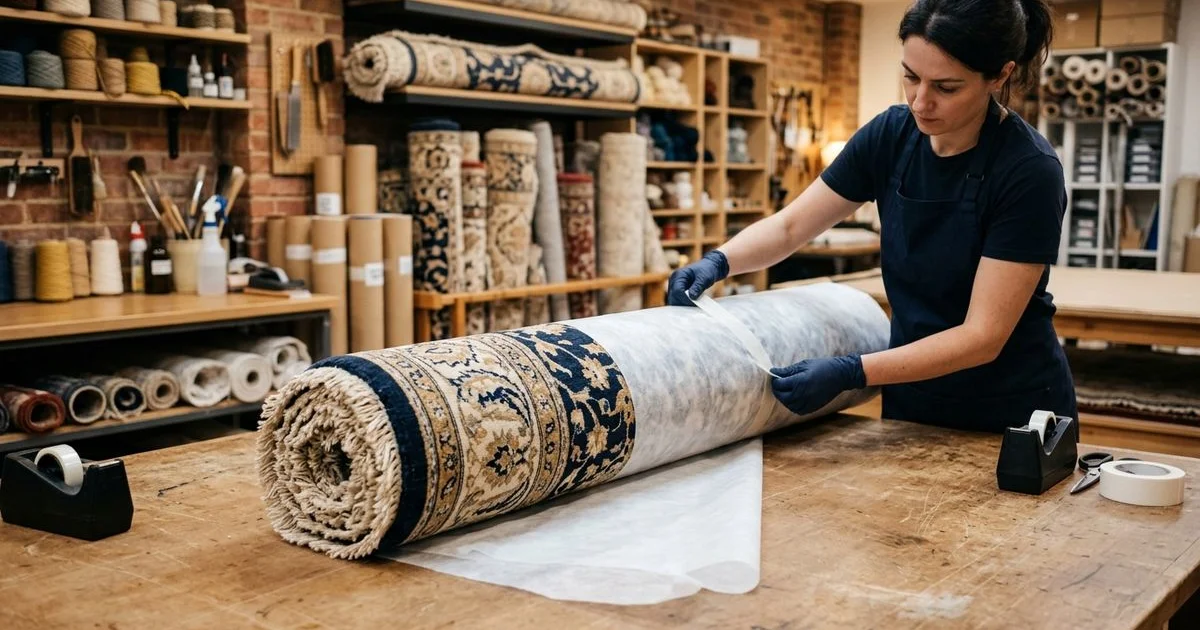
Learning how to store area rug long term requires more than just tossing it in the attic. You probably know that natural fibers are highly sensitive to their environment. Trapping even a tiny amount of moisture inside a plastic cover can destroy thousands of dollars of hand-knotted wool in just a few months.
Our specialists at Legacy Rug Cleaning see the aftermath of these simple mistakes far too often. You can easily avoid them by following a few strict protocols. For the direct service, you can check out our options for Rug Storage & Wrapping.
Let’s look at the seven specific preparation steps you need to follow. Our team will break down the exact materials to use and show you what to avoid completely. This guide provides everything you need to know.
Step 1: Clean before storing
You must completely clean your rug before placing it in storage. Storing a dirty rug provides an absolute feast for pests.
Common organic attractants include:
- Microscopic skin cells and oils
- Deeply embedded pet dander
- Micro-crumbs from food spills
We strongly recommend a professional clean before you pack the item away. This process removes deep-seated attractants that a standard vacuum misses. Your rug enters storage in its absolute best condition.
If a rug is already sitting in a storage unit uncleaned, pull it out immediately. The cost of cleaning it now is always worth the investment to prevent permanent fiber damage.
Step 2: Dry completely
Your rug must be 100% dry down to the foundation core before wrapping. Any trapped moisture will create mold and mildew during the storage period. This hidden decay often happens invisibly until major rotting occurs.
Pro Tip: Wool naturally holds up to 20% of its weight in water while still feeling completely dry to the touch. Professional controlled drying ensures the fibers reach a safe, neutral moisture level.
We advise against attempting at-home washing before storage for fine rugs. If you do spot-clean a synthetic piece, you must wait a minimum of 48 hours in very dry indoor conditions before you even consider wrapping it.
Step 3: Roll, don’t fold
Always roll your rugs tightly for storage to avoid permanent foundation damage. Folding creates sharp, permanent creases that weaken the backing along the fold lines. Those weakened creases become pressure points where long-term damage accumulates quickly.
We suggest using a technique called “reverse rolling” for optimal protection. This outward-facing pile puts significantly less stress on the stiff backing materials.
Follow these steps for a perfect roll:
- Place the rug face down on a clean surface.
- Insert a sturdy cardboard tube or PVC pipe at the core for support.
- Roll tightly with the pile facing outward.
- Tie the cylinder with natural cotton twine, never sticky tape.
Step 4: Wrap in breathable material
You must use a breathable wrapping material to protect the rolled rug from dust and pests. Plastic wrap is the single worst choice you can make. Plastic traps ambient humidity, creating a greenhouse effect that promotes rapid mildew growth.
Our team relies on specific professional-grade covers to ensure proper air exchange. The wrap needs to completely enclose the rug while still allowing it to breathe.
Best and Worst Wrapping Materials
| Material Type | Recommendation | Why It Works (or Fails) |
|---|---|---|
| Tyvek House Wrap | Highly Recommended | It breathes well but strongly resists water and accidental tears. |
| Archival Muslin | Excellent | Perfect for delicate silks because it allows maximum airflow. |
| Acid-Free Paper | Good | Used by museums for antiques. It requires a neutral pH of 7 to 8.5. |
| Plastic Shrink-Wrap | Never Use | Traps 100% of moisture. It causes dry rot and mildew. |
| Garbage Bags | Never Use | Traps moisture and off-gasses harmful chemicals into the wool. |
Step 5: Elevate off the floor
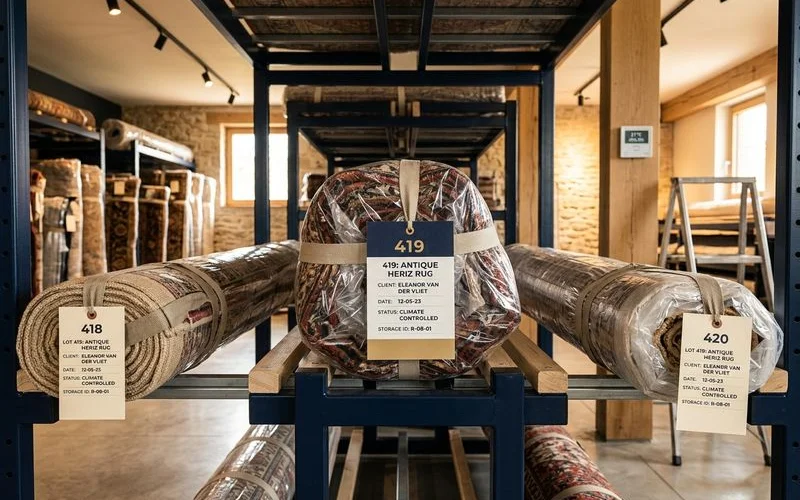
Never store your rolled rug directly on a bare concrete or wooden floor. Concrete floors actively wick moisture from the ground and transfer it straight into your rug. Floor-level pests also have immediate, easy access to the wool.
We always keep wrapped textiles raised to make cleaning the surrounding area much easier.
Ideal elevation tools include:
- Heavy-duty wire shelving units
- Suspended ceiling racks
- Clean wooden pallets
Lifting the item by at least four to six inches provides essential airflow underneath. This simple gap stops condensation from forming beneath the wrap during seasonal temperature shifts.
Step 6: Climate control
The physical environment around your rug matters just as much as the protective wrapping. You need a space that remains cool, dark, and perfectly stable year-round. An unheated garage, a damp basement, or a hot attic will easily destroy natural fibers.
To store rug without damage, our storage experts aim for very specific climate targets:
- Temperature: A stable 55°F to 80°F range.
- Humidity: Strictly between 40% and 60%.
- Light: Pitch black to prevent UV dye fading.
You can easily monitor these conditions yourself with a highly accurate digital tool. Devices like the ThermoPro TP49 Digital Hygrometer track both temperature and humidity levels continuously. Extreme dryness causes natural fibers to become brittle, while humidity above 65% triggers rapid mold growth.
Step 7: Periodic inspection
Safe storage is an active process that requires routine checking. You should briefly unwrap the rug every three to six months to look for any hidden issues. Moths thrive in dark, undisturbed areas, so the simple act of moving the rug disrupts their environment.
We always check for the subtle signs of damage during these inspections:
- Small sand-like casings indicating moth larvae
- Sticky, thin webbing near the rug borders
- Unexpected dampness or a musty mildew odor
Once you finish the inspection, re-wrap the piece securely and put it back. Adding natural repellents like cedarwood blocks or setting up Dr. Killigan’s Premium Clothing Moth Traps nearby adds an excellent layer of defense. For long-term storage of highly valuable pieces, an annual professional inspection is worth the nominal cost.
For specific prevention strategies, see our guide on preventing moth damage in stored rugs.
When professional storage makes sense
Professional facilities offer the safest environment for long-term rug preservation. Many homeowners simply lack a dedicated, climate-controlled space that is safe from temperature swings and household pests. Handing the job to experts removes the stress of constant monitoring.
We recommend professional services for specific high-risk scenarios:
- Multi-year storage needs
- Major home renovations with heavy dust
- Moving between primary and secondary residences
- Protecting multiple high-value, antique, or silk pieces
Our climate-controlled storage facility manages every single detail, from proper Tyvek wrapping to strict humidity monitoring. According to 2026 US industry data, the average cost for professional rug storage ranges from $1.00 to $1.80 per square foot each month. This small monthly fee is incredibly cheap insurance compared to the thousands of dollars required to reweave a moth-eaten antique.
What not to do
Avoiding a few critical errors is one of the best rug storage tips we can give you. Most ruined rugs suffer from the exact same easily preventable mistakes.
Here are the most dangerous storage hazards to avoid:
- Using plastic sheeting: Sealing a rug in plastic causes irreversible mildew and dry rot within weeks.
- Skipping the wash: Storing a dirty rug provides a protein buffet that actively attracts clothes moths.
- Folding the foundation: Folding stiff-backed rugs causes permanent, unfixable creases and broken fibers.
- Using the garage or attic: Wild temperature swings and high humidity in these uninsulated spaces destroy natural dyes.
- Ignoring the rug: Failing to inspect the stored item means tiny pest problems compound into total losses.
Stay far away from these common traps to ensure your investment survives intact.
How long can a rug be stored
A properly prepared hand-knotted rug can remain in storage for many years without suffering any degradation. Owners with seasonal homes routinely store their valuable pieces for six to nine months every single year without a single issue.
The Golden Rule of Storage: The exact protocols you follow matter far more than the actual duration the rug spends packed away.
We know that the preparation protocols dictate the final outcome. A perfectly cleaned and Tyvek-wrapped rug will look flawless after five years in a climate-controlled unit. This is the main goal when mastering how to store area rug long term.
For specific wrapping techniques regarding transit or heirloom pieces, see our detailed instructions on professional rug wrapping for storage and shipping.
Related Rug Care Guides
Frequently Asked Questions
Should I clean a rug before storing it?
Can I store a rug in plastic?
How should a rug be stored physically?
Have a Rug You'd Like Us to Look At?
Free pre-inspection, transparent quoting, and pickup across Las Vegas.
Get My Free Quote