
Preventing Moth Damage in Stored Rugs
Moths love stored wool. How to prevent damage during storage, clean first, wrap professionally, control climate, and inspect on a schedule.
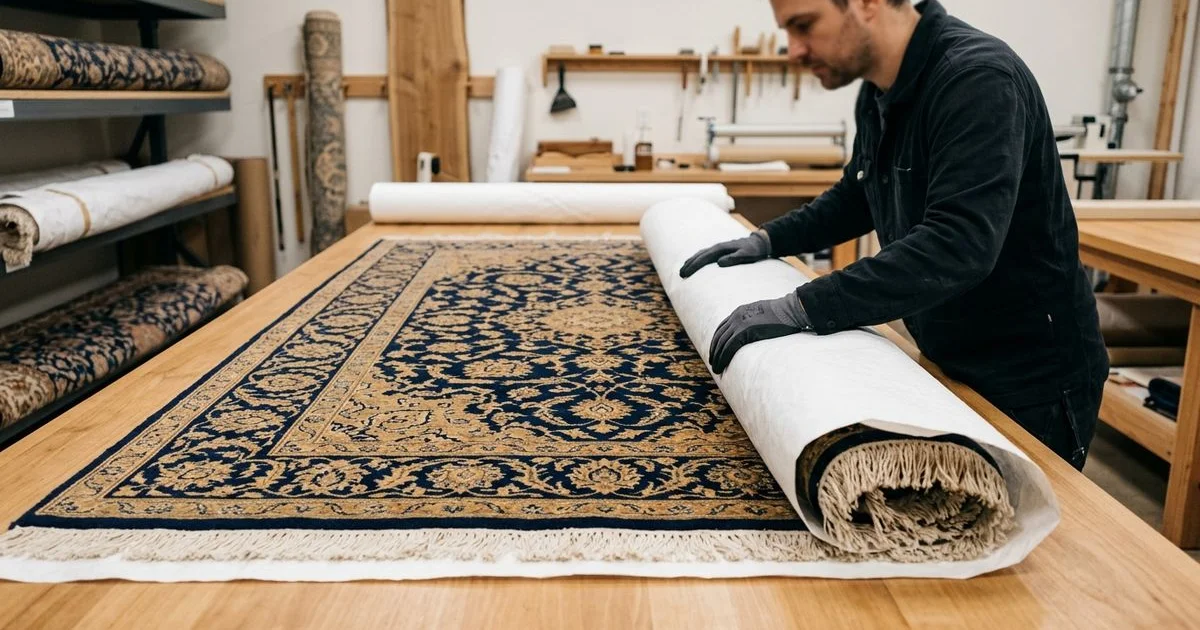
You probably know how frustrating it is to unroll a treasured wool rug only to find bare patches and insect webbing. We handle this exact heartbreak regularly at our Las Vegas rug cleaning and restoration facility.
This destruction happens because dark closets and undisturbed spaces provide exactly what these insects crave. In fact, preventative Moth Treatment & Removal remains one of the most critical services for any serious rug owner.
Our team is going to break down the biological reasons moths target stored textiles.
These proven methods will help you prevent moth damage stored rugs often suffer. This step absolutely dictates the success of your entire prevention plan.
Clean before you store
We cannot emphasize enough that stored rugs missing a proper wash will reliably attract pests. When you store wool rug moths quickly become the biggest threat to your investment in the United States. The webbing clothes moth and the casemaking clothes moth specifically hunt for keratin protein.
Our specialists constantly find these insects thriving on textiles that looked clean to the naked eye. Invisible attractants act like an all-you-can-eat buffet for larvae:
- Pet dander provides extra keratin for larvae.
- Tiny food particles supply necessary vitamins.
- Invisible body oils act as a rich food source.
Booking a professional clean before storage eliminates these microscopic attractants.
We utilize deep washing techniques that extract contaminants from the very foundation of the fabric. A freshly washed rug paired with correct wrapping materials drastically reduces your risk of an infestation. Homeowners should never pack away a piece that has been sitting on a floor for months.
Our inspection process often reveals early-stage insect activity hidden deep within the pile of unwashed pieces. Catching these tiny larvae early prevents them from consuming large patches of your expensive floor covering. Heavy plastic sheeting seems like logical protection against water and dirt.
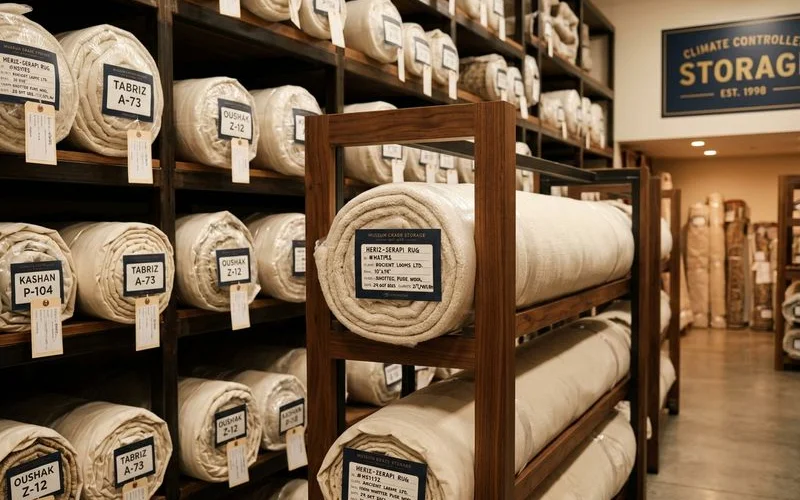
Wrap in breathable material, not plastic
We consider standard plastic wrap to be the fastest way to ruin a stored natural fiber rug. Wool fibers can naturally hold up to 30 percent of their own weight in moisture while still feeling dry to the touch. Wrapping these fibers in airtight plastic traps that internal moisture and creates a miniature greenhouse.
Our facility strictly avoids this approach because condensation quickly leads to mold growth and devastating dry rot. The safest defensive layer after a thorough cleaning requires materials that allow for constant air circulation. Breathable protective barriers keep out dust and pests without trapping humidity.
We wrap all outbound customer rugs in specialized breathable materials for this exact reason. Many museums and textile conservators rely on Tyvek paper or acid-free muslin for long-term preservation.
| Wrapping Material | Moisture Control | Pest Protection |
|---|---|---|
| Tyvek Paper | Excellent (Breathable) | High barrier against insects |
| Acid-Free Muslin | Excellent (Breathable) | Good barrier against dust and bugs |
| Heavy Plastic Sheeting | Poor (Traps condensation) | High, but causes dry rot |
The right wrapping material acts as your critical second line of defense.
We source these specific paper products to ensure our clients have the best protection available. Insects thrive in environments that stay relatively warm and heavily humid. A dark closet resting at 80 degrees provides the ultimate breeding ground.
Climate control matters
We know that the ideal storage climate for a natural wool rug requires temperatures resting between 50 and 70 degrees Fahrenheit. Relative humidity should stay perfectly balanced between 40 and 60 percent. Paying a small premium for a specialized, climate-controlled unit easily pays off when protecting antique or custom investments.
Our team maintains these exact climate metrics to guarantee the safety of the pieces in our care. You must avoid several common household storage areas to prevent serious damage. Direct sunlight and wild temperature swings will destroy delicate fibers over time.
We strongly advise keeping your textiles out of these specific locations:
- Garages: These spaces suffer from massive temperature swings and frequent dust accumulation.
- Attics: Extreme summer heat bakes the wool threads and makes them highly brittle.
- Damp Basements: High moisture levels promote rapid mold growth and attract insects.
Simply placing a rug in a secure unit does not mean your job is finished. Routine checks keep small issues from becoming total losses.
Inspect periodically
We recommend scheduling a visual inspection every three to six months without fail. The casemaking clothes moth can complete a full life cycle in just 30 days under optimal conditions. This rapid breeding means a small problem turns into a catastrophic loss very quickly.
Our inspection protocol involves unrolling the piece completely to examine both sides. You should look closely for sticky webbing, tiny cigar-shaped casings, or fresh bare patches. A professional inspection once a year brings peace of mind for highly valuable or antique pieces.
We can identify microscopic signs of larvae long before the average homeowner spots a flying adult insect. These pests almost always start their feeding frenzy on the dark, undisturbed back side of the foundation. Catching this activity early on the reverse side saves the visible top pile from permanent bald spots.
Pro Tip: Always use a bright flashlight during your quarterly inspections. Shining a harsh light across the back of the rug casts shadows on tiny moth casings that you might otherwise miss.
We find that clients who use a flashlight discover problems much sooner. Traditional insect deterrents simply do not offer enough protection for high-end textiles. Toxic chemical vapors pose unnecessary risks to your household.
Mothballs and cedar
We see countless ruined rugs that were packed alongside pounds of ineffective natural repellents. The Environmental Protection Agency clearly warns that the chemicals in mothballs pose serious health hazards.
The Dangers of Mothballs
Naphthalene and paradichlorobenzene create dangerous, lingering fumes when confined in small, unventilated spaces.
We firmly prefer physical barriers over these toxic chemical vapors. Mothballs also lose their potency rapidly over a few months and leave an awful odor embedded in the wool.
The Limitations of Cedar
Cedar blocks provide a very mild repellent effect through their natural oils.
We agree that cedar works nicely for a fresh scent in standard clothing closets. The volatile oils in cedar wood dry up and diminish entirely as the blocks age. Neither of these old tricks can replace a strict protocol of cleaning, wrapping, and climate control.
Our comprehensive overview on how to store an area rug long-term covers these complete defensive steps. Relying on a piece of wood as your primary protection strategy will eventually result in holes. Managing a large collection of off-season textiles requires a highly organized approach.
For owners with multiple rugs
We help collectors and large households structure proper rotation schedules. Swapping out light summer flatweaves for heavy winter wools leaves your unused pieces vulnerable during their downtime. Documenting exactly where and how each item sits prevents accidental neglect.
Our staff recommends creating a simple spreadsheet to track your entire collection. Your tracking document should include these crucial data points:
- The exact date of the last professional wash.
- The specific wrapping material used for the bundle.
- The physical location of the stored item.
- The scheduled date for the next visual inspection.
Creating this habit saves time and prevents expensive mistakes.
We have seen a simple spreadsheet save entire collections from ruin. Discovering live insects or fresh bald spots during a quarterly check requires an immediate response. Fast action contains the threat before it spreads.
What to do if you find damage
We stress the importance of isolating the infested item away from all other natural fibers instantly. Moth larvae will quickly migrate from a compromised rug to your nearby cashmere sweaters or silk curtains. Emergency containment requires three specific steps to prevent further damage:
- Wrap the damaged piece completely in heavy plastic.
- Tape all seams tightly closed to trap the insects.
- Move the sealed bundle away from other textiles.
Our advice against plastic does not apply during this short-term emergency containment situation. Sealing the piece tightly stops the larvae from escaping while you arrange for immediate transport. Call a specialist the moment you secure the plastic barrier.
We can neutralize the active infestation before the larvae eat through the foundation threads. The faster a professional treats the problem, the less permanent damage compounds over time. Review how moth containment and treatment works to understand exactly what happens once the rug arrives at a specialized facility.
We handle emergency containment cases every single week. Protecting your beautiful floor coverings from insects just requires a few deliberate steps. Proper preparation always pays off in the long run.
Conclusion
We know that investing a little time in prevention saves thousands of dollars in restoration costs.
Start by scheduling a deep wash, wrap the textile in breathable Tyvek, and maintain a cool environment to protect rug from moths permanently.
Take action today by checking your current storage setup before the next breeding cycle begins.
Related Service
Moth Treatment & Removal
Containment, removal, and treatment of wool moth infestations, with pest-control coordination and post-damage repair.
Learn more about Moth TreatmentRelated Rug Care Guides
How Moth Containment & Treatment Works
From isolation to eradication, how we contain a moth-infested rug, wash and treat to kill larvae and eggs, and coordinate pest control to stop the spread.
Repairing Moth-Eaten Wool Rugs
Moths leave bald patches and eaten foundation. How we assess the damage, reweave pile and foundation, and when damage is too extensive to restore.
Signs of a Wool Moth Infestation in Rugs
Spot a moth problem early, webbing, shed casings, bald patches, and larvae hiding under furniture. The warning signs before moths ruin a wool rug.
Frequently Asked Questions
How do I store a wool rug safely?
Do mothballs protect stored rugs?
Should I check a stored rug?
Have a Rug You'd Like Us to Look At?
Free pre-inspection, transparent quoting, and pickup across Las Vegas.
Get My Free Quote