Why Pet Urine Odor Returns After Regular Cleaning
Urine smell returns because crystallized salts deep in the rug reactivate with humidity. Why surface cleaning fails and what actually removes it.
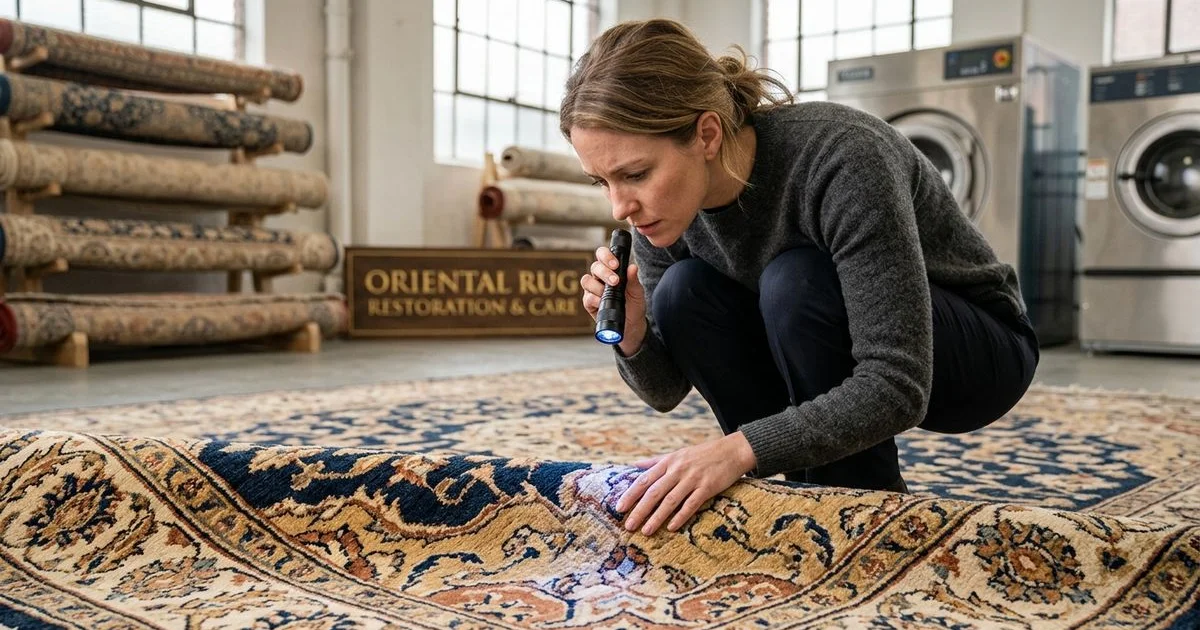
Our team frequently hears from frustrated homeowners dealing with a specific recurring issue.
You know the exact scenario. A beautiful rug smells fresh right after professional washing, but then the rug smells like urine after cleaning efforts wear off a month later. We recognize this pet urine smell returns rug problem as the most common failure mode of basic surface treatments.
The underlying chemistry explains exactly why these superficial methods always fail.
For the specific methods that permanently eliminate the stench, review our complete guide on Pet Urine Odor Removal. Let’s look at the data and explore practical ways to respond.
What pet urine leaves behind
When a pet urinates on a rug, the moisture evaporates while leaving behind solid uric acid crystals. These stubborn salt crystals settle deep into the foundation and remain entirely immune to standard cleaning.
We deal with these toxic residues constantly at Legacy Rug Cleaning. They quickly crystallize and settle deep into the backing and sometimes the subfloor.
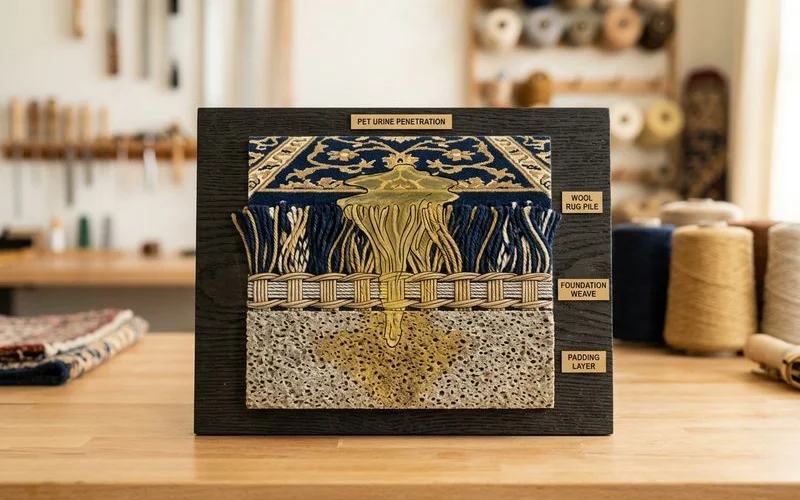
These sharp crystals are completely insoluble in water, sitting dormant inside the rug as long as the environment stays dry. We know from 2026 industry data that leaving these acidic crystals untreated can permanently weaken natural fibers by up to 50 percent.
This severe degradation ruins expensive custom and antique pieces across the US every year. To understand the problem, you must understand the three distinct components of pet contamination.
| Component | What It Does | Why It Resists Cleaning |
|---|---|---|
| Urochrome | Creates the visible yellow stain. | Binds tightly to natural wool and silk dyes. |
| Urea | Produces the initial sticky residue. | Washes away easily, giving a false sense of clean. |
| Uric Acid | Forms hard, invisible salt crystals. | Completely repels standard water and soap. |
The humidity cycle
This exact cycle creates the frustrating returning odor. Uric acid salts are highly hygroscopic, meaning they actively pull moisture directly out of the ambient air.
We observe this reactivation spike constantly during warm, humid weather.
- Humidity levels rise inside the house from cooking, open windows, or summer heat.
- The dormant uric acid crystals absorb this fresh moisture and dissolve slightly.
- Bacteria immediately begin feeding on the newly dissolved organic matter.
- The feeding process releases pungent ammonia gases directly into your living room.
- The humidity drops, forcing the salts to harden and re-crystallize.
- The foul smell temporarily fades until the next moisture event.
This pattern explains why the dog urine smell comes back so reliably at specific times. Morning dew or a sudden shift in US weather patterns provides all the water those crystals need.
We routinely get emergency calls from homeowners the morning after a heavy rainstorm.
Why surface cleaning fails
Most commercial carpet cleaners and consumer enzyme products only target the top layer of the rug. They cannot reach or dissolve the hardened uric acid crystals buried deep within the foundation. We see these surface methods fail constantly because they only wash away the sticky urea.
The core contamination remains locked safely inside the woven base and the pad below. This explains the common pet urine smell returns rug issue you might experience after a cheap wash.
A standard steam clean actually makes the situation much worse. The hot water from a carpet wand hydrates the hygroscopic crystals without removing them. We find that this sudden moisture triggers a massive release of trapped ammonia gas.
The Limits of Retail Sprays
Retail odor eliminators face a similar structural limitation. They rely heavily on artificial fragrances to cover up the volatile gases.
We know from chemical analysis that standard sprays lack the bio-enzymatic agents required to digest hardened uric acid. The liquid spray simply dries on the surface.
The core contamination remains completely untouched.
What actually works
The only permanent fix requires complete physical extraction of the urine salts. Our submersion decontamination flush drops the contaminated rug into a specialized bath to wash these crystals out. The flowing water physically forces the dissolved urine salts out of the tightly woven foundation.
We use targeted enzymatic neutralizers to break down any remaining acid at the molecular level. This multi-step combination removes the actual source of the odor.
A proper US-based facility will use hundreds of gallons of fresh water to guarantee a clean rinse. We often utilize massive 14-foot centrifuge machines to spin the rug completely dry. This rapid extraction prevents any lingering moisture from causing new bacterial growth.
Replacing Contaminated Padding
Cleaning an infected rug pad is neither economical nor fully effective. You must replace the pad to protect your expensive hardwood floors.
A new protective layer, specifically a pet-barrier pad with a moisture liner, stops future accidents from ruining the subfloor below.
We strongly recommend closed-cell polypropylene pads because they block 100 percent of liquid from passing through. These dense barriers prevent the acid from reaching the sensitive wood grain.
Handling Subfloor Damage
Severely contaminated wood or concrete subfloors require dedicated professional attention. You might need a specialized floor contractor to seal the wood before replacing the rug.
We will gladly guide you through the required steps during your initial pre-inspection. The honest answer remains straightforward and scientifically proven.
Surface cleaning guarantees failure as long as the crystallized salts stay trapped inside the fibers. You must completely extract the source material to finally breathe easy and solve the pet urine smell returns rug problem for good.
Related Service
Pet Urine Odor Removal
Full submersion decontamination and enzymatic treatment that neutralizes organic pet odors without ruining fibers.
Learn more about Pet Urine & OdorRelated Rug Care Guides
Can a Urine-Damaged Rug Be Saved?
Whether a urine-damaged rug can be saved depends on dye and fiber damage, extent, and the pad. How a pre-inspection decides treat, repair, or replace.
Enzyme Decontamination vs. Surface Cleaning for Pet Odor
Surface spot cleaning masks urine; enzyme decontamination removes it. What each does, how long results last, and why rugs need the deep approach.
How Uric Acid Crystals Damage Rug Fibers
Pet urine isn't just odor, uric acid crystals and bacteria degrade fibers, cause yellowing, and shift pH. The chemistry behind urine damage in rugs.
Removing Pet Urine Stains from Wool & Silk Rugs
Wool and silk are easily bleached or yellowed by urine and harsh products. How fiber-safe treatment removes stains, and when they're permanent.
Frequently Asked Questions
Why does the smell come back in humid weather?
Can I fix urine odor with DIY products?
Does the rug pad need replacing too?
Have a Rug You'd Like Us to Look At?
Free pre-inspection, transparent quoting, and pickup across Las Vegas.
Get My Free Quote