
How Moth Containment & Treatment Works
From isolation to eradication, how we contain a moth-infested rug, wash and treat to kill larvae and eggs, and coordinate pest control to stop the spread.
Spotting a bald patch on a prized wool rug is a sinking feeling for any homeowner. We see this exact scenario weekly at Legacy Rug Cleaning, where a small issue quickly escalates into a multi-room crisis. A moth-infested rug requires more than ordinary cleaning, which is why our rug moth treatment process focuses on containment first, eradication second, and prevention third.
The primary culprit is usually the webbing clothes moth (Tineola bisselliella), a destructive pest that targets natural fibers. If you need immediate intervention, see our comprehensive Moth Treatment & Removal services.
Let’s look at the exact steps needed to reverse this damage and protect your investment.
Step 1: Containment
The first priority when we confirm an infestation is preventing the spread. A single female moth can lay up to 200 microscopic eggs, meaning these insects can easily migrate from an infested rug to other wool textiles in your home. We often see secondary infestations establish themselves in closets or on adjacent carpets before the original source is even treated.
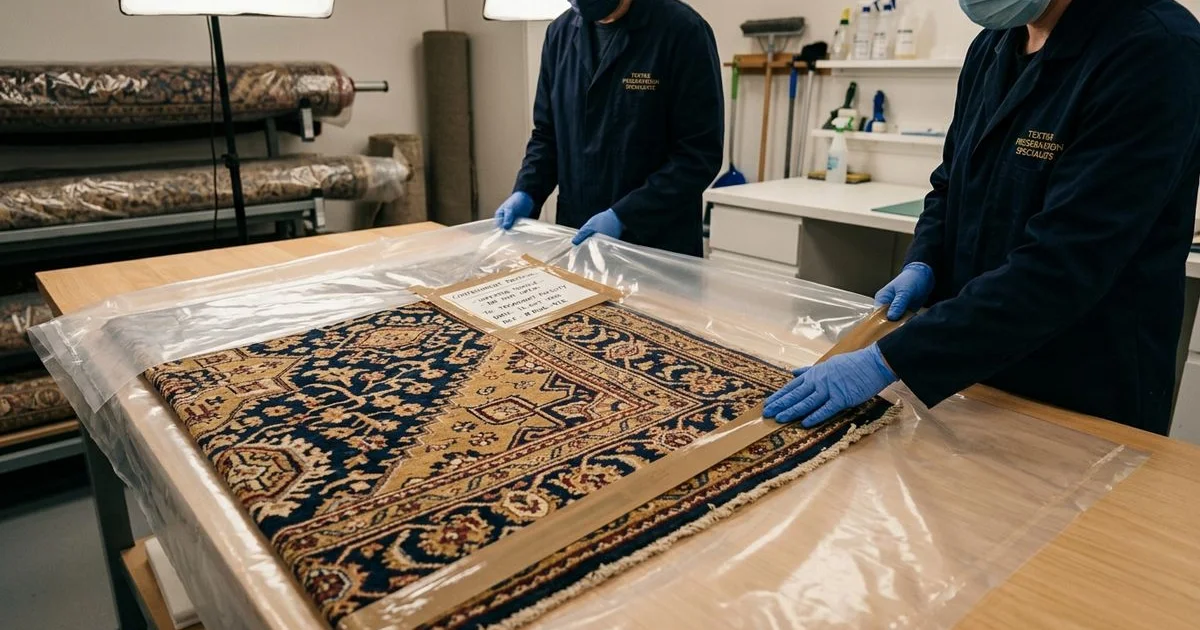
To stop this migration, our technicians seal the affected rug in protective 3-mil transport plastic before it leaves your home. This heavy-duty seal prevents moths from escaping during pickup, transport, or facility transfer. At our facility, we immediately isolate the rug in a dedicated area completely separate from non-infested client work.
If you have identified the infestation but cannot get the rug to us immediately, isolate it yourself. You can wrap it securely in heavy plastic or seal smaller rugs in a standard contractor bag. This fast action limits structural damage while you wait for professional pickup.
Step 2: Inspection and damage documentation
Before treatment begins, our team inspects the rug under high-intensity light to map the full extent of the problem. Moths instinctively seek out dark, undisturbed areas, so the worst damage is almost always hidden under furniture legs or on the very underside of the rug. We evaluate several specific factors:
- Larvae count and their current life stage (which can last from 2 to 30 months)
- The extent of silken webbing and powdery frass (excrement)
- Foundation damage caused by feeding on the wool knots
- Bald patches and overall pile loss
- Microscopic egg deposits hidden in the foundation corners
High-resolution photographs document all existing damage at intake. This visual baseline lets you see exactly what was there and what the final restoration work will need to address.
Step 3: The rug moth treatment process and wash
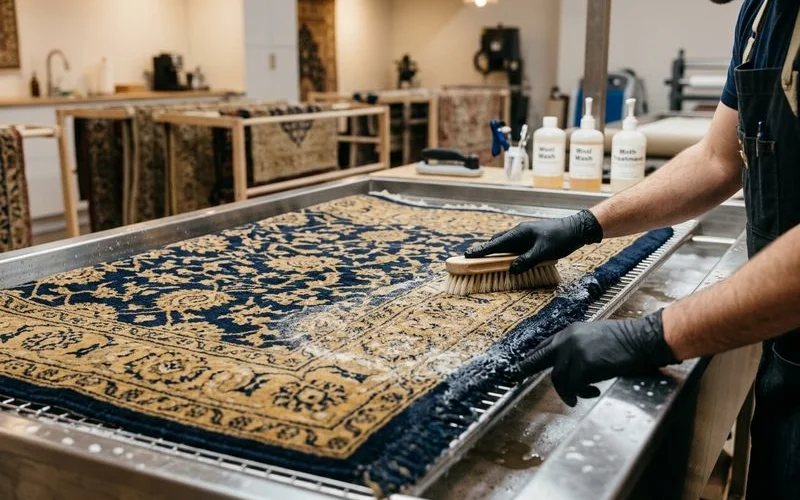
The treatment itself combines specialist chemistry and strictly controlled heat in an individual wash bath. Adult moths actually do not eat your rug, but their hungry larvae feed on the keratin protein found in wool and silk. Our wash protocol directly targets these feeders:
- Eradicates larvae at all life stages immediately
- Kills eggs deposited deep in the cotton or wool foundation
- Removes silken webbing, pupal casings, and sandy frass
- Treats secondary contamination like pet hair or spills that attract pests
Heat is precisely calibrated to reach 120 degrees Fahrenheit, which is hot enough to eradicate eggs but safe enough to protect delicate wool fibers. We utilize WoolSafe-approved chemistry, such as Pyrethrum-based souring agents, to ensure the wool itself is never compromised. This specialized treatment changes the taste of the wool, making it completely unpalatable to future insects without leaving behind harsh chemical odors.
Step 4: Inspection and verification
Post-treatment, our technicians inspect the rug a second time to definitively verify total eradication. The entire process typically takes 10 to 14 days to ensure every fiber is absolutely clear. We immediately re-treat the piece if our team finds even a single sign of remaining activity.
Step 5: Restoration (if needed)
After complete eradication, the rug may require structural restoration to regain its original value. Moths often eat the wool knots right off the cotton foundation, leaving bare grid-like patches behind. We commonly perform two types of repair:
- Reweaving missing wool knots to match the original design
- Rebuilding damaged cotton foundation threads
This highly detailed work happens strictly after treatment, never before. Treating over live larvae just feeds them an expensive new meal.
Step 6: Pest control coordination
A structural pest control company is needed if moths have spread beyond the rug to infested clothing or multiple rooms. We strongly recommend coordinating with local exterminators for household-level issues.
Pheromone traps only catch flying adult males, serving as an early warning system rather than a cure. The rug treatment does not address eggs hidden in baseboards or closet corners.
If your home has a broader moth problem, your newly cleaned rug will just act as a magnet and keep getting reinfested. A coordinated approach remains the only true path to lasting resolution.
Step 7: Prevention guidance
After a successful treatment, we provide written prevention guidance specific to your textiles. Prevention is the crucial difference between a one-time cleaning and an ongoing, expensive problem.
Our team recommends focusing on these proven protocols:
- Storage protocols (including cleaning before storing, and using breathable Tyvek wrapping)
- Inspection cadence (checking the back of your rugs every 3 to 6 months)
- Vacuum protocols (regular vacuuming of the front, back, and under furniture legs)
- Environmental factors (managing humidity and increasing light exposure)
The protocols are not complicated, but consistency absolutely matters.
What happens next
After the final wash and repair, the textile returns home with full documentation of the entire rug moth treatment process. You will receive detailed before and after photos, along with your written prevention plan.
We find that most clients see absolutely no recurrence when they follow the provided guidance.
Periodic inspection schedules are available for owners with multiple wool rugs and a history of recurring problems. Reach out to schedule your professional evaluation today, and let us help protect your investment for generations.
Related Service
Moth Treatment & Removal
Containment, removal, and treatment of wool moth infestations, with pest-control coordination and post-damage repair.
Learn more about Moth TreatmentRelated Rug Care Guides
Preventing Moth Damage in Stored Rugs
Moths love stored wool. How to prevent damage during storage, clean first, wrap professionally, control climate, and inspect on a schedule.
Repairing Moth-Eaten Wool Rugs
Moths leave bald patches and eaten foundation. How we assess the damage, reweave pile and foundation, and when damage is too extensive to restore.
Signs of a Wool Moth Infestation in Rugs
Spot a moth problem early, webbing, shed casings, bald patches, and larvae hiding under furniture. The warning signs before moths ruin a wool rug.
Frequently Asked Questions
Does professional cleaning kill moth larvae?
Do I need pest control for my home too?
Will the moths come back?
Have a Rug You'd Like Us to Look At?
Free pre-inspection, transparent quoting, and pickup across Las Vegas.
Get My Free Quote