
Signs of a Wool Moth Infestation in Rugs
Spot a moth problem early, webbing, shed casings, bald patches, and larvae hiding under furniture. The warning signs before moths ruin a wool rug.
You invest in beautiful rugs, but the biggest threat is often invisible until it is too late.
We regularly inspect stunning Persian and Navajo textiles damaged by pests. The larvae of these insects feast quietly on natural fibers for months before anyone notices.
Catching signs of a rug moth infestation early is the difference between a simple clean and a massive restoration bill. Our team knows that stopping these silent destroyers fast requires knowing exactly what to look for.
You can easily spot the red flags if you know where to check. Let’s break down the common carpet moth signs, the tools you need, and how to protect your investment.
If you already see damage, head directly to our Moth Treatment & Removal service page for immediate help.
The basic biology
We see case-bearing clothes moths (Tinea pellionella) and webbing clothes moths (Tineola bisselliella) causing the most destruction in US homes. The adult moths actually do not eat your wool. Their larvae cause all the damage.
Our experts always explain that these larvae specifically hunt for keratin. This protein exists naturally in animal fibers like wool, silk, and goat hair. Female moths lay microscopic eggs deep in the rug fibers. These eggs hatch in just four to ten days inside a warm house.
We find that the newly hatched larvae then feed for anywhere from 35 days to over two years. They prefer dark, low-traffic areas with stable temperatures. That perfectly describes the environment under a heavy sofa in your formal living room.
“Adult moths do not eat wool. The larvae consume the keratin protein in your rugs for months before maturing.”
What to look for
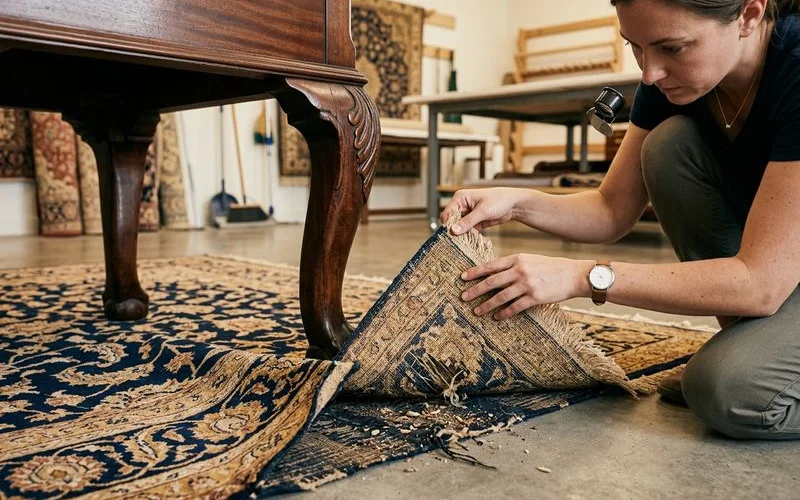
We advise our clients to look immediately for silken webbing, sand-like casings, and irregular bald patches. A UV blacklight works exceptionally well for spotting these hidden problems. Larvae are drawn to fibers soiled with pet urine or spilled drinks. A UV light makes those organic stains glow brightly.
Our specialists look for several distinct carpet moth signs. You should check for the following indicators regularly.
- Webbing on the back of the rug. Fine threads of webbing often hide in foundation corners or under heavy furniture. This silken tunnel is a primary indicator of webbing clothes moths.
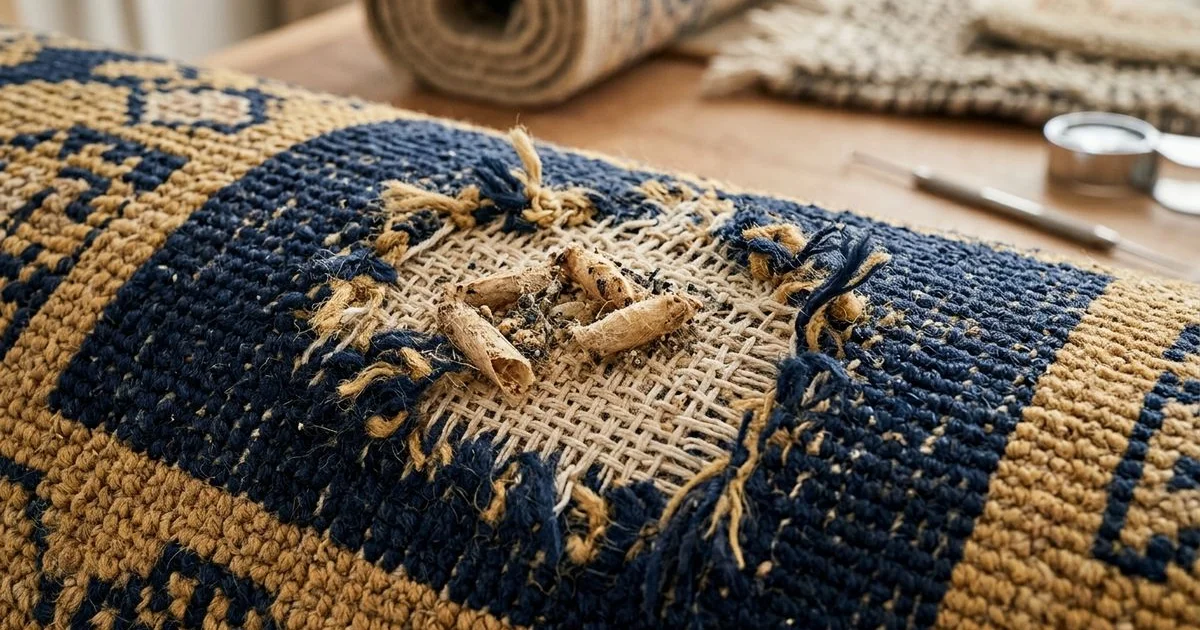
- Grain-of-sand-sized casings. Case-bearing larvae build small protective tubes from rug fibers as they grow up to half an inch long. These look like tiny grains of sand or rice on the rug.
- Color-matched frass (larvae droppings). Fine, sand-like debris gathers near affected areas. The frass usually takes on the exact dye color of the wool they just ate.
- Bald patches in the pile. The wool pile completely vanishes where larvae have fed. Bald patches often appear in irregular shapes, exposing the bare cotton foundation underneath.
- Small flying moths. Adult moths are tan or beige and measure less than half an inch long. They avoid bright lights and often hop or fly low to the ground.
- Damaged foundation. Severe moth damage wool rug cases compromise the internal warp and weft threads. You can easily see this structural loss from the back of the textile.
Where to check
We always start our inspections under heavy furniture, along dark baseboards, and on the back of the rug itself. Moths hate sunlight and heavy foot traffic. They seek out undisturbed areas to lay their eggs safely.
Our routine involves checking beneath large dressers, couches, and heavy chests. The back of the rug is the absolute most reliable place to find early damage. Larvae usually feed from the underside where they remain completely hidden from your vacuum.
Inspect these specific high-risk zones:
- The underside of edges along baseboards
- Dark areas underneath heavy furniture legs
- Wool clothing stored in nearby closets
- Thick Persian or Navajo rugs placed in unused guest rooms
We highly recommend flipping the corners of your rugs every few months. This simple disruption stops larvae from establishing a feeding ground. Sunlight forces the insects to look elsewhere.
When to act
We urge you to act immediately and isolate the rug if you confirm even mild signs of activity. Moth infestations expand incredibly fast. A small problem caught at the casings-only stage costs much less to resolve.
Our current 2026 pricing data shows that major reweaving can cost over $100 per square inch. Allowing a problem to progress to bald patches and foundation damage will lead to a massive restoration bill. You save significant money by stopping the pests early.
We ask that you separate the affected rug from other wool textiles right away. You should follow these immediate steps to stop the spread:
- Wrap the rug tightly in a sealed plastic bag.
- Remove any nearby wool clothing from the room.
- Call us for a professional pickup and assessment.
Once at our facility, we will thoroughly inspect the piece, contain and treat the active larvae, and address any post-infestation repair the rug needs. Professional care guarantees the insects are gone for good.
What about prevention
We focus heavily on regular vacuuming and using breathable storage wrapping to prevent future infestations. Prevention requires consistent habits and the right materials to keep pests away. A clean rug is a safe rug.
Our top advice for long-term storage is to never wrap a wool rug in standard plastic. Polyurethane plastic traps internal moisture and quickly creates toxic mold. You must use a breathable material like white Tyvek paper or heavy cotton sheets.
| Storage Material | Breathability | Pest Protection | Recommendation |
|---|---|---|---|
| Tyvek Paper | High | Excellent | Best for long-term |
| Cotton Sheets | High | Moderate | Good for short-term |
| Polyurethane Plastic | Zero | Poor (Causes Mold) | Never use |
We strongly encourage regular vacuuming across the entire surface. You should target the back of the rug where eggs hide. Avoiding long-term storage of unwashed wool is also critical. Soil and skin oils naturally attract pests.
Our team suggests setting up sticky pheromone traps in the room to monitor activity. Keep in mind that these traps only catch adult males. You must still conduct periodic visual inspections of all wool textiles.
Our complete guide on preventing moth damage in stored rugs outlines the exact storage protocols.
If you see anything suspicious, get the rug inspected right away. Recognizing the signs of a rug moth infestation early is the difference between a small repair and a major restoration.
Related Service
Moth Treatment & Removal
Containment, removal, and treatment of wool moth infestations, with pest-control coordination and post-damage repair.
Learn more about Moth TreatmentRelated Rug Care Guides
How Moth Containment & Treatment Works
From isolation to eradication, how we contain a moth-infested rug, wash and treat to kill larvae and eggs, and coordinate pest control to stop the spread.
Preventing Moth Damage in Stored Rugs
Moths love stored wool. How to prevent damage during storage, clean first, wrap professionally, control climate, and inspect on a schedule.
Repairing Moth-Eaten Wool Rugs
Moths leave bald patches and eaten foundation. How we assess the damage, reweave pile and foundation, and when damage is too extensive to restore.
Frequently Asked Questions
How do I know if my rug has moths?
Where do rug moths hide?
Do moths only eat wool?
Have a Rug You'd Like Us to Look At?
Free pre-inspection, transparent quoting, and pickup across Las Vegas.
Get My Free Quote