
Repair vs. Replace: Is Your Rug Worth Restoring?
Should you restore or replace a damaged rug? Weigh sentimental and market value, damage extent, and cost, plus why hand-knotted rugs are worth saving.
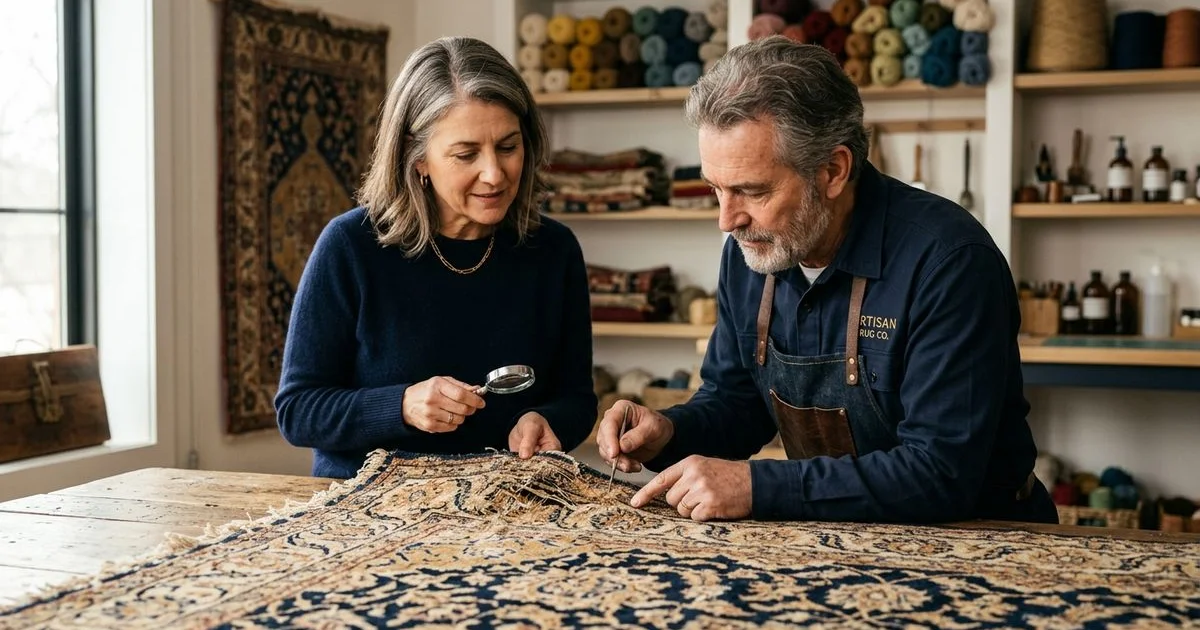
We often see customers torn over whether to repair or replace a rug.
Experience shows that the line between a sensible restoration and a wasted investment comes down to a few core factors. It usually depends on three things: what the rug is, what the damage is, and what you are trying to achieve.
Our team put together this framework to help you make that call with confidence. For the broader service, you can review our full guide to Rug Repair & Restoration.
Let us look at the data, what it actually tells us, and explore how to assess your specific piece.
Start with what the rug is
Hand-Knotted Persian, Oriental, or Tribal Rugs
We always tell clients that construction determines lifespan. A hand-knotted Persian or tribal rug is almost always worth restoring because it is built on a durable warp and weft foundation.
These rugs are specifically designed for repair. Our team sees quality work return these rugs to full function for many more decades.
Antique Rugs
Historical preservation makes antique rugs worth restoring regardless of daily use. Vintage pieces, like a 1970s Taba Tabriz, hold significant cultural weight.
We find that older, well-maintained pieces often appreciate in value over time. Even an imperfect restoration is better than a total loss.
High-Quality Wool Area Rugs
Machine-made wool options require evaluation on a case-by-case basis. Our experts consider high-quality wool area rugs worth repairing for moderate wear.
Extensive structural damage makes them much less economical to fix. Tufted rugs are usually not worth major repair because the latex backing degrades naturally over five to ten years.
Tufted and Synthetic Rugs
We rarely recommend major structural fixes for glued pieces. This hidden degradation limits the remaining lifespan regardless of any surface cleaning or restoration work you perform. You can learn more about this structural difference in our breakdown of hand-knotted vs tufted rugs.
Our advice for inexpensive synthetic rugs remains simple. Replace them immediately. Repair costs typically exceed the retail value of synthetic pieces.
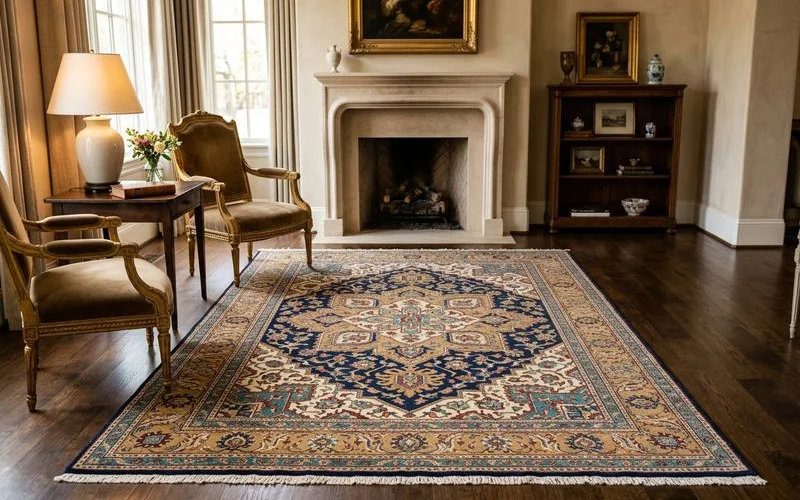
Then assess the damage
Localized Damage
We consider localized damage almost always restorable. This category includes frayed fringe, edge wear, small holes, or contained dry rot. Fringes are actually part of the rug’s foundation, so repairing a fray early prevents the entire piece from unraveling.
Moderate Damage
Our technicians successfully treat moderate damage every single week. This includes moth bald patches, medium reweaving, or water damage in specific, small areas. Carpet moths specifically target the keratin in wool and often hide under heavy furniture.
We know that catching them early makes reweaving a small patch highly successful and virtually invisible.
Widespread Damage
Pet urine across much of the rug, age-related foundation weakness, or smoke damage sometimes leave a rug restorable. The decision usually comes down to the piece’s original quality and your budget.
Catastrophic Damage
Our honest assessment is that catastrophic damage is rarely economical to fix. Severe dry rot across most of the foundation destroys the structural warp and weft threads. Bleach damage to large areas or complete latex backing degradation also signal that replacement is the smarter choice.
Sentimental value matters too
We know that some rugs are worth restoring for purely non-market reasons. A grandmother’s heirloom Persian, your first big home purchase, a wedding gift, or a piece from a meaningful trip all hold irreplaceable history. The market value might not justify the cost on paper, but the personal meaning certainly does.
Our industry is seeing a massive shift toward environmentalism in 2026. Preserving a seventy-year-old rug keeps quality materials out of landfills. This conscious choice reduces the demand for fast-fashion home goods.
We never try to talk anyone out of a sentimental restoration. The main goal is simply to provide an honest assessment. If you are asking yourself ‘is my rug worth fixing,’ the personal meaning often says yes.
The cost framework
We track industry pricing closely to ensure customers understand their financial options. Repairing a valuable hand-knotted piece often costs a fraction of buying a brand-new replacement. Current 2026 market averages provide a helpful baseline for your decision.
Our compiled estimates reflect standard US professional rates for quality craftsmanship. Keep in mind that specific costs vary based on the rug’s condition and exact materials. The tables below outline the expected expenses.
Average Rug Repair Costs
| Type of Repair | Estimated Cost Range |
|---|---|
| Fringe and Edge Repair | $100 to $500 (approx. $39 per linear foot) |
| Small Hole or Moth Patch | $85 to $300 |
| Larger Reweaving | $500 to $5,000+ |
| Full-Foundation Rebuild | $5,000 to $25,000+ |
| Decontamination | Priced by area plus restoration cost |
Average Rug Replacement Costs
| Type of New Rug | Estimated Cost Range |
|---|---|
| New Hand-Knotted Persian | $2,000 to $50,000+ |
| New Silk Rug | $5,000 to $100,000+ |
| Quality Machine-Made Wool | $1,000 to $5,000 |
| New Tufted Wool Rug | $500 to $3,000 |
| New Synthetic Rug | $200 to $1,000 |
Our transparent pricing model removes the guesswork from this process. Local markets dictate slight variations in these final numbers. For even more detailed local pricing breakdowns, see our guide on rug repair cost in Nevada.
The decision questions
We recommend walking through a simple mental checklist before making your final call. Ask yourself these five specific questions to clarify the path forward:
- Is the rug hand-knotted? Our shop finds that construction dictates longevity. If it features a woven warp and weft, lean heavily toward repair.
- Does the rug have sentimental value? Family history cannot be purchased in a store. Our team sees that if the piece holds personal meaning, you should lean toward repair.
- Is the damage localized? We always tell clients that small issues are highly manageable. If the problem is contained to edges or a few small moth patches, lean toward repair.
- Would replacement cost more than restoration? Our advice is to run the numbers using the tables above. If buying a comparable new piece costs significantly more, repair wins.
- Is the rug functionally usable after restoration? We ensure a repaired piece will still lay flat and serve its purpose safely.
A transparent approach guides every recommendation in this shop. Your satisfaction is the ultimate priority. Our team will always tell you honestly if a rug will remain structurally sound after the proposed work.
Our honest approach
We say yes to restoration only when the final outcome truly justifies the work. Pushing unnecessary services goes against our core values. A project gets rejected immediately if the foundation is beyond saving.
Our experts would much rather lose a single job than charge you for work that simply does not make sense for your piece. Building long-term relationships matters more than a quick sale.
Bring the damaged rug in for a completely free pre-inspection at our facility.
Our specialists will give you a detailed written assessment covering all repair options and accurate costs. This document includes straightforward guidance on whether a professional restoration or a brand-new replacement is the better call for your home.
Many homeowners find rug restoration worth it after seeing the breathtaking results. Our facility is ready to help you make the best decision for your investment today.
Related Service
Rug Repair & Restoration
Restoration for holes, cuts, dry rot, worn corners, edges, and fringe, including master-weaver reweaving.
Learn more about Repair & RestorationRelated Rug Care Guides
Common Rug Damage We Repair (Holes, Cuts, Rot, Corners)
Holes, knife cuts, rotted areas, missing corners, vacuum and pet damage, the full range of rug damage we restore, and what's typically repairable.
Reweaving Missing Foundation & Pile
Reweaving rebuilds a rug's foundation and pile knot by knot, with color-matched wool. The high-end restoration path and our master-weaver partnership.
Rug Fringe Repair & Replacement
Fraying or missing fringe? How we secure rug ends to stop unraveling, rebuild or replace fringe, surge edges, and when fringe is structural.
How Much Does Rug Repair Cost?
Rug repair is priced by type, fringe, edge, hole, or full reweave. Typical Nevada cost factors, why we quote after inspection, and value vs replacement.
Frequently Asked Questions
Is it cheaper to repair or replace?
When should I replace instead of repairing?
Does restoration hurt resale value?
Have a Rug You'd Like Us to Look At?
Free pre-inspection, transparent quoting, and pickup across Las Vegas.
Get My Free Quote