
Rug Fringe Repair & Replacement
Fraying or missing fringe? How we secure rug ends to stop unraveling, rebuild or replace fringe, surge edges, and when fringe is structural.
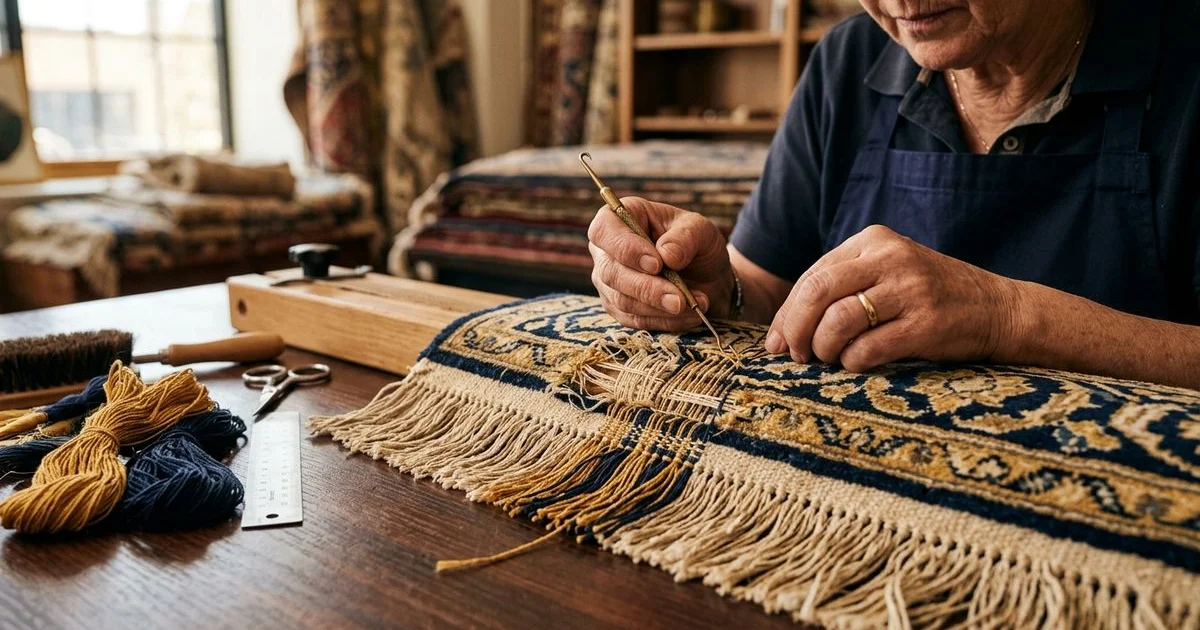
You know how the fringe is almost always the first part of a beautiful area rug to look tired and worn? It happens even in well-kept homes. That white or off-white cotton is actually the skeleton holding your entire piece together.
We see this daily at Legacy Rug Cleaning. Those delicate end threads take the brunt of foot traffic and vacuuming over the years.
Handling a rug fringe repair replacement project early is the smartest way to protect your investment. The fringe and side edges are simply the most vulnerable parts of a hand-knotted rug. They are also the most commonly repaired areas in our shop.
Addressing this quickly stops a minor fray from becoming a major structural loss.
Let’s walk through exactly what causes the damage and how to fix it. If you need broader structural work, be sure to see our guide on Rug Repair & Restoration.
Why fringe matters
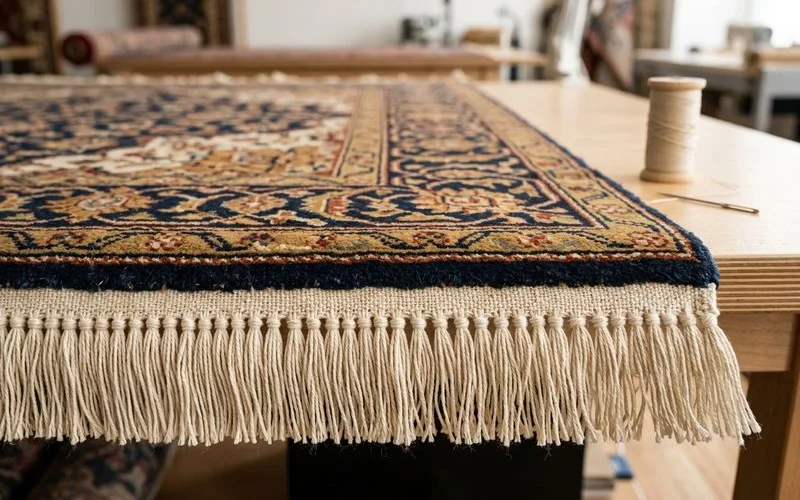
The fringe on a hand-knotted rug matters because it is not just a decorative, sewn-on trim. It consists of the actual warp threads extending past the foundation, meaning these are the exact same threads holding the entire rug together.
We often remind clients that the fringe is essentially the exposed skeleton of their rug. See hand-knotted rug construction explained for a deeper look at this structural background.
Most antique and high-end rugs use cotton warp threads. Cotton naturally has a lower resistance to abrasion than the dense wool pile sitting right above it.
When this fringe wears down or breaks, the hidden foundation threads behind it instantly become vulnerable. Pile then starts coming loose and sliding right off the ends.
A tiny fringe problem transforms into a massive structural loss if ignored.
Fringe repair vs replacement
Choosing between fringe repair and replacement depends on the current length and stability of the warp threads. We assess whether enough original material remains to safely secure the rug ends.
Fringe repair secures the existing fringe and the foundation behind it so it stops unraveling. Professionals use an overcast stitch or a Zangera stitch to lock the knots firmly in place. This is the right approach when the fringe is mostly intact but starting to come loose.
Fringe replacement adds entirely new fringe when the original is completely gone, rotten, or unsalvageable. We weave new fringe in a color, thickness, and style that closely matches the rug’s original era and origin.
Fringe stabilization uses a specialist binding technique to secure heavily damaged fringe areas temporarily. Experts sometimes use this as an interim measure when full reweaving will happen at a later date.
Here is a quick look at how these options compare for your rug:
| Service Type | Best Used For | Typical Lifespan |
|---|---|---|
| Fringe Repair (Overcasting) | Minor fraying, intact warp cords | 10 to 15 years |
| Fringe Replacement (Reweaving) | Missing fringe, exposed foundation | 20+ years |
| Fringe Stabilization | Halting active damage temporarily | 1 to 3 years |
Edge surging and selvage repair
The long sides of your rug are finished with a selvage, which is a reinforced edge wrapping the outermost warp threads. When this binding breaks down, you will experience severe rug edge unraveling.
We see side cords loosen rapidly once the initial wrap breaks. The selvage essentially acts as a bumper guard against lateral wear and tear. Most traditional Persian and Oriental rugs feature selvages that wrap over two or three sturdy outer cords.
Edge surging rebuilds the selvage by carefully wrapping new, color-matched wool yarn around those exposed warp threads. Selvage repair restores the tight structural binding so the rug stays intact and flat at the edges.
Fixing a loose edge immediately prevents the expensive loss of outer border knots.
What causes fringe and edge damage
Fringe and edge damage is primarily caused by aggressive vacuuming, heavy foot traffic, and natural fiber degradation over time. We can trace almost every frayed end back to one of these common household hazards.
Protecting your rugs requires knowing exactly what destroys them. Modern conveniences often do the most hidden damage.
Here are the usual suspects causing structural failure:
- Vacuum damage: Modern beater bar brushes spin at up to 6,500 RPM, which easily catches, pulls, and shreds delicate fringe over the years.
- Robotic vacuums: Smart vacuums routinely get tangled in long fringes, ripping out foundation threads before shutting off.
- Pet damage: Dogs and cats favor rug edges for chewing, clawing, or repeated rolling.
- Foot traffic: The edges of rugs placed in direct walking paths or entryways naturally wear out much faster than the center.
- Age: Even with perfect care, cotton fringe and wool selvages naturally dry out and become brittle after decades of use.
- Improper rolling for transport: Rolling a rug far too tightly can crush the fringe or snap dry foundation threads.
Why early repair matters
Catching damage early keeps the fix simple and the costs low. A small unraveling spot requires a minor securing stitch, while ignoring it leads to massive foundation loss.
We always emphasize that the cost difference between securing a fringe and rebuilding a foundation can easily be 10x or more. A basic end-securing might cost around $20 to $40 per linear foot. Once those knots slide off, reweaving the foundation often exceeds $100 per foot in the US.
If you see fraying fringe or a section of selvage starting to come loose, that is the exact right time to bring the rug in. Choosing to fix rug fringe early keeps the structural integrity of your piece totally intact.
“The most expensive rug repair is the one you put off. A loose thread today becomes a lost border tomorrow.”
The repair is highly straightforward at that initial stage. By the time the foundation is fully exposed and the pile starts falling out, the restoration process becomes much more involved and expensive.
Pairing with cleaning
We almost always pair fringe and edge repair with a full immersion hand-wash. This thorough cleaning removes abrasive grit from the foundation and highlights the rug’s true colors.
A professional wash makes the newly repaired areas blend much better with the original fibers. Our team can also identify and address any hidden structural concerns, like dry rot or pet urine damage, during the cleaning process.
Washing the rug ensures that the new fringe or edge surging lays flat and looks natural.
If you are not entirely sure whether your rug’s fringe needs professional attention, send us some photos through the contact form. We will happily review the damage and give you an honest read on what it needs.
Related Service
Rug Repair & Restoration
Restoration for holes, cuts, dry rot, worn corners, edges, and fringe, including master-weaver reweaving.
Learn more about Repair & RestorationRelated Rug Care Guides
Common Rug Damage We Repair (Holes, Cuts, Rot, Corners)
Holes, knife cuts, rotted areas, missing corners, vacuum and pet damage, the full range of rug damage we restore, and what's typically repairable.
Repair vs. Replace: Is Your Rug Worth Restoring?
Should you restore or replace a damaged rug? Weigh sentimental and market value, damage extent, and cost, plus why hand-knotted rugs are worth saving.
Reweaving Missing Foundation & Pile
Reweaving rebuilds a rug's foundation and pile knot by knot, with color-matched wool. The high-end restoration path and our master-weaver partnership.
How Much Does Rug Repair Cost?
Rug repair is priced by type, fringe, edge, hole, or full reweave. Typical Nevada cost factors, why we quote after inspection, and value vs replacement.
Frequently Asked Questions
Can missing fringe be replaced?
Why is my rug's edge unraveling?
Is fringe structural or decorative?
Have a Rug You'd Like Us to Look At?
Free pre-inspection, transparent quoting, and pickup across Las Vegas.
Get My Free Quote