
Hand-Knotted Rug Construction Explained
Warp, weft, pile, selvage and fringe, how hand-knotted rugs are built and why their construction shapes how they're cleaned and repaired.
You know how easy it is to get caught up in the vibrant colors and intricate patterns of a fine area rug.
Most buyers stop their evaluation right there at the surface. We find that looking past the pile to the actual skeleton of the piece completely changes how you care for it. Understanding hand knotted rug construction explains almost everything about how it’s cleaned, repaired, and how long it lasts.
Our team at Legacy Rug Cleaning applies this structural knowledge daily, dedicating ourselves to expert rug care and restoration through quality workmanship. For the specialized service built around this core architecture, review the details in Oriental & Persian Rug Cleaning. Let’s look at the foundational data, what it actually tells us, and explore practical ways to respond to wear.
Warp and weft: the foundation
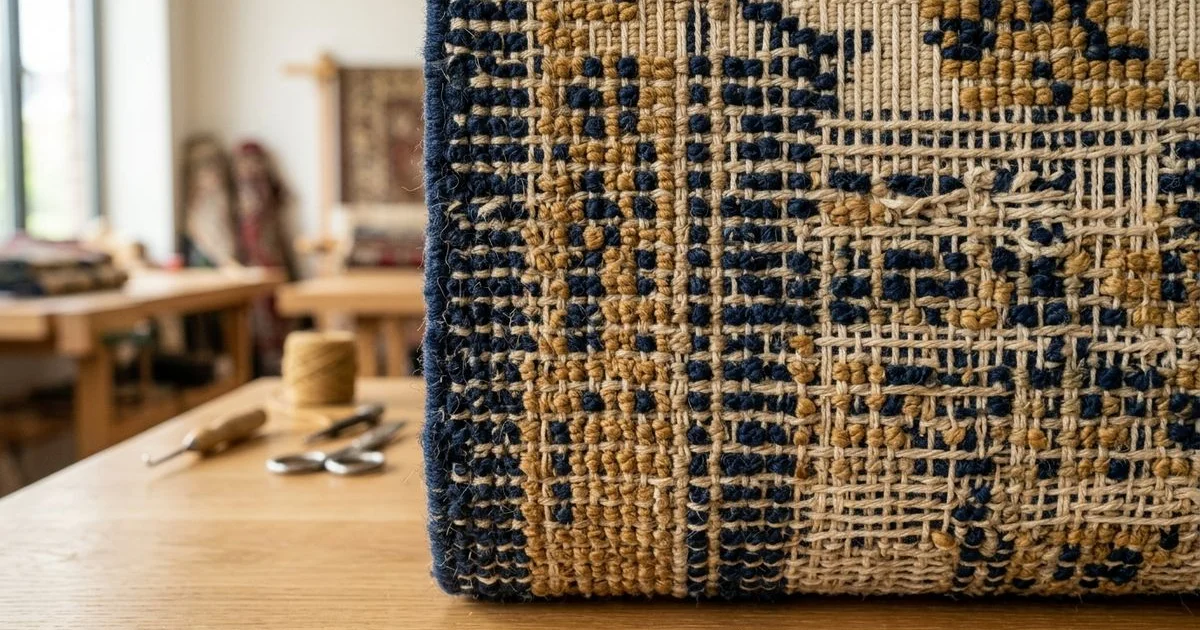
Every hand-knotted piece begins on a loom with vertical warp threads, usually cotton or sometimes wool. The weaver passes horizontal weft threads between them, stacking the rows tightly. We always check this base first because a solid warp and weft rug foundation acts as the structural skeleton onto which everything else is built.
These foundational materials dramatically impact the final product. Cotton warps are the standard in modern high-end production because they provide a stiff, stretch-resistant frame that keeps the rug laying perfectly flat. Wool foundations, often found in tribal or nomadic pieces, create a much more flexible and warm base but carry a higher risk of warping over time.
Our clients often ask how density affects this skeleton. A typical US-market piece has a foundation density of dozens to hundreds of warp threads per inch, depending on the knot count. Higher knot counts mean finer detail but also result in more fragile foundations because the weaver must use thinner threads.
| Foundation Material | Common Usage | Primary Benefit | Potential Drawback |
|---|---|---|---|
| Cotton | City rugs (Tabriz, Kashan) | High tension, lays flat | Susceptible to dry rot if wet |
| Wool | Tribal rugs (Afghan, Kazak) | Highly flexible, durable | Can stretch or warp over time |
Knots and pile
The artisan ties the colored wool or silk pile directly to the foundation, knot by knot. Two main knot types dominate the market, and each serves a very specific design purpose. We look closely at the back of the fabric to determine exactly which technique the creator used, especially when comparing the ghiordes vs senneh knot.
- Ghiordes (symmetrical): This knot is utilized in most Turkish, Caucasian, and some Persian rugs. The yarn loops around two adjacent warp threads and pulls tight from the middle. This symmetrical wrapping creates a highly resilient, durable pile that is perfect for executing bold, geometric lines.
- Senneh (asymmetrical): You will find this knot in most Persian city rugs. The yarn loops around one warp thread and passes under the other, leaving one side open. This technique allows the weaver to pack knots much tighter, enabling fluid, curvilinear floral patterns.
Our restoration team uses Knots Per Square Inch, or KPSI, to evaluate this density. A solid mid-range rug in the US generally features 80 to 120 KPSI. Fine masterpieces from regions like Isfahan or Tabriz can easily exceed 300 KPSI, packing an incredible amount of detail into a tiny space.
The weaver packs these knots tightly together and trims them to a uniform pile height after each row, creating the finished surface.
Selvage: the side edges
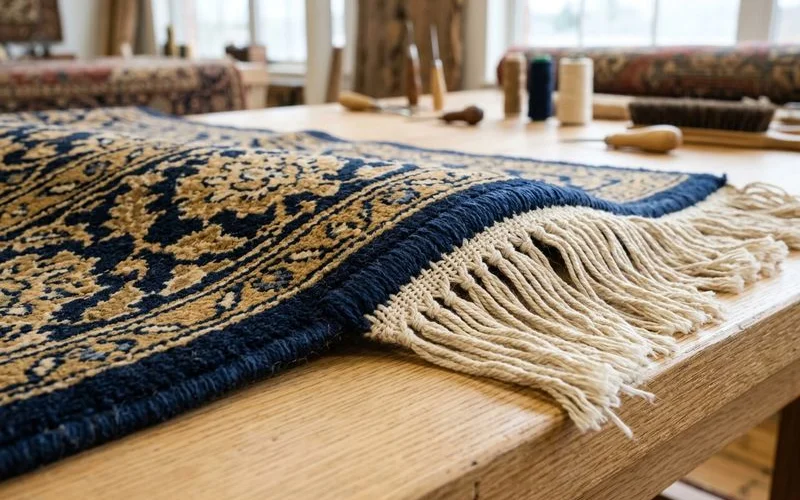
A selvage finishes the long sides of the rug, acting as a reinforced edge that wraps and binds the outermost warp threads. This continuous wrap prevents the foundation from unraveling laterally at the edges and provides essential structural strength. We frequently see this area take the brunt of heavy foot traffic and vacuum cleaner collisions.
When a selvage breaks down, the warp threads at the edge start to come loose. The rug can then rapidly lose pile from the sides inward, creating an uneven, jagged border. This damage represents one of the most common repair scenarios encountered by industry professionals.
Repairing a fraying edge early prevents catastrophic foundation loss. For a complete look at the restoration approach, see the rug fringe and edge repair guide.
Our technicians recommend monitoring your rug for these three common selvage threats:
- Robotic Vacuums: The continuous bumping and spinning brushes easily fray the binding yarns.
- Heavy Traffic: Entryway placement causes the sides to roll and compress under shoes.
- Pet Damage: Dogs and cats frequently target the thick edges for chewing or scratching.
Fringe: structural, not decorative
Many homeowners mistakenly believe the fringe at the ends of the rug is simply an aesthetic addition. It is actually the warp threads themselves, extending directly past the foundation. The fringe is strictly structural, meaning if it unravels, the foundation behind it starts to come apart and the rug loses pile.
We handle fringe damage every single week. A standard upright vacuum tangles the cotton fringes in its spinning beater brush and violently tears the foundation apart. This vulnerability is exactly why fringe repair matters so much.
Vacuum cleaners stand as the number one enemy of fine hand-knotted rugs, frequently catching the delicate fringe and causing severe structural damage.
We do not just tidy up frayed tassel ends. Instead, a technician secures the foundation using specialized overcast stitching so the rug’s internal structure remains intact.
To protect your investment, strictly avoid running a vacuum over the ends. You should use a soft horsehair brush or a suction-only upholstery attachment to safely remove dust from the fringe.
Why hand knotted rug construction dictates cleaning and repair
Knowing all these structural details changes how a professional thinks about cleaning. We do not aggressively agitate the fibers because a vintage or fragile foundation cannot always take the stress. The natural fibers and dyes remain highly sensitive, meaning hot water extraction is completely out of the question.
We handle the fringe with extreme care during transport because it is a load-bearing element. This structural awareness also changes what is possible in the repair room. Restoration on hand-knotted rugs can successfully rebuild damaged sections of foundation and reweave matching pile because the construction is repeatable, knot by knot.
That specific knotting technique is why a true piece boasts an average lifespan of 50 to 100 years. Several factors dictate exactly how long your rug will survive:
- Material Quality: Natural wool provides inherent elasticity and stain resistance.
- Knot Density: Tighter packing prevents dirt from grinding against the warp.
- Adhesive-Free Construction: Hand-knotted rugs avoid latex glues that crumble over time.
Machine-made tufted rugs rely on latex glue that breaks down rapidly, usually failing within a decade. Hand-knotted rugs remain permanent restoration candidates regardless of damage, while tufted rugs simply end up in a landfill.
Protecting your investment starts with understanding its architecture.
We hope this breakdown helps you make informed choices about maintaining your textiles. If you need professional care, reach out to schedule an inspection and see how proper hand knotted rug construction informs our restoration process.
Related Service
Oriental & Persian Rug Cleaning
Specialist hand-washing for hand-knotted Persian and Oriental rugs, with dye testing and antique-safe handling.
Learn more about Oriental & PersianRelated Rug Care Guides
Caring for Antique & Heirloom Rugs Between Cleanings
Protect a valuable antique rug between washes, rotation, gentle vacuuming, sun and humidity control, padding, and fast spill response.
Dye Testing & Color Bleeding in Antique Rugs
Worried your rug's colors will run? How pre-wash dye testing identifies unstable dyes and how we stabilize them to prevent bleeding during cleaning.
How Much Does Oriental Rug Cleaning Cost in Nevada?
Oriental and Persian rug cleaning in Nevada typically runs $4-$10+ per sq ft by fiber, age, size, and repairs. Price drivers and the estimate process.
Oriental Rug Cleaning vs. Carpet Cleaning for Hand-Knotted Rugs
Why hand-knotted rugs need an off-site rug plant, not an in-home carpet cleaner, dedicated equipment, dye safety, and fiber expertise compared.
Frequently Asked Questions
What is a rug's foundation?
What's the difference between Ghiordes and Senneh knots?
Is the fringe part of the rug?
Have a Rug You'd Like Us to Look At?
Free pre-inspection, transparent quoting, and pickup across Las Vegas.
Get My Free Quote