
7 Signs Your Area Rug Needs Professional Cleaning
Embedded grit, dulling colors, odor, allergy flare-ups, the signs that DIY isn't enough and your area rug is due for a professional wash.
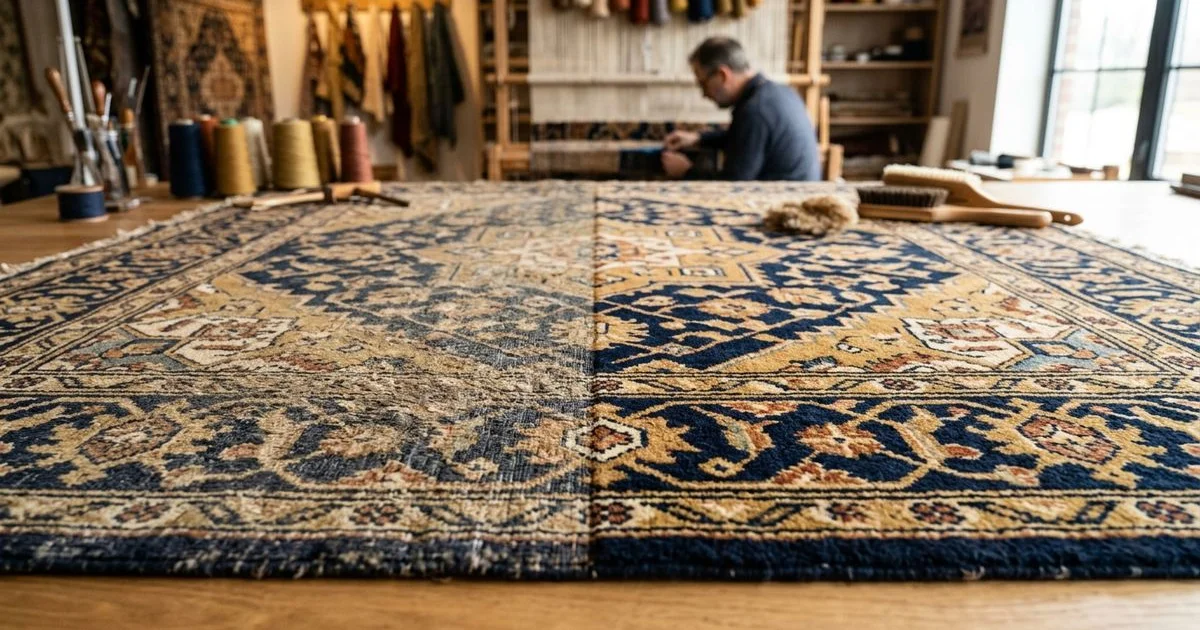
You know how a high-end wool rug can look perfectly fine on the surface, yet feel surprisingly heavy when you try to move it? That weight difference is almost entirely hidden soil. A standard 8x10 area rug can hold up to 40 pounds of dirt deep in its foundation before it even begins to look dirty.
This unseen grit acts like sandpaper against delicate fibers.
Our team at Legacy Rug Cleaning sees this hidden damage every day. If you want to know the true signs a rug needs cleaning, waiting for visible soil usually means you are waiting too long.
Let’s explore the seven overlooked indicators that your piece needs professional attention. If these red flags sound familiar, our Oriental & Persian Rug Cleaning service can help resolve them safely. Understanding exactly when to clean an area rug comes down to recognizing these specific environmental cues.
1. The thwack test reveals grit
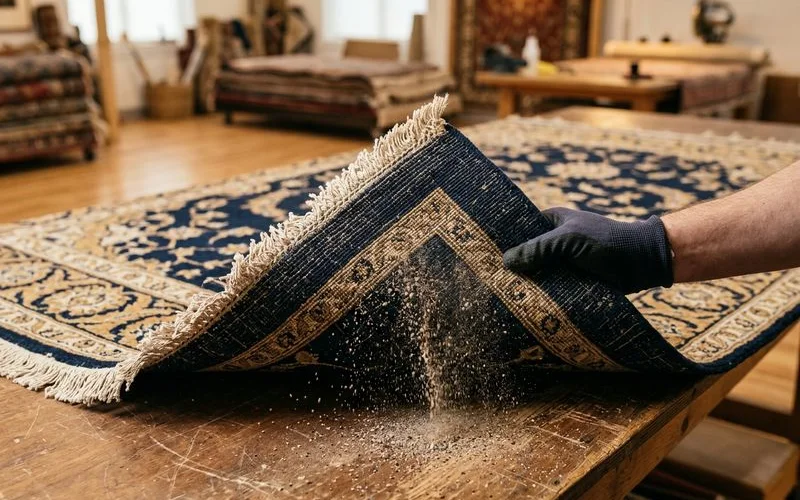
A sharp tap on the back corner of your rug will instantly expose hidden grit, sand, and dust. The amount of debris that falls out is usually quite shocking, even to diligent cleaners.
Our experience shows that an 8x10 foot area rug can hide between 25 and 40 pounds of dirt deep in its foundation. The sheer volume of this accumulation happens long before the rug actually looks dirty to the naked eye. Standard home vacuums simply lack the structural airflow needed to pull dense particles from the tightly woven base.
Common types of embedded debris include:
- Sharp silica sand from outdoor footways.
- Pet dander and dried organic matter.
- Asphalt residue tracked in from driveways.
- Tiny rock fragments that settle at the base of the knots.
We highly encourage homeowners to try this simple physical test. You will immediately see what your vacuum is leaving behind.
2. Traffic lanes look dull
A clear dulling along main walking paths or in front of heavy furniture indicates soil has built up faster than your vacuum can extract it. This contrast always stands out most on light-colored or deeply saturated wool pieces.
The problem goes beyond simple dirt covering the color. Those hidden particles act exactly like sandpaper against the delicate fibers every time someone walks across the room. Recognizing these dirty rug signs early can save your piece from permanent damage.
When abrasive soil grinds against wool, it creates microscopic scratches on the fiber’s surface. These tiny abrasions scatter light rather than reflecting it smoothly, causing the entire traffic lane to look permanently dull and lifeless.
We see this structural damage frequently in busy hallways and living rooms. Regular foot traffic literally saws away at the yarn.
Protecting your investment requires removing that abrasive grit before the micro-scratches become permanent.
3. Colors have lost vibrancy
Hand-knotted Persian and Oriental rugs only display their true depth of color when they are completely free of embedded soil. A subtle, cloudy haze over the intricate pattern is the classic sign of a dirty foundation.
Many owners slowly get used to this muted appearance over time. A proper professional wash strips away that cloudy filter and restores a striking depth of color.
We use specific washing techniques to safely dissolve the oily binders that hold this soil haze in place. Water alone cannot break the bond between the fiber and the sticky residues from cooking or skin oils.
| Visual Aspect | Appearance When Soiled | Appearance After Washing |
|---|---|---|
| Dye Contrast | Colors bleed together visually | Crisp, distinct borders between motifs |
| Wool Luster | Flat, matte, and light-absorbing | Natural sheen that reflects room light |
| White Accents | Yellowed or slightly gray | Bright, clear, and high-contrast |
The transformation is often dramatic enough that clients completely forget how bright their piece used to be.
4. Persistent odor
If your room carries a stale smell that commercial air fresheners cannot fix, the source is trapped deep in the rug’s foundation. Surface sprays only mask the problem temporarily.
This issue is incredibly common in households with indoor pets, where urine penetrates the backing and dries into concentrated crystals. Family room rugs also develop a distinctive sour smell as dropped food particles and natural skin oils accumulate over the years.
Our process specifically targets the microscopic bacteria feeding on these organic deposits. The bacteria are the actual source of the bad smell.
Specific odor-causing culprits include:
- Crystallized Urine Salts: These draw moisture from the air and reactivate the smell on humid days.
- Bacterial Growth: Strains like Proteus mirabilis and E. coli thrive in dried pet accidents.
- Cooking Aerosols: Vaporized cooking oils settle onto the floor and trap other household odors.
- Mildew Spores: Lingering moisture from spills or DIY cleaning attempts can spur mold growth in the cotton foundation.
You must flush the foundation completely to solve the odor issue at its root.
5. Allergy flare-ups
Family members who experience worse allergy symptoms in rooms with heavily trafficked rugs are usually reacting to a dense load of trapped allergens. Dust mites, pet dander, and pollen easily bypass the surface pile and settle into the woven base.
The sheer volume of biological matter hidden in a soft floor covering is substantial. The American Lung Association reports that the average person sheds 1.5 grams of skin flakes daily, providing an endless food source for microscopic pests.
We regularly remove massive amounts of this fine particulate matter during the dusting phase of our wash. The specialized equipment gently vibrates the trapped debris loose without straining the delicate backing.
The Centers for Disease Control and Prevention (CDC) estimates that a single square yard of carpet can harbor up to 100,000 dust mites. These mites produce waste particles that act as severe respiratory triggers.
Professional washing completely extracts these irritants from the textile. Your home will immediately feel fresher and easier to breathe in.
6. It’s been more than 2 years
A very practical rule of thumb is that if you cannot remember the last time the rug was professionally cleaned, it is officially overdue. Most pieces require a thorough wash every 1 to 3 years to prevent irreversible fiber damage.
Homes with multiple pets or heavy foot traffic often require maintenance much closer to the 12-month mark. You can read our detailed breakdown on how often to professionally clean an area rug for fiber-specific guidance.
We base our recommendations on established industry standards designed to maximize the lifespan of woven textiles.
| Household Environment | IICRC Recommended Cleaning Frequency |
|---|---|
| Light Traffic (Single person, no pets) | Every 18 to 24 months |
| Normal Traffic (Families with children) | Every 12 to 18 months |
| Heavy Traffic (Multiple pets, smoking) | Every 6 to 12 months |
The Institute of Inspection, Cleaning and Restoration Certification (IICRC) sets these exact benchmarks to stop soil from cutting the yarns.
7. A visible spill, set stain, or new damage
Spills chemically set into the dyes as time passes, turning a simple accident into a permanent stain. A fresh spill from last month is something a professional can usually correct, while an acidic spill from 18 months ago is significantly harder to reverse.
New physical damage like an unraveling fringe, a small tear, or patches of missing pile are massive red flags. These issues quickly expand and compromise the entire structure if left untreated.
Our repair team frequently sees extensive damage caused by small, unchecked insect infestations. These microscopic pests multiply rapidly in warm environments.
Common threats that require immediate intervention:
- Webbing Clothes Moths (Tineola bisselliella): The larvae aggressively eat the keratin proteins found in natural wool.
- Carpet Beetles: These pests burrow into dark, undisturbed areas beneath heavy furniture.
- Fringe Unraveling: The fringe is the skeleton of the rug, and losing knots means losing the structural border.
- Dry Rot: Stiff, cracking foundations caused by old water damage or over-watered potted plants.
You should always bring the piece in at the first sign of structural weakness or pest activity.
When DIY isn’t enough
At-home spot cleaning is highly effective for fresh spills if you use a clean towel to blot the liquid immediately. However, manual blotting cannot extract embedded silica grit, lift heavily set stains, or neutralize deeply accumulated allergens.
Renting a commercial carpet cleaner from the grocery store is actually worse than doing nothing for a hand-knotted wool rug. The harsh chemistry and uncontrolled drying temperatures cause immediate damage that far outweighs any visual improvement.
We strongly warn against using off-the-shelf carpet shampoos on natural fibers. The chemistry involved is entirely wrong for organic materials.
Reasons to avoid DIY machine cleaning:
- High pH Chemicals: Wool requires a mildly acidic pH between 4.5 and 8.5. Standard carpet shampoos often exceed pH 10, which strips natural oils and causes dye bleeding.
- Incomplete Extraction: Rental machines lack the suction to pull water through a dense woven foundation, leaving the core soaking wet.
- Fungal Growth: That lingering moisture creates the perfect dark, damp environment for mold and mildew to thrive.
- Residue Buildup: Soaps left behind act as a magnet for new dirt, causing the rug to soil twice as fast.
If two or more of these seven signs match the condition of your rug, a professional wash is officially overdue.
Our free pre-inspection process takes all the guesswork out of the equation. A dedicated technician will thoroughly evaluate the fibers, identify exactly what has accumulated inside, and explain precisely what you can expect from a proper wash. Please contact us to schedule an assessment and protect your woven investment.
Related Rug Care Guides
How Much Does Area Rug Cleaning Cost in Nevada?
Nevada area rug cleaning runs roughly $4-$12 per sq ft by fiber and condition. What drives price (urine, size, repairs) and what an estimate includes.
Hand-Knotted vs. Tufted Rugs: What Can Be Cleaned & Restored
Tufted rugs use latex backing that degrades and off-gasses; hand-knotted rugs last generations. What each can take and when restoration is worth it.
Hand-Washing vs. In-Home Steam Cleaning for Fine Rugs
Why hot-water extraction with detergent risks color bleeding, shrinkage, and dry rot in fine rugs, and when steam is acceptable vs full submersion.
How Often Should You Professionally Clean an Area Rug?
Most area rugs need professional cleaning every 1-3 years, sooner with pets, kids, or heavy traffic. Fiber-specific guidance and between-wash care.
Frequently Asked Questions
How can I test if my rug is dirty?
Does a clean-looking rug still need washing?
Can vacuuming replace cleaning?
Have a Rug You'd Like Us to Look At?
Free pre-inspection, transparent quoting, and pickup across Las Vegas.
Get My Free Quote