What Makes Oriental & Persian Rug Cleaning Different
Hand-knotted Persian and Oriental rugs need specialist handling, natural dyes, fragile foundations, WoolSafe methods, not machine carpet cleaning.
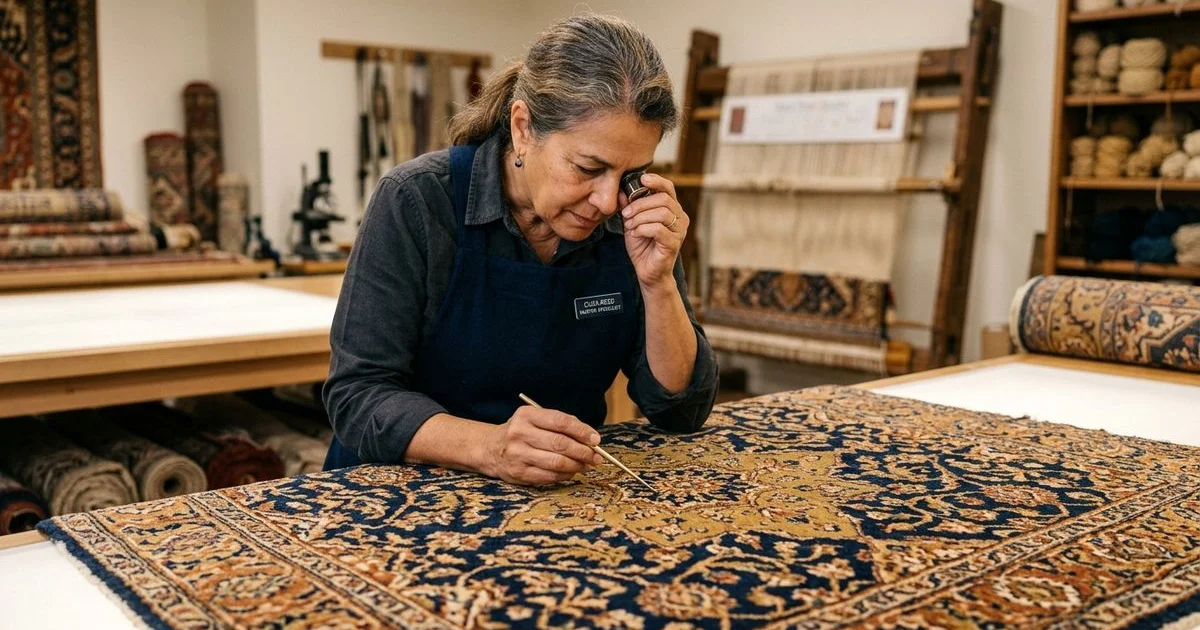
You already know that throwing a hand-knotted heirloom into a standard carpet extractor is a recipe for disaster. For the specialized service that delivers proper care, see Oriental & Persian Rug Cleaning.
As experts at Legacy Rug Cleaning, our team has seen too many stunning pieces ruined by high heat and harsh chemicals. A dense wool or silk blend is a work of art that demands respect.
Let’s break down the mechanics of the oriental rug cleaning process and explore exactly why standard cleaning methods fall short.
Natural dyes are sensitive
Natural vegetable dyes require a low-temperature, pH-balanced approach to prevent catastrophic bleeding. Many antique Persian and Oriental rugs use natural sources like indigo, madder root, walnut shells, and weld. These organic dyes have rich character but remain highly sensitive to heat and over-wetting.
Hot extraction with a standard alkaline detergent can cause those dyes to migrate, bleed into adjacent colors, or fade unevenly. Even modern synthetic dyes found in high-end rugs are surprisingly unstable when exposed to the wrong chemistry.
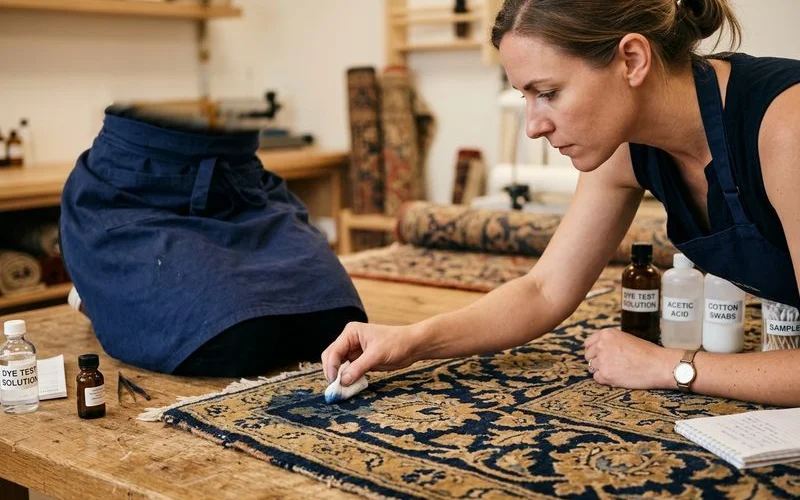
We start every cleaning job with a rigorous pre-wash dye-stability test. A technician applies a damp white cotton swab to multiple color zones and watches for any color transfer.
If a dye proves unstable, the wash chemistry gets adjusted immediately.
Here is a breakdown of common natural dyes and their vulnerabilities:
- Madder Root (Reds): Highly susceptible to fading from alkaline exposure.
- Indigo (Blues): Can crock or rub off if agitated aggressively.
- Walnut Husks (Browns/Blacks): Iron mordants used to set dark colors often accelerate wool degradation over time.
- Weld (Yellows): Frequently fades quickly under high heat.
Foundations are fragile
The structural grid of a hand-knotted rug requires gentle handling because aggressive agitation will literally tear the foundation apart. The cotton or wool foundation, known as the warp and weft, holds thousands of individual knots in place. If this foundation weakens, the entire piece starts to unravel. See hand-knotted rug construction explained for a deeper look at the underlying mechanics.
We regularly see older textiles with foundations already compromised by age, previous moisture damage, or pet accidents. Cotton foundations are especially vulnerable to dry rot if they remain wet for more than 48 hours. Aggressive cleaning, hot water, harsh alkaline chemistry, or rough scrubbing can easily snap these weakened threads.
Understanding the risk factors helps prevent irreversible damage:
- High KPSI (Knots Per Square Inch): Denser rugs trap fine, abrasive grit deep against the foundation, acting like sandpaper on the warp threads.
- Pet Urine Exposure: Urine salts crystallize and remain in the foundation, attracting moisture and weakening the cotton fibers over time.
- Improper Storage: Storing rugs in humid environments like basements accelerates fiber breakdown.
WoolSafe-approved methods
A safe persian rug cleaning method depends entirely on using specialized, mildly acidic products that will not strip the fiber’s natural oils. Most Persian and Oriental rugs are woven from wool, which has highly specific care requirements compared to synthetic carpet. The international WoolSafe certification program specifically tests products to ensure they will not cause color bleeding, rapid resoiling, or fiber damage.
Our facility operates as a certified WoolSafe Approved Service Provider. This specialized chemistry is carefully calibrated to preserve wool’s natural lanolin coating and prevent the fibers from felting together.
Standard carpet cleaning chemicals often hit a pH of 9 or 10. Wool requires a slightly acidic cleaning solution, typically resting between pH 4.5 and 5.5.
Here is a quick comparison of why wool-specific chemistry matters:
| Factor | Standard Carpet Cleaning | WoolSafe Specialist Cleaning |
|---|---|---|
| pH Level | Highly Alkaline (pH 9-11) | Mildly Acidic (pH 4.5-5.5) |
| Lanolin Impact | Strips natural oils, leaving wool brittle | Preserves oils for softness and stain resistance |
| Dye Reaction | High risk of color bleeding | Stabilizes natural and synthetic dyes |
The hand-washing standard
Proper immersion washing involves dusting, individual pH-balanced baths, and controlled drying to safely flush out decades of embedded soil. Once pre-inspection and dye testing wrap up, the physical wash begins. A standard 9x12 rug can hide up to 10 pounds of dry, abrasive particulate deep in the pile, so thorough dusting is the mandatory first step before any water touches the textile.
We place each rug into its own individual wash pool. Communal tubs are never used, completely eliminating the risk of cross-contamination between different pieces. Master Certified specialists then perform the wash by hand, using gentle agitation calibrated specifically to the rug’s age, origin, and fiber condition.
We hang the washed rugs vertically in a specialized drying tower equipped with regulated humidity and industrial airflow. This rapid moisture extraction is critical for several reasons:
- Prevents Cellulose Browning: Fast drying stops cotton fringes from turning brown as moisture wicks to the ends.
- Stops Dye Migration: Colors stay locked in place when the rug dries quickly.
- Eliminates Mildew Risk: Controlled airflow ensures the dense foundation dries completely within 24 hours.
If you own a hand-knotted piece that needs attention, this careful, multi-step system is exactly how oriental rugs are cleaned correctly. Anything less puts the value and lifespan of your textile at serious risk. Contact a certified professional today to schedule an inspection and protect your investment.
Related Service
Oriental & Persian Rug Cleaning
Specialist hand-washing for hand-knotted Persian and Oriental rugs, with dye testing and antique-safe handling.
Learn more about Oriental & PersianRelated Rug Care Guides
Caring for Antique & Heirloom Rugs Between Cleanings
Protect a valuable antique rug between washes, rotation, gentle vacuuming, sun and humidity control, padding, and fast spill response.
Dye Testing & Color Bleeding in Antique Rugs
Worried your rug's colors will run? How pre-wash dye testing identifies unstable dyes and how we stabilize them to prevent bleeding during cleaning.
Hand-Knotted Rug Construction Explained (Warp, Weft, Knots)
Warp, weft, pile, selvage and fringe, how hand-knotted rugs are built and why their construction shapes how they're cleaned and repaired.
How Much Does Oriental Rug Cleaning Cost in Nevada?
Oriental and Persian rug cleaning in Nevada typically runs $4-$10+ per sq ft by fiber, age, size, and repairs. Price drivers and the estimate process.
Frequently Asked Questions
Can a regular carpet cleaner do my Persian rug at home?
Are natural dyes a problem for cleaning?
Is hand-washing safe for antique rugs?
Have a Rug You'd Like Us to Look At?
Free pre-inspection, transparent quoting, and pickup across Las Vegas.
Get My Free Quote