
Dye Testing & Color Bleeding in Antique Rugs
Worried your rug's colors will run? How pre-wash dye testing identifies unstable dyes and how we stabilize them to prevent bleeding during cleaning.
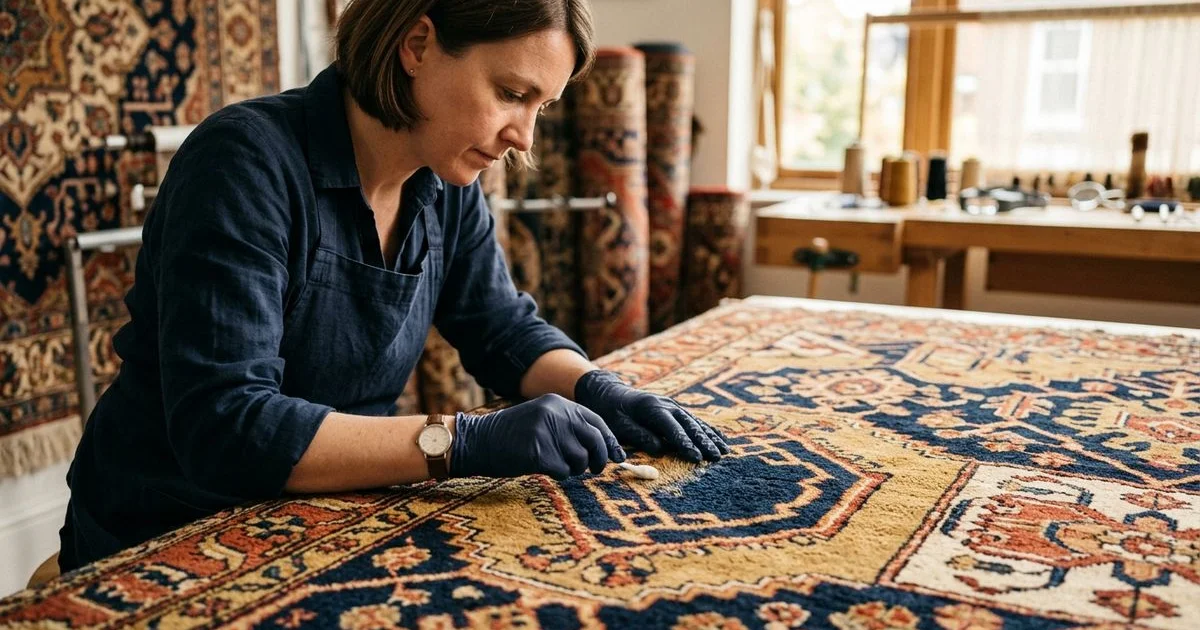
We understand that handing over a treasured family heirloom for cleaning can feel risky.
Conversations with clients constantly reveal a shared fear about rug colors running during the wash. Our experience shows that while some dyes definitely migrate, this damage is entirely preventable with the right protocol. A careful assessment prevents costly mistakes.
Finding a reliable cleaning method that incorporates an antique rug dye test is your best tool for rug color bleeding prevention. For a complete breakdown of how this protects your textiles, see our guide to Oriental & Persian Rug Cleaning.
What dye-stability testing actually involves
Our testing protocol relies on precise industry standards to predict exactly how a textile will react to moisture. The baseline assessment follows the American Association of Textile Chemists and Colorists (AATCC) Test Method 104 for water spotting colorfastness. We apply a clean, slightly damp white cotton swab to a small area of each color on the rug. Gentle pressure reveals whether the dye bond holds firm or transfers onto the cotton.
If color migrates onto the swab, that specific dye is unstable and requires a specialized wash plan. We test multiple colors because stability varies drastically from dye to dye. Deep blues on an antique Persian might be perfectly secure, while the vibrant reds easily wash away.
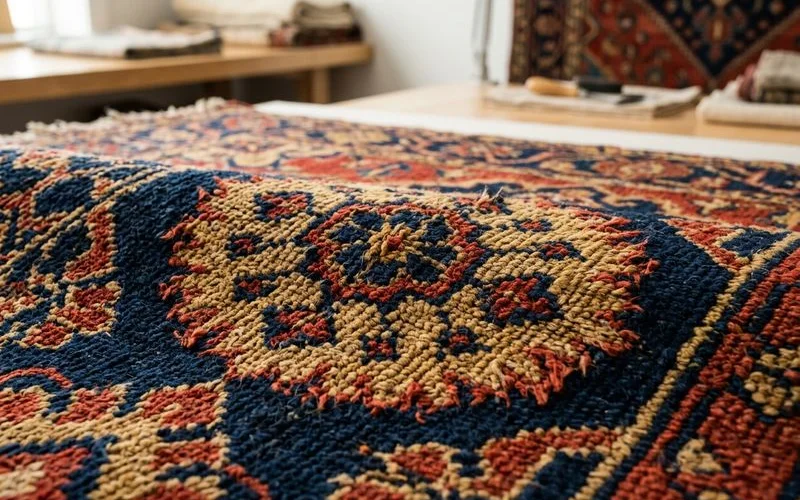
Testing every shade prevents catastrophic mistakes. Our technicians often use an acidic dye stabilizer during this phase to see if the migration can be safely paused. This targeted chemistry drops the pH of the test area, giving a clear picture of whether the color can be locked in place for a full submersion wash.
Why dyes go unstable
We see a huge variety of dye issues based on the age, origin, and chemical makeup of the rug. Natural vegetable dyes like indigo, madder, and walnut stay incredibly fast when fixed properly by a master weaver. A rushed fixing process by a less-skilled producer guarantees stability problems from the very first day. We frequently encounter this with certain regional textiles. Transitional-era Navajo rugs from the late 19th century famously used early commercial aniline dyes that are notoriously unstable when wet.
Bokhara rugs also carry a reputation for bleeding if the deep red dyes lack proper chemical bonding. We must treat these specific regional weaves with extreme caution to prevent the dark colors from staining the surrounding ivory wool.
The Impact of Age and Environment
Age and environmental factors constantly degrade the integrity of a textile’s color. UV exposure from a sunny window slowly breaks down the dye molecules over time. We also find that prior cleaning attempts using high-alkaline carpet shampoos will strip away the natural acid bonds protecting the wool.
Pet Urine and Dye Migration
Pet accidents introduce a severe chemical reaction that destroys dye stability. Urine leaves behind alkaline salt residues that eat through the acid-based dye bonds in natural wool. We consider any area exposed to pet waste highly unstable, even if the surrounding colors remain perfectly intact. Leaving these salts untreated invites a fungus known as dry rot, which can grow and destroy natural cellulose fibers with as little as 20% moisture content.
What we do with unstable dyes
We implement strict damage-control protocols the moment the testing phase detects color migration. Standard carpet cleaning methods use hot water extraction reaching temperatures of 140 to 200 degrees Fahrenheit. This intense heat easily melts the dye bonds in a handmade piece. We always default to cooler wash temperatures to reduce moisture stress while still achieving a sanitary clean.
Specialized Chemistry and Treatments
Advanced color-locking treatments provide a temporary way to secure the fibers. Professional-grade acidic stabilizers, such as Wool Medic or Dye-Loc, drop the pH of the rug down to around 3.0. This low-pH environment acts as a chemical barrier that stops migration long enough for a safe extraction, making it a critical step in rug color bleeding prevention.
Low-Moisture Handling
We switch to lower-moisture handling when full submersion poses too much of a risk. Surface cleaning and targeted subsurface extraction allow the safe flushing of contaminants like urine without soaking the entire foundation. We rely on careful, section-by-section hand washing for the most fragile pieces.
| Cleaning Factor | Standard Carpet Service | Unstable Antique Rug Wash |
|---|---|---|
| Water Temperature | 140°F - 200°F (Hot) | 60°F - 70°F (Cool) |
| Moisture Level | High Pressure Injection | Controlled Sub-Surface Extraction |
| Chemical pH | High Alkaline (pH 9-11) | Acidic Stabilizers (pH 3-5) |
| Drying Time | 12 to 24 Hours | Accelerated (Under 4 Hours) |
Owner Consultation and Next Steps
Full disclosure is a mandatory step before a single drop of water touches your textile. Some rugs suffering from severe dye decay require alternative approaches like conservation dry-cleaning rather than a traditional wash. Our team will always present the safest options and clearly explain the risks involved.
Why transparency matters
Every single dye test gets documented in writing during the comprehensive pre-inspection phase. You deserve to see exactly which colors hold fast and which areas require special handling before approving the work. We utilize a rigorous inspection checklist to map out the exact structural and chemical condition of your piece.
This level of detail separates true specialists from companies taking a rolled-dice approach to your valuable property. A cleaner suggesting they will just “see what happens” during the wash is gambling with your investment. We rely on data, not luck, to protect your textiles.
For a deeper understanding of why hand-knotted pieces demand such rigid protocols, read our guide detailing what makes Oriental and Persian rug cleaning different. The basic facts remain simple:
- Fragile Foundations: Cotton and wool bases easily warp under excessive tension.
- Natural Fibers: Organic wool and silk shrink without temperature control.
- Sensitive Dyes: Unstable colors run when handled poorly.
Our wash process respects all three of those fragile elements.
If you have concerns about a family heirloom losing its vibrancy, insist on an AATCC-standard stability test. We include this check as a mandatory part of our intake process. Reach out to our team today to schedule an evaluation and discuss the best options for rug color bleeding prevention.
Related Service
Oriental & Persian Rug Cleaning
Specialist hand-washing for hand-knotted Persian and Oriental rugs, with dye testing and antique-safe handling.
Learn more about Oriental & PersianRelated Rug Care Guides
Caring for Antique & Heirloom Rugs Between Cleanings
Protect a valuable antique rug between washes, rotation, gentle vacuuming, sun and humidity control, padding, and fast spill response.
Hand-Knotted Rug Construction Explained (Warp, Weft, Knots)
Warp, weft, pile, selvage and fringe, how hand-knotted rugs are built and why their construction shapes how they're cleaned and repaired.
How Much Does Oriental Rug Cleaning Cost in Nevada?
Oriental and Persian rug cleaning in Nevada typically runs $4-$10+ per sq ft by fiber, age, size, and repairs. Price drivers and the estimate process.
Oriental Rug Cleaning vs. Carpet Cleaning for Hand-Knotted Rugs
Why hand-knotted rugs need an off-site rug plant, not an in-home carpet cleaner, dedicated equipment, dye safety, and fiber expertise compared.
Frequently Asked Questions
Will my rug's colors bleed during cleaning?
Why do some dyes bleed?
What if a dye tests as unstable?
Have a Rug You'd Like Us to Look At?
Free pre-inspection, transparent quoting, and pickup across Las Vegas.
Get My Free Quote