
Caring for Antique & Heirloom Rugs Between Cleanings
Protect a valuable antique rug between washes, rotation, gentle vacuuming, sun and humidity control, padding, and fast spill response.
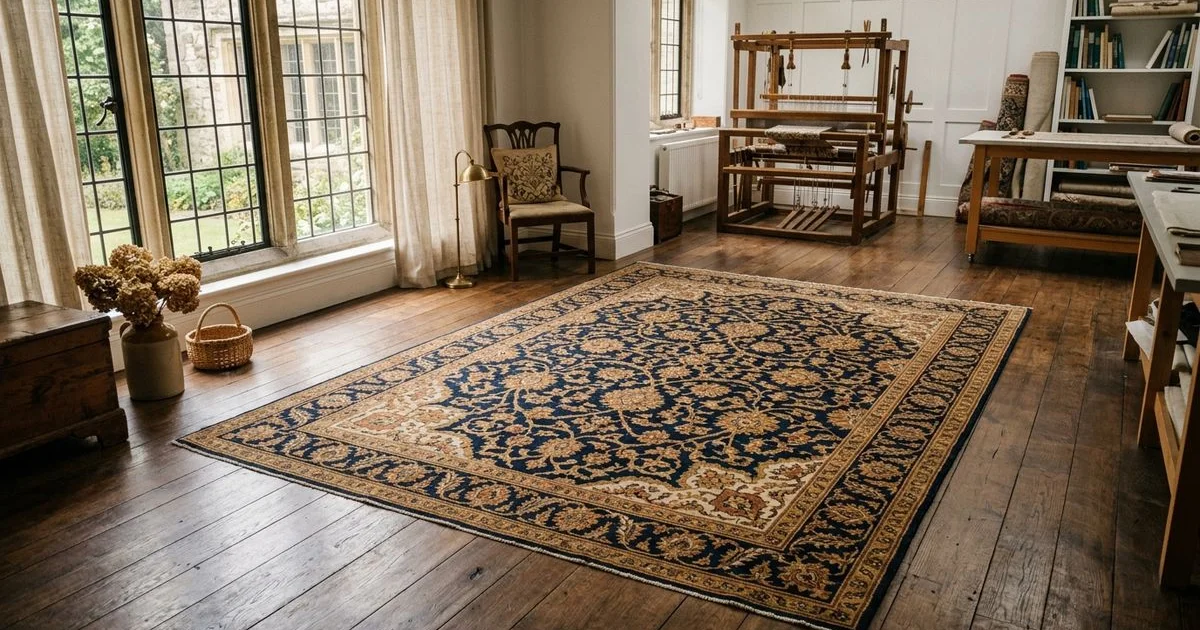
We see hundreds of stunning textiles come through our Las Vegas shop every year. The line between a vibrant family heirloom and a faded piece almost always comes down to daily habits.
When caring for antique rugs, small routines easily add decades of life between deep washes.
Our team knows that minor mistakes can quickly cause irreversible damage to natural fibers. We created this guide to cover the exact at-home steps that actually work.
For the specialized washing these pieces require, you can explore our complete process for Oriental & Persian Rug Cleaning.
Rotation prevents uneven wear and fading
The simplest, highest-impact habit you can adopt is routine rotation. Every six to twelve months, turn the rug 180 degrees.
Our technicians frequently encounter rugs with severe, one-sided fading from stagnant placement. A rug that sits in one position develops visible traffic lanes across its surface.
Regular rotation distributes this physical stress across the entire foundation.
We recommend watching out for these three signs that your rug needs an immediate turn:
- One side feels noticeably thinner or flatter than the other.
- Colors near a window look slightly lighter than colors under a sofa.
- Fringes on the main walking path look frayed while the opposite side remains pristine.
Sun is the silent destroyer
UV exposure from south-facing and west-facing windows fades natural dyes permanently. The sun breaks down the chemical bonds in traditional organic dyes like madder root and indigo.
Our top recommendation is applying a high-quality UV-filtering window film. Products like 3M Sun Control Window Films block up to 99.9% of UV rays without noticeably darkening the room.
This specific upgrade is a brilliant investment for any space housing a valuable textile.
We also suggest closing your blinds during peak afternoon hours over the hottest summer months. Repositioning furniture slightly casts protective shade over the most vulnerable sections of the rug.
Vacuum gently and often
Weekly gentle vacuuming removes the sharp, sandy grit that otherwise grinds deep into the foundation. According to the Carpet and Rug Institute, dry soil makes up roughly 79% of the dirt in any rug.
Our cleaning process removes this embedded silica, which acts like tiny glass shards cutting wool fibers. The best protective habit is to always use a vacuum with the beater bar completely turned off.
Aggressive mechanical action from a rotating brush easily pulls threads loose and destroys the delicate fringe.
We strictly advise using suction-only settings to prevent this expensive mechanical damage.
| Vacuum Feature | Recommendation | Why It Matters |
|---|---|---|
| Beater Bar | Turn completely off | Prevents tearing the delicate wool pile |
| Suction Style | Canister with parquet tool | Gently lifts surface dirt without friction |
| Fringe Edges | Avoid entirely | Mechanical action easily unravels threads |
You should completely avoid running your vacuum directly over the fringe ends under any circumstances. Every six months, flip the rug over and carefully vacuum the back.
Our experts know this simple technique vibrates the heaviest, most damaging dirt out of the foundation. Removing this dry particulate matter is significantly easier now than trying to flush it out during a wet wash later.
Padding matters
A proper custom rug pad physically extends the lifespan of your piece. Cushioning the stiff foundation against compression is the best way to protect antique persian rugs from severe wear.
We see far too many clients ruin expensive polyurethane floor finishes by using cheap PVC padding. Inexpensive plastic grips chemically react with the floor over time to cause permanent discoloration.
Selecting the Right Foundation Material
High-quality pads made of 100% felt or a blend of felt and natural rubber provide safe structural support.
Our padding solutions prevent dangerous slipping while fully protecting your hardwood finishes. Pet owners absolutely need a specialized barrier pad equipped with a moisture-proof liner.
This vital layer stops acidic accidents from soaking entirely through the rug and rotting the wood floor below.
Spills happen, but blot, don’t rub
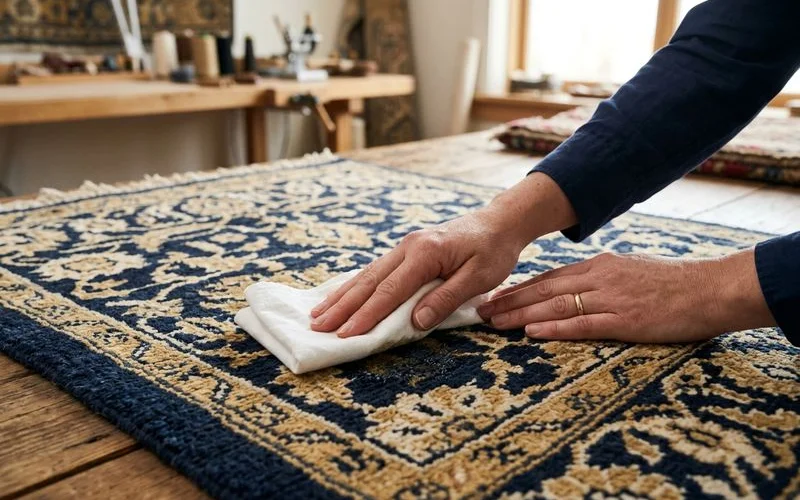
The absolute golden rule for liquid accidents on antique fibers is to blot immediately with a clean white cotton towel. Friction forcefully pushes the spill deeper into the foundation.
Our technicians often deal with color migration on natural dyes caused entirely by panicked scrubbing. Pressing a dry towel firmly into the pile usually extracts enough moisture for basic water spills.
Wine, hot coffee, greasy food, and pet accidents demand immediate blotting followed by a call to a specialist.
Why Consumer Stain Removers Fail
We strictly warn against reaching for a standard consumer carpet stain remover from the grocery store. Popular spray cleaners typically carry a highly alkaline pH of 9 to 11.
Antique wool requires a neutral or slightly acidic environment near a pH of 5.5 to 7.5 to keep its natural protective lanolin intact.
Our experience shows that harsh chemical sprays will strip the wool and bleach the ancient dyes. This creates a permanent chemical burn that is far worse than the original stain.
Cleaning frequency
Most high-end antique textiles require a full submersion professional cleaning every two to three years. The Institute of Inspection, Cleaning and Restoration Certification (IICRC) sets this benchmark to prevent permanent fiber degradation from soil buildup.
We provide a detailed breakdown on how often to professionally clean an area rug to give specific guidance based on your fiber type.
The most impactful decision you make for heirloom rug care is not a single massive intervention. Consistent rotation, careful suction-only vacuuming, and proper padding do the heavy lifting over the decades.
Our clients who follow these basic routines effortlessly preserve the structural integrity of their pieces for the next generation. If your rug is due for its professional wash, contact a trusted specialist today to schedule an inspection.
Related Service
Oriental & Persian Rug Cleaning
Specialist hand-washing for hand-knotted Persian and Oriental rugs, with dye testing and antique-safe handling.
Learn more about Oriental & PersianRelated Rug Care Guides
Dye Testing & Color Bleeding in Antique Rugs
Worried your rug's colors will run? How pre-wash dye testing identifies unstable dyes and how we stabilize them to prevent bleeding during cleaning.
Hand-Knotted Rug Construction Explained (Warp, Weft, Knots)
Warp, weft, pile, selvage and fringe, how hand-knotted rugs are built and why their construction shapes how they're cleaned and repaired.
How Much Does Oriental Rug Cleaning Cost in Nevada?
Oriental and Persian rug cleaning in Nevada typically runs $4-$10+ per sq ft by fiber, age, size, and repairs. Price drivers and the estimate process.
Oriental Rug Cleaning vs. Carpet Cleaning for Hand-Knotted Rugs
Why hand-knotted rugs need an off-site rug plant, not an in-home carpet cleaner, dedicated equipment, dye safety, and fiber expertise compared.
Frequently Asked Questions
How do I protect an antique rug from sun damage?
Can I vacuum an antique rug?
What should I do about a spill?
Have a Rug You'd Like Us to Look At?
Free pre-inspection, transparent quoting, and pickup across Las Vegas.
Get My Free Quote