
White Knots After Cleaning: What They Are and Why They Appear
Seeing white spots after your rug was cleaned? They're normal foundation knots, not damage. Why washing reveals them and when to trim them.
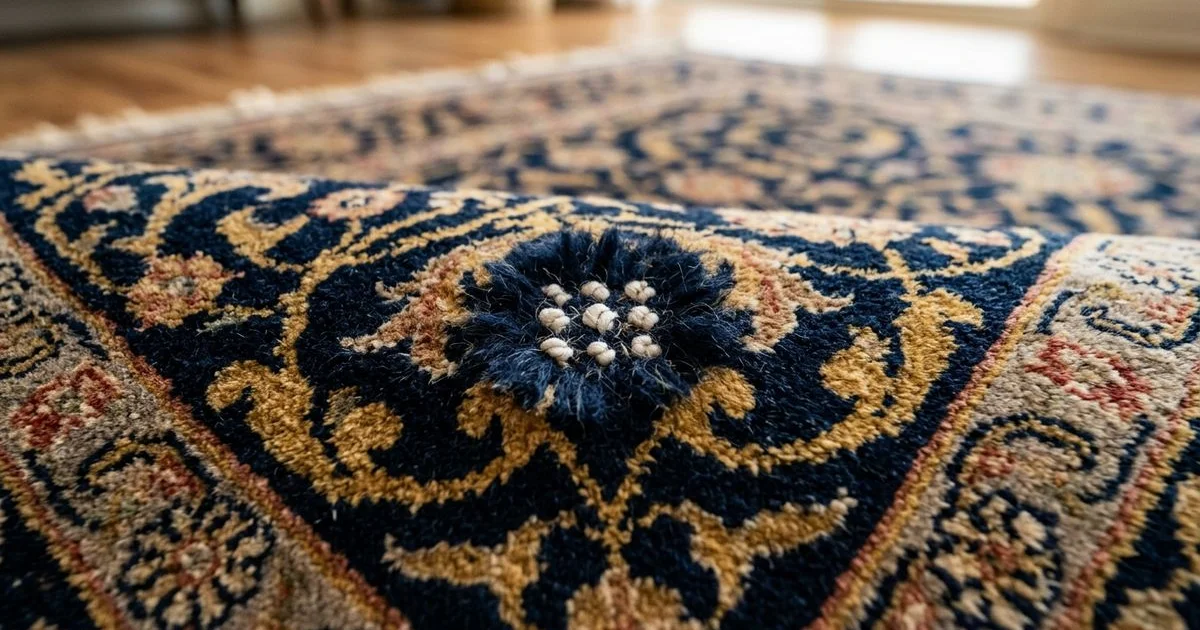
You know how it goes when you inspect a freshly cleaned piece from your collection. Spotting a few white spots on a rug after cleaning can be alarming if they were previously hidden.
Seeing white knots on an oriental rug after cleaning is a concern we address almost daily at Legacy Rug Cleaning. Many collectors worry that a mistake happened during the wash.
The reassuring answer is that nothing went wrong.
These spots are a natural feature of traditional weaving. If you want to review the craftsmanship that produces them, take a look at our guide on hand-knotted rug construction explained.
For details on the washing process that may have revealed these spots, review the approach detailed in Oriental & Persian Rug Cleaning. Let us look at what the structural data actually tells us.
Then, you can explore a few practical ways to handle them safely.
What white knots actually are
White knots are simply small pieces of the cotton foundation yarns poking through the surface pile. They are exposed structural ties, rather than defects or damage.
Hand-knotted rugs are built on a foundation of warp and weft threads. These threads are almost always made of white or light-colored cotton. The pile, which is the colored wool or silk, is tied to that foundation knot by knot.
Weavers sit at traditional wooden looms for months at a time. Sometimes the vertical cotton warp string breaks under the heavy tension of the weaving process. The weaver must then take the two broken ends and tie them back together to continue the work.
Those tied ends create the small white bumps you see. Industry professionals often refer to them as foundation knots or rug freckles. They are the rug’s own structural skeleton.
Here is exactly what you are seeing when a spot appears:
- The Warp Yarn: The vertical cotton strings stretched across the loom.
- The Weft Yarn: The horizontal threads woven between the rows of knots.
- The Repair Tie: The physical knot where a weaver spliced two broken warp threads together.
- The Surface Exposure: The top of that cotton tie pushing through the wool pile over time.
These spots become visible because the cleaning relaxed and lifted the wool that previously hid them.
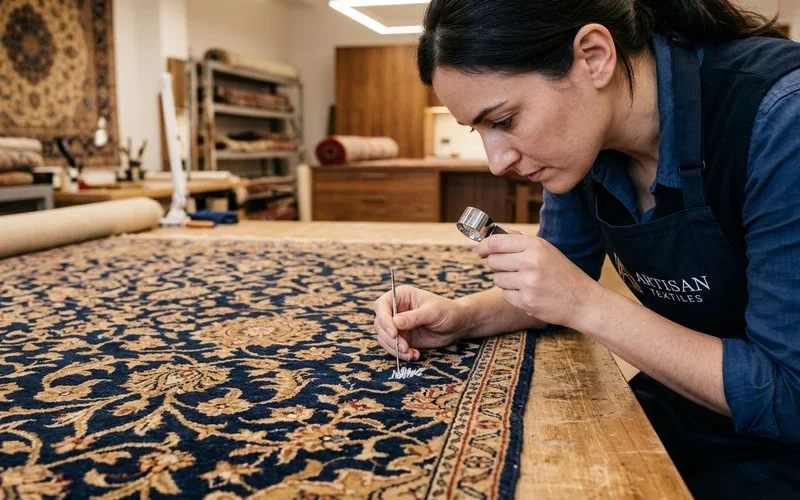
Why cleaning reveals them
Professional washing removes the sticky, accumulated soils that glue the pile down, bringing the wool back to its natural, upright position. This fluffy, restored pile exposes the small white foundation ties that were previously buried under the compressed wool.
In daily use, rug pile gets compressed under heavy foot traffic. The wool densifies and lays in flat, directional patterns from constant walking. Dirt and fine debris act like a mild adhesive, holding the fibers in this flattened state.
White foundation knots that exist under that compressed pile become completely hidden. You might go years without noticing a single one.
To understand this transformation, compare the before and after states of your rug:
| Condition | Pile Orientation | Visibility of Knots |
|---|---|---|
| Before Cleaning | Flattened and matted down by foot traffic | Hidden beneath compressed wool fibers |
| After Cleaning | Lifted, fluffy, and restored to original height | Exposed as the pile separates and breathes |
Our cleaning process lifts and relaxes the pile back to its proper orientation. The wash successfully removes the abrasive soils holding the fibers down. The pile becomes much fluffier after a professional service.
It is the same effect you see when you fluff a couch cushion that has been sat on for months. The rug version is just more permanent and much more visible.
Why this is actually a sign of authenticity
White knots only appear on hand-knotted rugs because they are a direct result of how weavers tie broken cotton warp threads together on a loom. Tufted rugs, machine-made rugs, and synthetic pieces lack this specific warp-and-weft construction, so they cannot produce these spots.
A rug that shows white knots after cleaning has effectively passed a major construction authenticity check. The knots are an intentional part of the craft. Many seasoned collectors view them as a positive identifier of a genuine piece.
If you are evaluating a rug, keep these structural differences in mind:
- Hand-Knotted Authenticity: Features visible individual knots on the back and natural cotton warp ties on the front.
- Machine-Made Construction: Shows a perfectly uniform plastic or mesh backing with zero variations.
- Hand-Tufted Imitations: Uses a thick canvas back covered in latex glue to hide the punched yarns.
Machine-tufted rugs rely on a tufting gun that punches yarn through a canvas backing. Manufacturers then apply a heavy layer of latex glue to hold the design together. This glue degrades quickly, meaning a machine-made rug typically only lasts around seven years.
Hand-knotted rugs use dense knots per square inch (KPSI) instead of chemical adhesives. Evaluating the white knots in a Persian rug is a great way to confirm its authentic hand-tied construction. This precise hand-tying creates a textile that can last for generations, but it also necessitates the occasional white foundation knot.
To trim or not to trim
You can safely trim a protruding white knot down to the height of the surrounding pile using small scissors. However, you should never cut the knot completely out or pull on it, as this can destroy the foundation.
Should you cut the white spots off? That is a purely cosmetic question and entirely up to you.
Our specialists strongly recommend leaving them in place. The knots are structural anchors for your rug. Cosmetically, the white spots integrate visually after a few weeks of use as the pile finds its new orientation under normal foot traffic.
Managing Visible Foundation Knots
Trimming them to pile height is acceptable if they truly bother you. We can do this as a final finishing step on your next cleaning. You can also carefully trim them yourself with small embroidery scissors.
Never cut them shorter than the surrounding pile, and absolutely never pull them with tweezers. Pulling a foundation tie will cause the warp string to unravel.
This mistake creates a hole in the foundation that requires professional reweaving. US repair facilities currently charge between $150 and $500 to reweave a single small hole. Extensive structural damage can easily push that repair bill over $1,000.
Here is a quick summary of your options:
- Leave them alone: The safest choice. The spots will blend back in as the rug settles.
- Trim them level: Carefully snip only the top fuzz so it sits flush with the wool pile.
- Avoid pulling (Critical): Pulling destroys the knot and leads to expensive reweaving costs.
The main takeaway is simple. Finding white knots on an oriental rug after cleaning is not a sign of damage.
Cleaning revealed them, but cleaning did not create them. Your rug is perfectly healthy, and if you have any questions about the structural integrity of your collection, reach out to our team for a professional evaluation.
Related Rug Care Guides
How Much Does Area Rug Cleaning Cost in Nevada?
Nevada area rug cleaning runs roughly $4-$12 per sq ft by fiber and condition. What drives price (urine, size, repairs) and what an estimate includes.
Hand-Knotted vs. Tufted Rugs: What Can Be Cleaned & Restored
Tufted rugs use latex backing that degrades and off-gasses; hand-knotted rugs last generations. What each can take and when restoration is worth it.
Hand-Washing vs. In-Home Steam Cleaning for Fine Rugs
Why hot-water extraction with detergent risks color bleeding, shrinkage, and dry rot in fine rugs, and when steam is acceptable vs full submersion.
How Often Should You Professionally Clean an Area Rug?
Most area rugs need professional cleaning every 1-3 years, sooner with pets, kids, or heavy traffic. Fiber-specific guidance and between-wash care.
Frequently Asked Questions
Are white knots damage from the cleaning?
Did cleaning cause the white spots to appear?
Should white knots be cut off?
Have a Rug You'd Like Us to Look At?
Free pre-inspection, transparent quoting, and pickup across Las Vegas.
Get My Free Quote